
BPIP Expert Council: Middle East Peace Requires Long-Term Diplomatic Commitment
The agreement between the United States and Iran is seen as opening new opportunities for the creation of stability in the Middle East. However, ongoing geopolitical dynamics mean the prospects for regional peace are not yet fully secure from challenges.
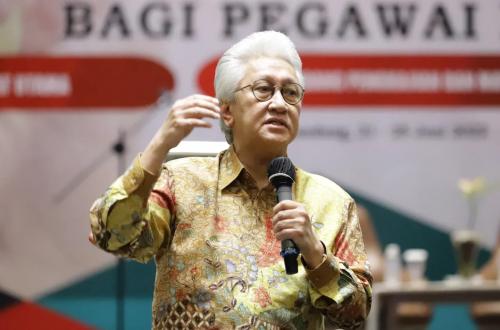
Darmansjah Djumala, an expert from the BPIP Council for Foreign Relations Strategy, assessed that the signing of the Memorandum of Understanding (MoU) between the United States and Iran on 17 June 202lar represents a significant development after years of tension between the two nations.
Darmansjah stated that the willingness of both countries to prioritise dialogue demonstrates that diplomacy remains the most effective instrument in resolving international conflicts.
“This agreement provides new hope for efforts to create peace and stability in the Middle East. After a long period of tension between the two countries, this diplomatic step shows there is space for conflict resolution through dialogue,” Darmansjah said in a statement on Tuesday (23/6/2026).
The former Indonesian Ambassador to Austria and the United Nations explained that the agreement holds several significant implications for the region. In addition to the potential to reduce tensions that have been a source of instability in the Middle East, the MoU could also restore international community confidence in diplomacy as a mechanism for resolving interstate disputes.
According to Darmansjah, the agreement also opens the possibility for more constructive relations between the two nations, which could ultimately drive political and security stability in the Gulf and the wider Middle East.
Nevertheless, Darmansjah warned that the implementation of the agreement still faces various challenges. One of these is the ongoing conflict dynamics in the region, including rising tensions in Southern Lebanon.
“The US-Iran agreement indeed provides a glimmer of hope, but one should not expect peace to be realised immediately. Regional security dynamics remain very complex. Ongoing aggression can hinder the diplomatic process currently being built,” he said.
The International Relations academic from Padjadjaran University University’s Faculty of Social and Political Sciences assessed that the escalation of conflict in Southern Lebanon has the potential to trigger a chain reaction in the region. Iran could face domestic and regional pressure to increase support for affiliated groups. On the other hand, the United States faces the challenge of balancing its diplomatic commitment to Iran with its strategic relationship with Israel.
Therefore, Darmansjah emphasised that the success of the agreement’s implementation depends heavily on the ability of all parties to restrain conflict escalation and create a more conducive regional environment.
“Peace in the Middle East cannot be built through bilateral agreements alone. A collective commitment is required to prioritise diplomacy, refrain from the use of military force, and create sustainable regional stability,” he said.
Darmansjah noted that this view aligns with the values upheld by Indonesia in international relations, namely prioritising peaceful conflict resolution, respect for humanity, and efforts to achieve world peace.
Through various studies and strategic thinking, BPIP continues to encourage the strengthening of diplomacy as the primary instrument in building a peaceful and civilised world order. This effort is in line with the mandate of the Preamble to the 1945 Constitution of the Republic of Indonesia, which affirms Indonesia’s commitment to participating in the implementation of a world order based on independence, eternal peace, and social justice.