
BPI Danantara and the Responsibility to Fulfil the People's Economic Rights
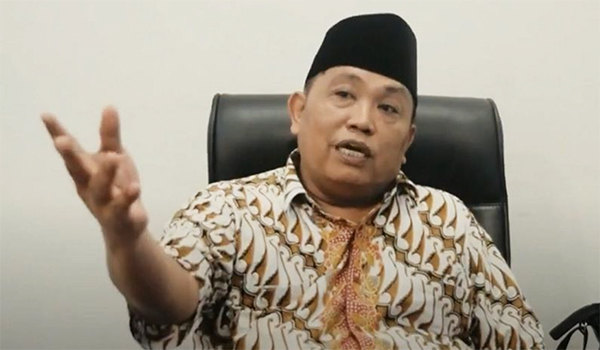
Human rights are often understood solely as matters of civil and political freedom. In fact, human rights also concern something very close to people’s daily lives: the right to obtain work, a decent livelihood, fair wages, food, and protection from poverty and economic injustice. From this perspective, economic development cannot be separated from the agenda of fulfilling human rights. High economic growth will not be fully meaningful if its benefits are concentrated only in certain groups while part of society still struggles to obtain decent work and meet basic needs. Moreover, this institution must be positioned as a state instrument to ensure that national wealth truly provides the greatest possible benefit for the people’s welfare.
President Prabowo Subianto places great hope in Danantara’s role in strengthening national economic resilience. The President reiterated this in his remarks at the first anniversary celebration of Danantara Indonesia at Wisma Danantara on 11 March 2026. Such optimism certainly has a basis. Indonesia is a country with abundant natural resources, a large domestic market, a plentiful workforce, and various strategic assets that can become national economic strengths. However, national wealth does not automatically produce welfare. Development history shows that even resource-rich countries can face inequality problems if that wealth is not managed effectively, transparently, and in favour of the people’s interests. This is where Danantara finds its strategic meaning.
Danantara carries a mandate far greater than merely generating profit. Its existence must be within the constitutional framework, namely how national wealth and economic power are managed to create a decent life and the greatest possible welfare for the people. The history of the Indonesian economy cannot be separated from the role of state-owned enterprises. From the beginning, SOEs were not merely companies established to seek profit. SOEs are state instruments for managing strategic sectors, controlling important resources, and implementing various national development policies. Indeed, in their development, SOEs are increasingly required to be professional, efficient, and able to compete commercially. However, business professionalism must not erase their public function. This is where the unique character of state companies lies. SOEs sit at the intersection of economic interests and public responsibility. On one hand, they must be financially sound and have good governance. On the other hand, their existence cannot be separated from the state’s goal of protecting and improving public welfare.
Danantara can be seen as a new chapter in that journey. The consolidation of state assets and strategic investments must become a new force for national development. State assets must not merely be large figures in financial reports. That wealth must be able to move, grow, and produce real benefits for people’s lives. Therefore, Danantara’s success cannot be measured only by the size of the investment portfolio it manages. A more important measure is the extent to which those investments are able to create social and economic value for society. Economic growth is not always synonymous with economic justice. A country can record high growth while simultaneously facing unemployment, income inequality, and public difficulty in accessing basic needs. Therefore, development oriented only towards growth figures risks losing its meaning if it is not accompanied by equitable distribution of benefits.
Danantara must emerge with a broader paradigm. State investment must have an impact on job creation, productivity improvement, strengthening of national industry, and development of the people’s economy. Investment should also be able to strengthen MSMEs, open opportunities for workers, and encourage the creation of a more inclusive economic chain. The question that needs to be asked of every successful state investment is not only how much profit is obtained. The far more important question is: how much benefit is felt by the people? How many jobs are created? How many national industries grow? How much involvement do small businesses have in the economic chain? Is investment able to strengthen communities in the regions? And is economic inequality decreasing? These questions must become part of the measure of Danantara’s success.
Fulfilment of human rights cannot be separated from society’s ability to live a decent life. The right to work, fair wages, and economic opportunity are important parts of human dignity. The state has an obligation to create an economic system that allows the people to obtain those opportunities. Therefore, Danantara must not merely become an investment machine. Danantara must become an engine of economic development oriented towards people. Every strategic investment needs to be viewed not only in terms of its rate of return, but also its impact on society. Investments that generate large profits but sacrifice people’s livelihoods, narrow the living space of vulnerable groups, or create new inequality must be a serious concern.
Source: jawawa.id (https://jawawa.id/newsitem/bpi-danantara-and-the-responsibility-to-fulfil-the-peoples-economic-rights-1787806217)
Originally published by batamtoday.com (https://batamtoday.com/news/bpi-danantara-dan-tanggung-jawab-memenuhi-hak-ekonomi-rakyat), translated from Indonesian