
BPDP Engages 42 Educational Institutions to Accelerate Smallholder Palm Oil Replanting
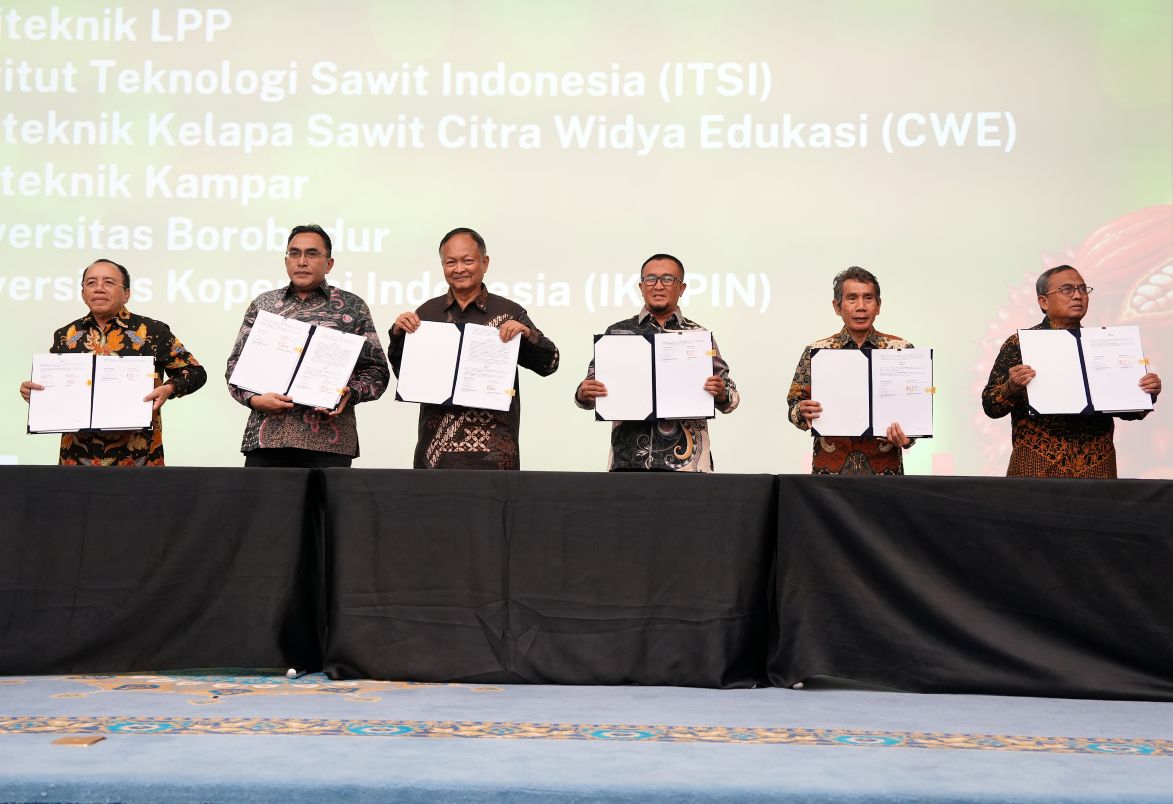
The Oil Palm Plantation Fund Management Agency (BPDP) is accelerating the Smallholder Palm Oil Replanting Programme (PSR) while strengthening plantation human resources through cooperation with educational institutions. The move was marked by the signing of a tripartite cooperation agreement for the Batch VI Palm Oil Plantation Replanting Fund Programme as well as cooperation on the Plantation Human Resources Development Programme.
BPDP President Director Eddy Abdurachman said PSR is a strategic government programme to improve the productivity and sustainability of smallholder oil palm plantations. The programme is also directed at improving the welfare of smallholders and maintaining the sustainability of the national palm oil industry.
“The PSR Programme is one of the government’s strategic programmes to improve the productivity and sustainability of smallholder oil palm plantations, improve the welfare of smallholders, and maintain the sustainability of the national palm oil industry,” said Eddy.
The PSR Programme is carried out by replacing unproductive oil palm trees with superior seeds and implementing Good Agricultural Practices (GAP). BPDP manages and channels funding support to smallholder institutions by involving local governments, partner banks, and other stakeholders.
From 2016 to 19 August 2026, PSR has cumulatively reached 187,782 smallholders with a land area of 428,745 hectares. Total funds disbursed reached Rp12.86 trillion.
In 2026, BPDP recorded PSR realisation of 133 proposals covering 20,229 hectares. The programme involved 10,403 smallholders with a fund disbursement value of Rp606 billion.
BPDP still faces a number of challenges in implementing PSR, including accelerating the submission and verification of prospective recipients and land, ensuring land legality, strengthening smallholder institutions, and the availability of quality seeds that meet replanting requirements.
Monitoring of physical progress, inter-agency coordination, and synchronisation of data and information systems are also being strengthened to reduce data discrepancies related to smallholders, land area, proposal status, physical progress, and use of funds.
In addition to PSR, BPDP is strengthening human resource development as part of efforts to improve the competitiveness of the palm oil industry. Since 2016, the Plantation Human Resources Development Programme through education and training has benefited more than 13,000 scholarship recipients and more than 32,000 training participants in various regions.
In 2026, the education programme quota has been increased to 5,000 recipients for levels D1 to S1. The programme involves 42 partner educational institutions with a total contract value of approximately Rp891 billion.
Nine educational institutions have met the requirements and will sign cooperation contracts. Meanwhile, 33 other institutions are still completing the required documents.
The education programme is also accompanied by support for palm oil training and research for training institutions, research institutions, and researchers in various regions. BPDP considers strengthening research and preparing human resources to be an important part of supporting downstreaming and the competitiveness of the national palm oil industry.
Eddy emphasised that the success of PSR is not only measured by the amount of funds disbursed and the area of land replanted. The programme must be able to improve plantation productivity and the welfare of smallholders sustainably.
“The success of the PSR Programme is not only measured by the amount of funds disbursed or the area of land replanted, but also by the programme’s ability to improve plantation productivity and the welfare of smallholders sustainably,” he said.
BPDP will continue to strengthen governance, accelerate implementation, and improve the quality of replanting through coordination with ministries and agencies, local governments, banks, educational institutions, and other stakeholders. These measures are expected to expand the benefits of PSR for the community while strengthening the contribution of the palm oil industry to the national economy.