
BPDP collaborates with GPPI to accelerate ISPO certification for palm oil farmers
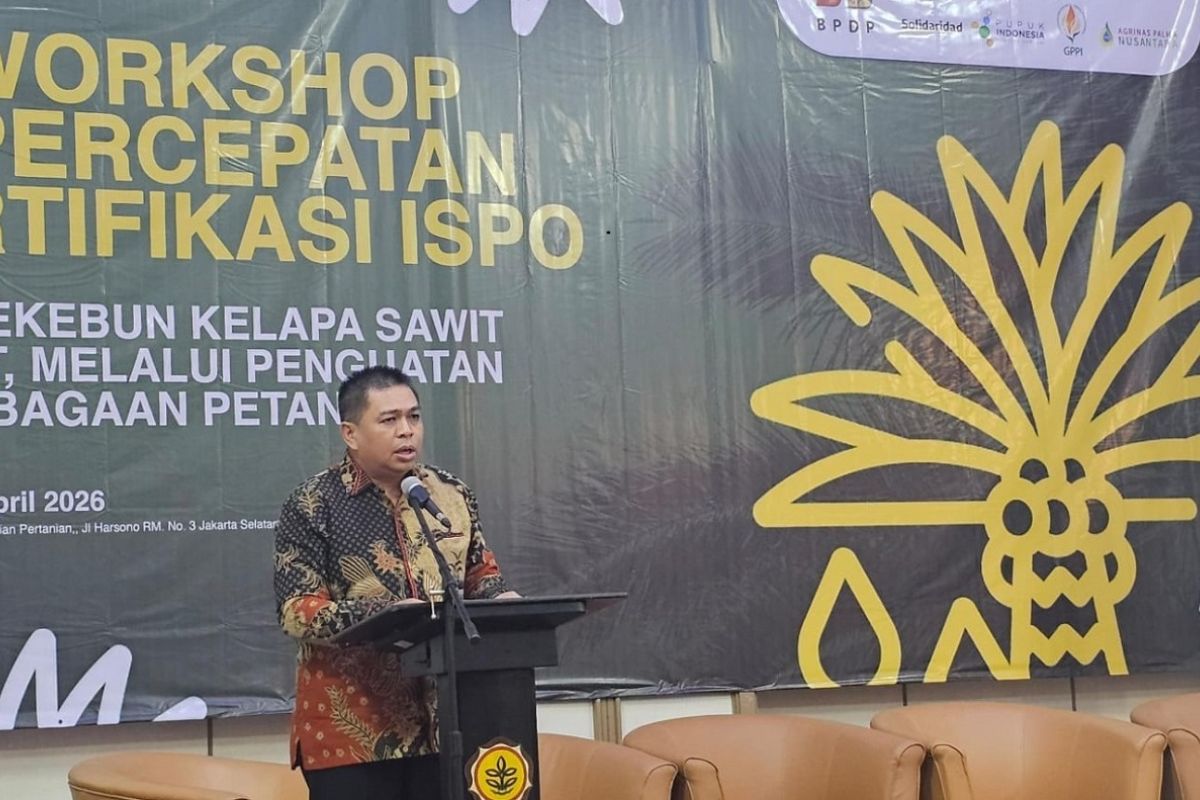
Jakarta (ANTARA) - The Badan Pengelola Dana Perkebunan (BPDP) and Gabungan Perusahaan Perkebunan Indonesia (GPPI) are promoting certification under the Indonesian Sustainable Palm Oil (ISPO) scheme for farmers to support the acceptance of palm oil in domestic and international markets.
BPDP’s Director of Upstream Sector Fund Distribution, Normansyah Hidayat Syahruddin, stated that BPDP plays a strategic role in ensuring sustainable palm oil management, enhancing global competitiveness, and complying with national regulations as mandated by Presidential Regulation No. 16 of 2025.
BPDP, he continued in his statement in Jakarta on Wednesday, has been mandated to finance certification through the Palm Oil Plantation Infrastructure and Facilities Programme, which covers STD-B data collection, environmental management commitment statements, ICS training, assistance, certification, and/or audits.
“Ministry of Agriculture Regulation No. 33 of 2025 confirms that farmers can apply for ISPO certification financing through Farmer Institutions,” he said.
Farmers who successfully obtain certificates through BPDP funding, he added, will receive priority access to other programmes, such as PSR.
Normansyah stated that BPDP has formed the Indonesian Sustainable Palm Oil (ISPO) Certification Acceleration Team for Farmers, which has four main tasks: coordinating and accelerating the implementation of ISPO certification for farmers.
It also involves preparing technical steps to accelerate the disbursement of SPPKS Funds for ISPO certification for farmers, as well as mapping the needs for regulatory, institutional, and financing support across agencies for farmers’ ISPO certification.
Additionally, he continued during the Workshop on “Accelerating ISPO Certification for Smallholder Palm Oil Farmers through Strengthening Farmer Institutions”, it proposes policy recommendations to support the implementation of Presidential Regulation No. 16 of 2025 in the upstream sector, particularly for farmers’ ISPO certification.
Meanwhile, the Director of Palm Oil and Other Palms at the Directorate General of Plantations, Ministry of Agriculture, Iim Mucharam, noted that palm oil’s contribution is vital to Indonesia’s economy and serves as a balancer for the country’s foreign exchange.
On one hand, palm oil receives a positive image from economic, social, and environmental aspects, he added, but negative issues remain a challenge for palm oil as a sustainable product needed by the world.
That is why, he added, President Prabowo Subianto issued Presidential Regulation No. 16/2025 on the Indonesian Sustainable Palm Oil Certification System (ISPO), which expands the scope of ISPO certification obligations in upstream plantation businesses, downstream industries, and bioenergy businesses.
“Through ISPO, the government seeks to improve palm oil industry governance while increasing competitiveness and global market trust in Indonesian palm oil products. ISPO is not only a strategy to boost productivity but a key to global market acceptance of palm oil products,” he said.
According to him, to date, ISPO implementation shows a positive trend with more than 7.5 million hectares of land already certified.
GPPI General Chairman Delima Hasri Azahari stated that accelerating ISPO certification is an important part of resolving the sustainable palm oil supply chain.
“The low achievement of ISPO certification among farmers requires acceleration strategies and collaboration from all parties,” she said.
In addition to RSPO and ISPO certification demands, she added, the global market now requires regenerative agriculture certification.
Through this certificate, agricultural product waste is required to be processed and re-implemented to increase palm oil productivity.