
BPBD Cianjur increases daily water distribution schedule
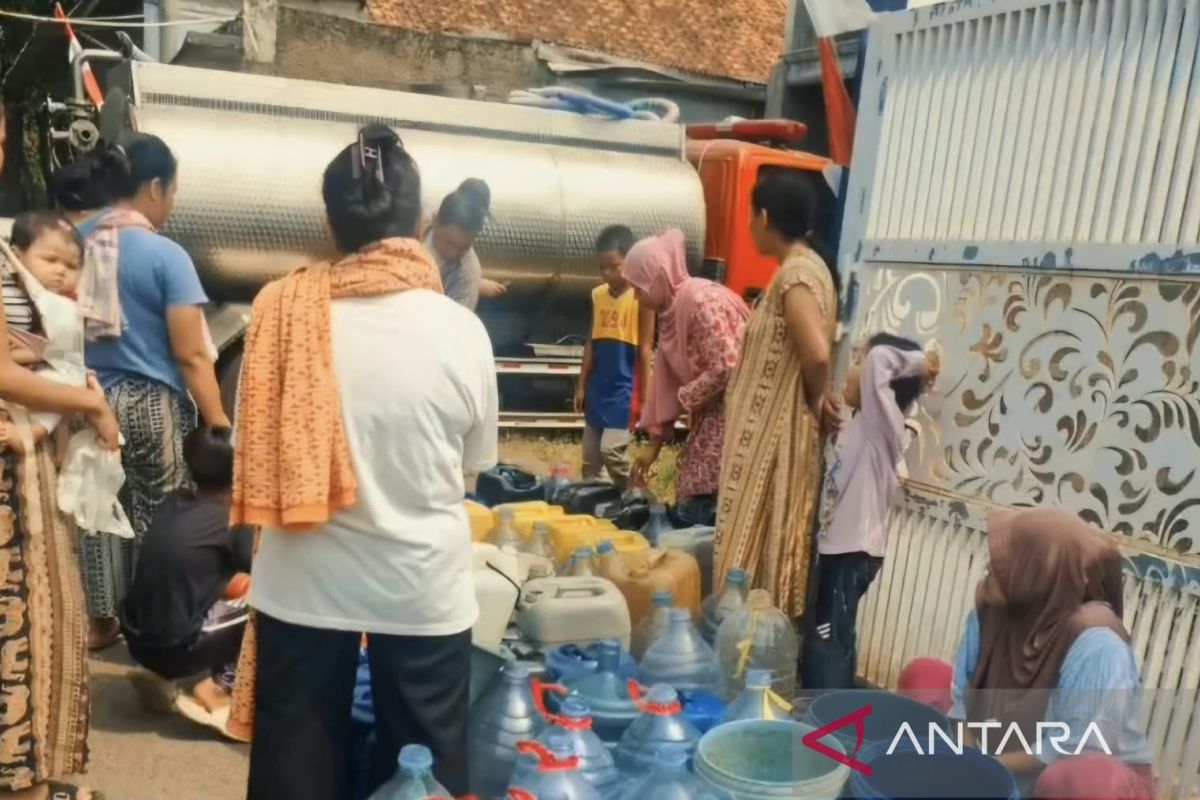
The Cianjur Regency Disaster Mitigation Agency (BPBD) in West Java has increased its clean water distribution schedule to drought-affected areas amid rising demand over the past week, with around 30,000 litres of water being delivered each day.
BPBD Cianjur Secretary Asep Sudrajat said in Cianjur on Saturday that the distribution covers 13 affected sub-districts from the town area to southern Cianjur, where most residents’ water sources continue to shrink or have dried up entirely.
Distribution is carried out from morning until night to meet the demand of residents in affected sub-districts, including Cianjur, Ciranjang, Cugenang, Mande, Karangtengah, Sukaluyu, Cikalongkulon, Haurwangi, Cilaku, Cibeber, Campaka, Sukanagara, and Cibinong.
“Distribution is carried out on a scheduled basis to a number of affected sub-districts so that the demand for clean water can be met every day, with around 30,000 litres of water for 1,000 households being delivered,” he said.
Throughout the dry season, around 300,000 litres of clean water have been distributed to the 13 affected sub-districts, including collaboration with PMI Cianjur to provide clean water services by tanker to the southern region.
In addition to distributing water, dozens of officers and volunteers routinely conduct outreach down to the neighbourhood level to prevent house, land, and forest fires, which have continued to occur over the past week due to careless rubbish burning.
“In addition to water distribution, officers and volunteers are asking the public to prevent fires during the dry season, where residents are required to regularly check electrical wiring in their homes and not to burn or discard cigarette butts carelessly,” he said.
This includes providing education to the public on using water wisely during the dry season, as well as not using water to spray roads or wash vehicles.