
BP2M Nationalism Camp Urges Students to Become Agents of Peace Against Violent Digital Content
JAKARTA — The threat posed by violent content in digital spaces is considered to be growing. According to data from the National Counter-Terrorism Agency (BNPT), 782 children in 18 provinces have been exposed to violent content through various digital groups. The situation reinforces the importance of digital literacy and the involvement of schools and families in protecting young people from negative content.
BNPT chief Eddy Hartono stressed that students should be more than active social media users. They also need the ability to screen information, reject hate speech and ensure their online interactions do not become channels for spreading hostility.
Eddy urged participants to become agents of change who can spread the values of tolerance, fellowship and national unity in their schools.
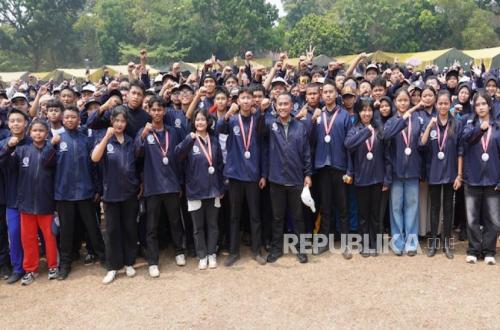
“After taking part in this Nationalism Camp, I hope you can become agents of change in your respective schools. There are 58 schools here. Yesterday, I also made a declaration with the school committees. The committees include teaching staff, other education staff and parents,” Eddy said while attending the BP2M Nationalism Camp, themed ‘National Pillars: Nurturing Diversity Amid Differences’, at the Cibubur camping ground in East Jakarta on Tuesday (20 October 2026). The event was attended by 1,600 secondary-school students from 58 schools across Greater Jakarta.
According to Eddy, unity amid diversity must be reflected in everyday behaviour, including the use of social media. Students need to understand that not everything circulating online is trustworthy or suitable for sharing. Content involving provocation, hate speech and the glorification of violence should be approached critically.
He therefore reminded students to adopt the “3T” principle: Tahan, Telusuri and Timbang—Pause, Trace and Weigh—before believing or sharing information.
“Do not let yourselves be exposed to violent information or hate speech. You must apply the 3T principle. First, Pause: hold back and look at the information. Second, Trace: do not share it straight away; investigate it first. Third, Weigh: consider whether it needs to be shared,” he said.
The principle emphasises the importance of pausing before reacting to digital information. Students should check the source, compare it with trusted sources and consider its potential impact on others before pressing the share button. This simple habit can help prevent the spread of misleading information and messages that promote hatred.
BNPT also highlighted exposure to violent content through true crime communities (TCCs), digital groups that discuss criminal cases and various violent incidents. The data on 782 children in 18 provinces has become a focus of efforts to strengthen child protection in digital spaces.
This challenge requires an approach involving multiple parties. Parents need to communicate openly with children about their online activities, while schools can strengthen character education and digital literacy. The government and the public also have a role in creating an environment that encourages healthy and responsible use of technology.
Protecting children cannot be achieved simply by prohibiting or restricting their use of digital media. Children and teenagers must also be equipped to recognise problematic content, understand the consequences of online behaviour and develop empathy for others. With these skills, they are expected to make independent decisions without being easily swayed by provocation.
The BP2M Nationalism Camp also provided students with an opportunity to strengthen social ties and develop critical and democratic attitudes. Muhammad Hanif, chairman of the Indonesian Association of Young Intellectuals and Students (Pionir), said he hoped the event would foster closer bonds among young people.
“I hope this event can be a moment for all of us to strengthen the bonds of fellowship and demonstrate that Indonesian students are pioneers of change who are critical and democratic,” Hanif said.
The national values promoted at the event are expected to amount to more than slogans. Students can put them into practice by respecting peers with different views or backgrounds, rejecting bullying, refusing to spread hate speech and resolving disagreements through dialogue.
As more interaction takes place in digital spaces, preserving unity requires the participation of young people both in person and online. Students can be part of the solution by building inclusive relationships and using social media responsibly.
Through the 2026 BP2M Nationalism Camp, BNPT is encouraging the development of a generation that not only understands diversity but actively nurtures it. Schools, families and digital spaces are expected to support the growth of tolerance, strengthen fellowship and prevent hatred and violence from taking hold.
Source: jawawa.id (https://jawawa.id/newsitem/bp2m-nationalism-camp-urges-students-to-become-agents-of-peace-against-violent-digital-content-1792659068)
Originally published by Republika (https://rejogja.republika.co.id/berita/tnarp5291/kemah-kebangsaan-bp2m-pelajar-didorong-jadi-agen-perdamaian-lawan-konten-kekerasan-digital), translated from Indonesian