
BP Taskin Praises Jember Regency for Strengthening the Validity of Poverty Data
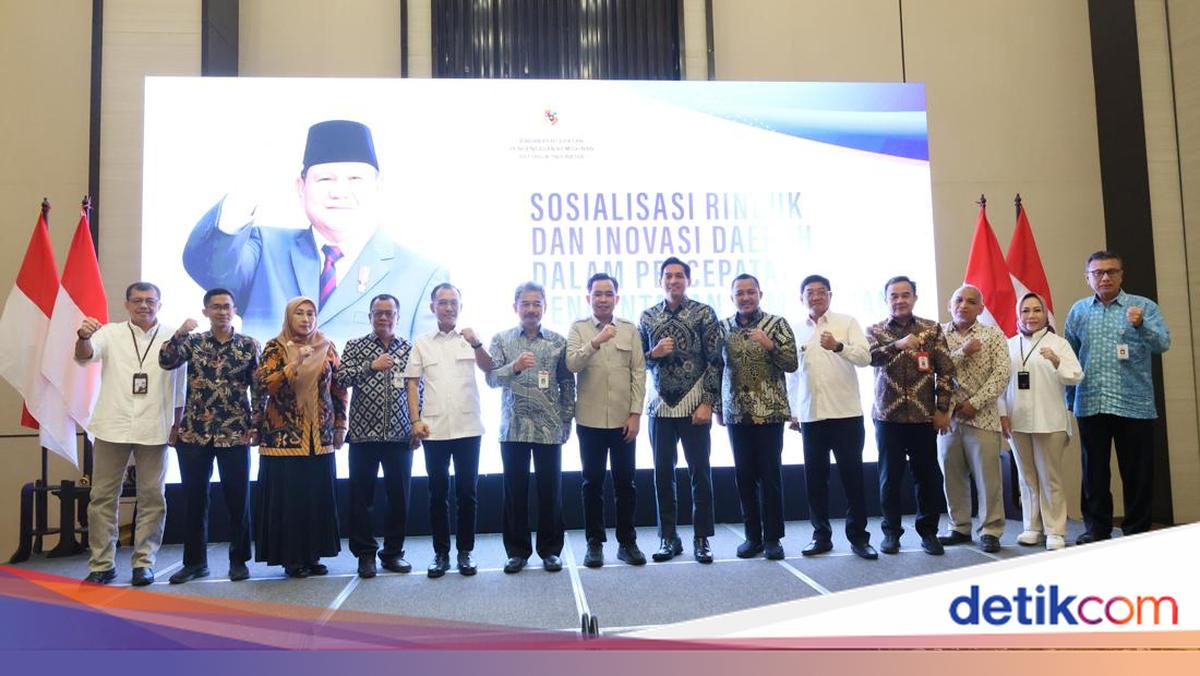
Deputy Chief of BP Taskin, Iwan Sumule, conveyed this at the Socialisation of the Master Plan (Rinduk) and Regional Innovation in Accelerating Poverty Alleviation at the BP Taskin Building, Jakarta, on Thursday, 21 May 2026. The national forum was attended by several ministries and agencies, including the Ministry of Home Affairs, Bappenas, the Ministry of Administrative and Bureaucratic Reform (PAN-RB), the Central Statistics Agency (BPS), and representatives from 14 regional governments in Indonesia. Speaking to the participants, Iwan said that the innovations implemented by Jember Regency are worthy of national best practice, particularly in strengthening the Data Tunggal Sosial Ekonomi Nasional (DTSEN) and improving the targeting accuracy of social assistance programmes. “The experience of Jember Regency can serve as a strategic reference for accelerating poverty alleviation that is more integrated and impactful,” he said in a written statement on Thursday, 21 May 2026. According to Iwan, the main challenge in poverty alleviation has not merely been the magnitude of poverty. He noted that data validity and the overlap of aid programmes are also challenges that need to be addressed. Therefore, the Jember Regency’s steps are viewed as aligned with the direction of national policy. Based on BPS data, the national poverty rate as of September 2025 stood at 8.25 percent or around 23.36 million people. The government aims to reduce this to between 4.5 and 5 percent by 2029, while extreme poverty is targeted to zero percent by 2026. “Accelerating poverty alleviation must be supported by strengthening data quality, programme targeting, and effective central–regional coordination,” he said. He added that data integration is the key to ensuring social protection programmes are truly targeted and have a real impact on the poor. “The expectation is for BP Taskin to become the central hub for orchestration and integration of national data so that government interventions truly have a real impact on the poor,” he continued. Meanwhile, the Regent of Jember, Gus Fawait, stressed that poverty alleviation must be built on accurate data and aligned with the real conditions of communities on the ground. He said the Jember Regency Government is currently developing a social intervention pattern based on micro data By Name By Address (BNBA). This step is to ensure that all assistance, whether funded from the state budget (APBN), regional budgets (APBD), or corporate CSR support, is truly received by those in need. “What we are building is not merely data collection, but ensuring the state is present through targeted programmes. For assistance to be effective, it must reach those who are truly in need and in line with local conditions,” said Gus Fawait. According to BPS data, the poverty rate in Jember Regency fell from 9.01 percent in 2024 to 8.67 percent in 2025. Some 8.01 thousand people managed to exit the poverty category. Nevertheless, in absolute terms, the number of poor people in Jember remains the second largest in East Java, reaching 216,760 people. Therefore, the Jember Regency government is focusing interventions on Decile 1, or the poorest households, through the verification and validation process (verval) of DTSEN. The total priority targets verified reached 97,060 households. Of this number, more than 68,000 households were prioritised to receive programme interventions quickly and directly. One of the steps drawing national attention is the large-scale involvement of civil servants (ASN) of Jember Regency in the data validation process. More than 20,000 civil servants were deployed to the field to verify the actual condition of communities. Before deployment, these civil servants received training together with BPS and the Family Hope Programme (PKH) of the Social Service to ensure verval proceeds in accordance with national standards. Verification was conducted over one month, from 17 April to 17 May 2025. Civil servants visited households individually using a ground-check method to ensure data accuracy with actual conditions. The check covered 39 poverty indicators, ranging from housing conditions, income, access to education, to family social conditions. The process was supported by web-based digital technology and smartphones, enabling verification results to be uploaded in real time. Besides accelerating data updates, the system also enhances transparency and accuracy in policymaking. The verval results showed significant achievement. Of the total around 260,087 people in Decile 1, 96,126 households were verified, equating to 98 percent of the target. From this process, 16,766 residents were found to be recorded as alive despite having died. Additionally, 10,703 households were known to have moved out of Jember but were still recorded as recipients in the social assistance data. These findings underscore the importance of on-the-ground data updating to ensure social protection programmes are not mis-targeted. “The government must work with accurate data so that policies do not miss the needs of the people. From valid data, steps that deliver real social justice can emerge,” concluded Gus Fawait.