
BP Batam Adopts 'Utility First, Investment Follows' Paradigm for Data Centre Boom
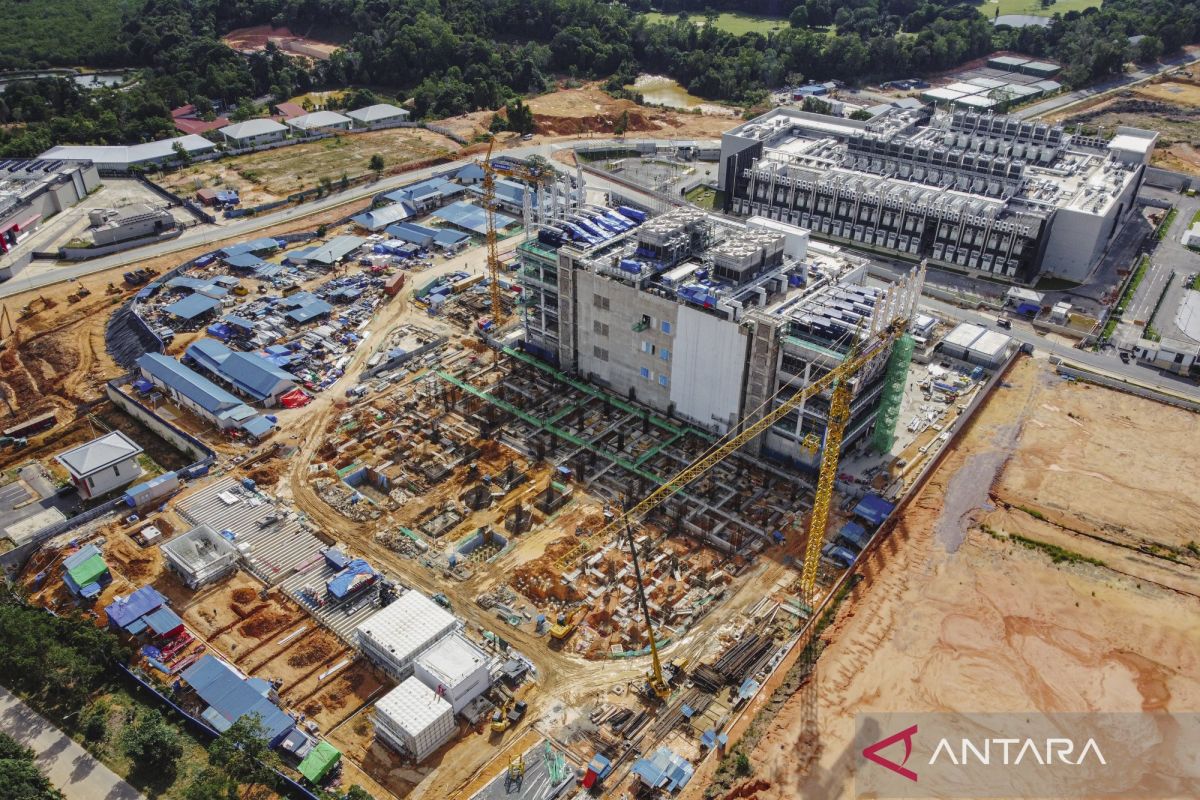
“Utility First, Investment Follows” is not merely a slogan, but a new development paradigm ensuring that every investment creates new capacity, safeguards the public interest, and delivers economic growth.
Jakarta (ANTARA) - At the Batam Trade Forum organised by Bank Mandiri Batam, I held discussions with business players, the leadership of the Batam Chamber of Commerce and Industry (KADIN), the banking community, and investors regarding Batam’s future as Indonesia’s digital investment hub.
Amid this optimism, one particularly interesting question arose from a business player: “Deputy, with large-scale data centre investments coming in, is Batam ready to provide electricity and water without reducing the public’s needs?”
For me, that question touches the very core of Batam’s future development.
Competition between investment zones is no longer determined solely by fiscal incentives, licensing ease, or strategic location. Global investors increasingly weigh the certainty of utilities, environmental sustainability, and long-term predictability. In other words, Batam’s future will be determined by its ability to guarantee reliable energy and water.
At present, Batam is enjoying extraordinary momentum. There are 16 data centre projects at various stages of development: 2 data centres already operational, 5 projects under construction, 3 in the construction preparation stage, and 6 in negotiation. Their investment value exceeds US$20 billion, with investors including DayOne, Equator Gate System Batam, Altiva DC, BW Digital, and NeutraDC Nxera.
These investments are not merely about building data storage facilities. Data centres are an anchor industry that will drive growth in artificial intelligence (AI), cloud computing, cybersecurity, semiconductors, telecommunications, and high-tech manufacturing. The knock-on effects will be felt in the construction, logistics, fibre optic, and professional services sectors, as well as by micro, small and medium enterprises (MSMEs) and through the creation of quality jobs.
However, behind this optimism lies a major challenge. Batam’s current power generation capacity is around 930 MW, with a peak load of approximately 770 MW. Meanwhile, the combined needs of all data centre projects are estimated to reach 1–2 GW in the coming years.
In the water sector, Batam’s production capacity is around 301,000 cubic metres per day, while data centre industrial demand is estimated at 20,000–50,000 cubic metres per day. If not anticipated from the outset, industrial growth could place pressure on utilities that also serve as basic public needs.
For this reason, I believe the time has come for BP Batam to introduce a new paradigm in investment management: Utility First, Investment Follows. This paradigm positions utilities as the primary prerequisite for investment, not merely a consequence once investment arrives.
Its implementation is simple yet strategic. Every data centre investor is required to bring a Utility Investment Package as part of their investment commitment.
This means that, in addition to building data centre facilities, investors are also obliged to contribute to building substations, electricity networks, power plants or energy supply schemes, as well as Sea Water Reverse Osmosis (SWRO) and water reuse systems according to their operational needs.
Under this policy, every additional demand for electricity and water will be met through new capacity built together with investors. Reservoir water remains prioritised for household needs and public services, while industrial demand is met through seawater-based SWRO and water recycling technology.
The same applies to the power sector. Every additional industrial load must be matched by the construction of new power plants, substations, and networks so that system reliability is maintained. For this reason, PLN continues to add power capacity on a massive scale.
Recently, PLN Batam signed a power supply agreement with a capacity of 511 MVA to support data centre needs. In addition, PLN is preparing potential additional electricity supply of up to 2,070 MW to anticipate a surge in demand from future investments.