
Boyolali Chicken Farmers Protest Skyrocketing Feed Prices, Distribute Free Poultry to Officials
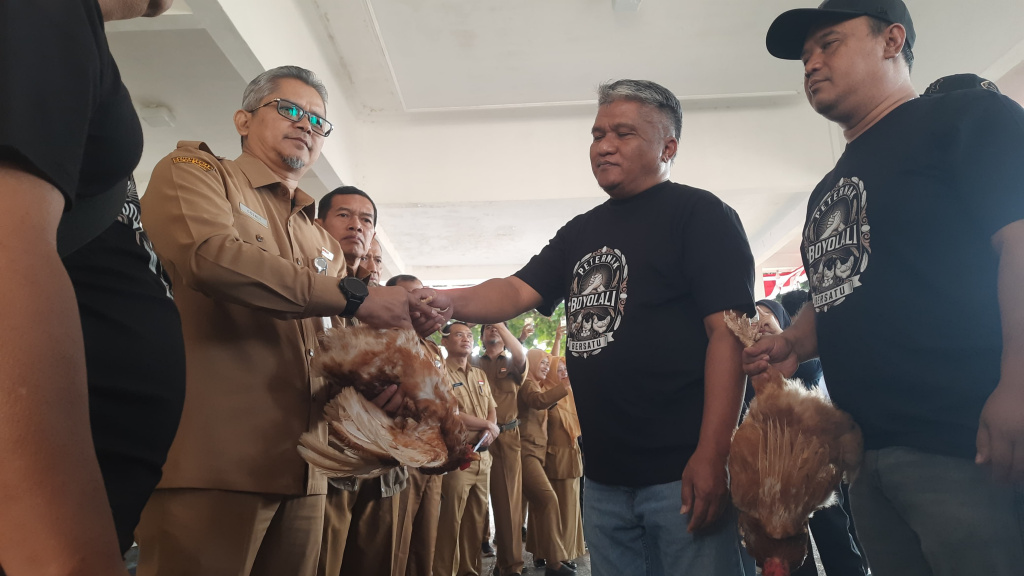
A wave of protests by chicken farmers in Central Java continues to spread. In Boyolali, hundreds of poultry farmers gathered at the Bundaran Tugu Jagung on Monday (10/8) to voice their frustration by distributing free chickens to local officials. The action was a demonstration of their despair over unaffordable feed prices.
Three local agency heads—from the Livestock and Fisheries Service (Disnakkan), the Food Security Service (DKP), and the Agriculture Service (Dispertan)—received the chickens directly amid the peaceful protest. Farmers displayed posters and banners with messages such as “Unreachable Feed Prices” and “Expensive Feed Leads to Bankruptcy,” while also demanding the establishment of a dedicated Ministry of Livestock.
“This is a pure protest from the Boyolali Breeders Association. We are in a squeezed position. Raw material prices have skyrocketed, but selling prices are low,” said Krishandrika Immanuel Raharjo, Chairman of the Boyolali Breeders Association.
According to data from the farmers, the price of corn—which constitutes 50% of production costs—has reached Rp7,200 per kilogram, far exceeding the government’s reference purchase price of Rp5,500 per kg. Meanwhile, the price of soybean meal (BKK) has also surged to Rp10,000-Rp11,000 per kg from a normal price of around Rp8,600 per kg.
Kahono, a broiler chicken farmer, described the situation as a no-win scenario. “If we sell, we lose money; if we hold on, we also lose because the feed costs are so high. We are being squeezed from all sides,” he said. Many farmers with populations under 2,000 birds have already been forced out of business.
Responding to the protest, Ahmad Gojali, Acting Head of the Boyolali Livestock and Fisheries Service, stated that he would immediately convey the farmers’ aspirations to the Boyolali Regent, Agus Irawan, and forward them to the provincial and central government levels. “If there is no quick solution, by December all of them could be out of business. We hope for a solution as soon as possible so that farmers can survive,” Gojali concluded.