
Boycott Israel Movement Already in the People's Wallets, Yet Absent from Government Procurement
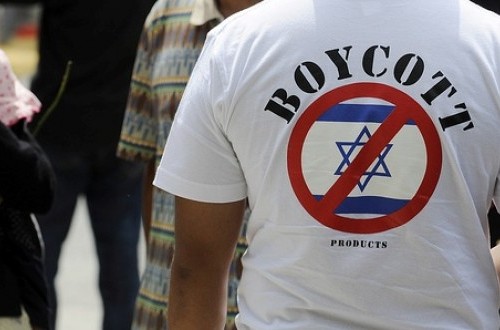
There is something incongruous about the boycott movement in Indonesia in recent years. Millions of consumers consciously abandon certain brands in favour of local products, tracing corporate affiliations before scanning barcodes at the till. Meanwhile, the state, with purchasing power far exceeding all of that combined consumer spending, carries on as usual.
Yet the movement that inspires these individual choices is not merely a spontaneous call. Boycott, Divestment, and Sanctions (BDS), for instance, was formulated in 2005 by hundreds of Palestinian civil society organisations as a measured strategy. Its mission is to sever the flow of money sustaining Israel’s occupation of Palestine. In a context where diplomatic pressure is half-hearted and international forums are frequently deadlocked, market pressure is the route that genuinely remains open.
The chairman of PBNU, Yahya Cholil Staquf, once asserted that a boycott conducted en masse and in an organised manner can exert real pressure on the Israeli economy. The key word lies there: organised. Individual choices may carry moral significance, but their economic impact is limited. A genuinely effective boycott requires institutional alignment, and no institution has greater purchasing power than the state.
The irony sharpens when we examine not merely trade data, but what is actually documented in the procurement records of state institutions themselves.
The semi-annual report of the BPKP Representative Office for the Riau Islands for the second semester of 2025 records an inventory of government technology equipment in the region. Amongst the long list appear laptop and printer products from a two-letter brand that the BDS movement openly lists as a priority boycott target, because it supplies computer equipment, information technology and databases to the Israeli police and military.
Its subsidiary is even recorded as supplying products and services to the offices of central figures of the genocide, including Israeli Prime Minister Benjamin Netanyahu and Finance Minister Bezalel Smotrich.
This is not conjecture, nor merely abstract import figures. These are facts neatly recorded in official government documents, verifiable by anyone willing to open the archives.
The facts grow heavier when linked to broader trade data. Statistics Indonesia (BPS) records that throughout 2025, the value of Indonesian imports from Israel reached around 39 million US dollars, far exceeding imports from Palestine at only around 2 million US dollars. That figure does not yet account for procurement from multinational companies on the BDS list because of their involvement in the economy of occupation, not because they are headquartered in Tel Aviv. They enter the government procurement market not through ports labelled ‘Product of Israel’, but through official catalogues bearing corporations that appear entirely global.
The picture becomes more complex when we turn to a side that remains opaque to this day. The IndonesiaLeaks consortium, in its investigative report, found indications that Pegasus — the spyware made by the Israeli company NSO Group — has entered Indonesia and was once used by the Indonesian National Police (Polri) and the State Intelligence Agency (BIN).
Polri did not entirely deny this. They acknowledged procuring zero-click spyware worth 149 billion rupiah in 2018, although they claim the tool was not Pegasus. Its documentation remains closed to this day.
As long as it stays closed, the claim cannot be verified, and actions that cannot be verified are actions that cannot be held accountable. Indonesia Corruption Watch (ICW) and a number of civil society organisations have long pressed for transparency, but these demands have yet to receive a proportionate response. In addition, it has been suggested that the government uses Israeli-made Cellebrite surveillance equipment.
If what is visible on the surface looks like this — documented BDS product lists, and imports from Israel continuing to outstrip those from Palestine — then what lies hidden behind still-closed documents becomes an increasingly urgent question to answer.
More fundamental than mere figures is the question of where procurement money comes from, and to whom it flows. Every rupiah of the central and regional budgets (APBN and APBD) derives from the public’s contribution through taxes. When the state spends its budget on companies whose profits flow into the economy of occupation over the Palestinian people, the question becomes: where exactly is public money being spent?
The question grows more significant when linked to Indonesia’s constitutional identity. As a nation born of struggle against colonialism, Indonesia has from the outset placed the rejection of occupation as a foundational principle of state administration. The Preamble to the 1945 Constitution affirms that colonialism throughout the world must be abolished because it is contrary to humanity and justice.
This is the basic norm that ought to colour every derivative of state policy, including — and especially — spending policy. The problem is that between the abstract constitutional norm and the technicalities of procurement policy lies a long distance, and that distance has yet to be bridged.
Reading the currently applicable procurement law offers no simple answer either. Presidential Regulation Number 46 of 2025 on Government Procurement of Goods and Services does establish principles that appear to close the door to political considerations: efficiency, effectiveness, transparency, healthy competition, fairness, and accountability as the principal tenets of procurement.
Read literally, there seems to be no room to exclude suppliers on the basis of their political alignment. But procurement law cannot be read literally alone. The same regulation also mandates the optimisation of domestic products and the enhancement of the Local Content Level (TKDN). This is not merely an industrial strategy; it is a policy instrument that legitimately grants preference to certain products over others. In other words, Indonesian procurement law does recognise alignment, provided there is a legitimate policy basis.
From that gap emerges a route not yet fully exploited. Consistent and strict strengthening of TKDN could naturally narrow the entry of foreign products, including those connected to Israeli corporate networks, without having to declare an explicit boycott policy. Admittedly, this strategy does not reach every sector. The government information technology sector — where we remain dependent on foreign products — is a weak point that cannot be resolved by TKDN alone.
To transcend that limitation, the government must confront a normative gap that has been left open. The blacklist mechanism in Presidential Regulation Number 46 of 2025 does not yet provide a legal basis explicitly permitting procurement restrictions based on a company’s affiliation with the Israeli occupation. The blacklist mechanism in that regulation is aimed only at suppliers committing violations during procurement processes, such as document falsification, tender collusion, or breach of contract.
In other words, blacklisting a company purely for its geopolitical affiliation cannot be done without a policy change. Herein lies the challenge of administrative law, and simultaneously the opportunity for its renewal.
The absence of rules does not mean the government must remain passive. The government can use its policy-making authority to draft procurement guidelines better aligned with Indonesia’s foreign policy, whether through amendments to the Presidential Regulation, regulations of the Government Procurement Policy Agency (LKPP), or other sectoral policies. This option is far more consistent with the principle of legality than expanding the grounds for blacklisting without a clear normative basis.
Of course, not all steps are complicated; some can even be taken relatively easily when a brand is clearly and demonstrably affiliated with entities supporting the Israeli occupation of Palestine. Neither the public nor the government needs lengthy investigations to take a stance. The boycott wave already under way in society proves that in many cases, choices can be made without waiting for complex regulation.
The real complexity arises only in certain cases. Multi-layered multinational ownership structures, for instance, sometimes make tracing corporate affiliations to their roots difficult. Likewise, the information technology and government digital systems sector, where Indonesia’s dependence on foreign products cannot be fully shed in the short term. Here, restriction policies require more than political sentiment. They need measurable, verifiable parameters that are legally accountable, whilst maintaining the continuity of public services.
Procurement policy is not a domain immune from public scrutiny. Where a particular procurement decision meets the characteristics of an administrative dispute object, society in principle has room to test the legality of government actions through the mechanisms available in the State Administrative Court. Admittedly, not every procurement contract can be directly challenged. Nevertheless, the existence of such oversight mechanisms affirms that the use of public money must always be accountable, both administratively and constitutionally.
Ultimately, the debate over boycotts is not solely about the scale of economic losses that can be inflicted on Israel. More fundamental is how the state exercises its authority in a manner consistent with the values affirmed by the constitution. State spending is never truly neutral. Every rupiah of the APBN and APBD always reflects political choices, policy priorities, and the moral commitment of the government.
If society has used its wallet as a form of solidarity with Palestine, then the state should likewise ensure that its goods and services procurement policy runs in line with the constitutional mandate. For a nation that has rejected all forms of colonialism since its birth, alignment with humanity should not stop at diplomatic statements, but should also be reflected in every decision to spend public money.
Source: jawawa.id (https://jawawa.id/newsitem/boycott-israel-movement-already-in-the-peoples-wallets-yet-absent-from-government-procurement-1785819159)
Originally published by Republika (https://rejogja.republika.co.id/berita/tj88qh291/boikot-israel-sudah-di-dompet-rakyat-belum-pada-pengadaan-pemerintah), translated from Indonesian