
Boy Thohir Expands Investments from Energy to Digital Infrastructure
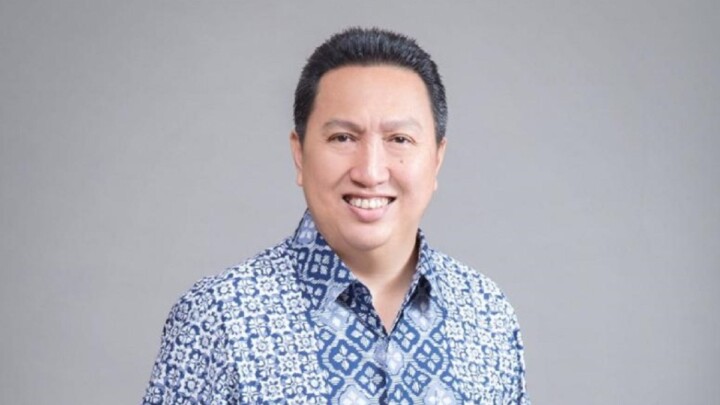
Jakarta — Businessman Garibaldi “Boy” Thohir has made further investments in Indonesia’s capital market by buying shares in several listed companies linked to his portfolio. The purchases span the energy and industrial sectors and also highlight investor interest in opportunities in digital infrastructure.
On 19 October 2026, PT Trinugraha Thohir, an investment company affiliated with Boy Thohir, bought 2.252 million shares in PT ESSA Industries Indonesia Tbk. (ESSA), 470,000 shares in PT Alamtri Resources Indonesia Tbk. (ADRO), and 102,600 shares in PT Adaro Andalan Indonesia Tbk. (AADI).
According to a Bisnis.com report on 20 October 2026, Boy said the transactions were part of a long-term investment strategy, taking into account the companies’ fundamentals and share valuations.
The purchases came as Indonesia’s stock market faced pressure following an announcement by Morgan Stanley Capital International (MSCI) that it was consulting on changes to the classification of the Indonesian equity market. Amid the volatility, purchases by major investors are noteworthy, although they do not in themselves guarantee a rise in share prices.
ADRO, AADI and ESSA have different business profiles, even though all are linked to the energy and industrial sectors.
ADRO, now known as PT Alamtri Resources Indonesia Tbk., has a long history in mining and energy. Changes to its business structure and the separation of its coal operations mean investors need to assess the company’s portfolio based on its current activities, rather than the group’s history alone.
AADI, meanwhile, operates in coal mining through its Adaro Andalan Indonesia business. Its performance is sensitive to coal prices, production volumes, operating costs, and domestic and export demand.
ESSA’s businesses include gas processing and the production of LPG and ammonia. Its performance is driven by factors different from those affecting coal miners, including gas feedstock prices, demand for industrial products, production efficiency, and conditions in the fertiliser and petrochemical markets.
These differences show that investing in several companies linked to the same businessman does not necessarily mean taking on one uniform type of risk.
Company performance is a consideration
First-half 2026 results showed that ADRO recorded net profit of about Rp5.32 trillion, up 87 per cent from the same period a year earlier. ESSA also reported net profit attributable to owners of the parent of US$30.2 million, roughly double the figure for the corresponding period last year.
These figures provide some fundamental context for the share transactions in October. However, past performance does not guarantee the same results in the following half-year.
Investors still need to assess financial statements alongside commodity-price movements, cost structures, capital expenditure requirements, cash flow and share valuations. Even companies reporting profit growth can see their share prices fall if market expectations change or if the price has already factored in strong prospects.
For that reason, transactions by major shareholders should be treated as an additional piece of information, not as a replacement for fundamental analysis.
Digital infrastructure as a diversification play
Boy Thohir’s interest in the technology sector is also reflected in his investment in PT NexAI Digital Infrastruktur Tbk. (MGLV).
In September 2026, Boy bought 30 million MGLV shares as the company was shifting its business focus towards digital infrastructure and data centres. According to a disclosure reported by Antaran.id on 10 September 2026, the purchase represented about 1.57 per cent of the company’s issued and fully paid-up shares.
Before the transaction, interests affiliated with Boy through PT Trinugraha Thohir and PT Trinugraha Thohir Harmoni were recorded at 2.25 per cent and 4.86 per cent, respectively, in MGLV.
In his comments, Boy highlighted growing demand for data centres driven by cloud computing, artificial intelligence and digital transformation. He said technology infrastructure would be an important part of future economic needs.
The investment illustrates the differences between the established energy business and digital infrastructure, which requires technological capacity, networks and capital investment to support demand growth.
However, a shift in business focus towards data centres does not automatically guarantee success. Investors still need to examine capital expenditure plans, funding sources, operating capacity, customer contracts and the company’s ability to generate cash flow.
What does this mean for businesses?
Additional investment in energy companies shows that resource-based sectors remain on investors’ radar, even as they face commodity-price fluctuations and changes in energy policy.
At the same time, the investment in MGLV signals interest in infrastructure supporting the digital economy. Data centres could benefit from growth in cloud services and artificial intelligence, but that opportunity depends on companies’ ability to provide reliable facilities and meet customer needs.
From an economic perspective, investment in listed companies can support business financing and development. However, buying shares on the secondary market does not always provide fresh capital directly to the issuing company. The effect on business expansion depends on the type of transaction, how the funds are used and the company’s financing structure.
This distinction matters: share trading should not be confused with new investment that directly funds construction or increases production capacity.
Following major investors is not enough
Transactions by major investors often attract market attention because they may indicate shifts in capital allocation. But information about a share purchase does not reveal the full investment rationale, including the average purchase price, investment horizon, liquidity needs and the risks of the portfolio as a whole.
Retail investors also have different financial circumstances and risk tolerances. A share bought by a businessman may not suit another investor’s objectives, particularly if its price has moved since the transaction was announced.
Changes in share ownership should therefore be a starting point for examining a company’s business, not the sole reason for making an investment decision.
Boy Thohir’s investment activity shows how capital can be allocated across sectors with different characteristics, from energy and industry to digital infrastructure. The next challenge for each company is to turn market opportunities into sustainable growth in revenue, cash flow and economic value.
Source: jawawa.id (https://jawawa.id/newsitem/boy-thohir-expands-investments-from-energy-to-digital-infrastructure-1793004645)
Originally published by beritakota.id (https://beritakota.id/boy-thohir-perluas-investasi-dari-energi-hingga-infrastruktur-digital/), translated from Indonesian