
Boy from Boyolali Finds Vulnerability in NASA's Cybersecurity System, Receives Award
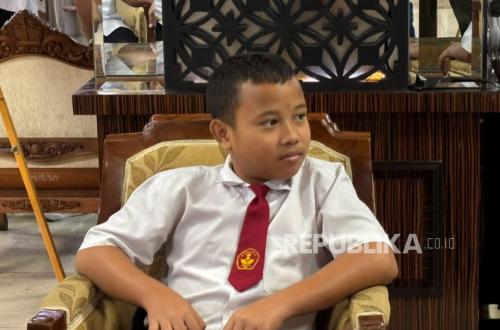
As the world’s most advanced space agency, NASA might reasonably be expected to have a formidable information technology security system. Who would have thought that a primary schoolboy from Boyolali could breach that system armed with nothing more than a laptop and artificial intelligence guidance.
The boy is Ibrahim Al Abrar, a pupil at SDN 3 Genengsari in Kemusu Sub-district, Boyolali Regency, Central Java. Ibra, now 12 years old and in the sixth year at SDN 3 Genengsari, said his first attempt to find a gap in NASA’s cyber security system was made in April 2026.
At the time, he became interested after a friend in his IT community, a junior high school pupil, failed to detect a vulnerability in NASA’s system. Ibra then read the instructions published by NASA for detecting gaps in their cyber security system.
“It’s called broken link hijacking, where the link is dead, so I can take it over and use it for phishing using NASA’s name,” Ibra said.
In the process of finding the gap in NASA’s cyber security system, Ibra used only a simple laptop, assisted by the artificial intelligence platform Deepseek and YouTube tutorial videos.
Ibrahim has been interested in computer programming since the fourth year of primary school. Through his diligent self-taught study of the subject, Ibrahim, or Ibra as he is usually called, was rewarded by NASA after discovering the flaw in the US space agency’s cyber security system.
Ibra admitted that in his early days learning computer programming, he was helped by his father, Aminudin, a computer and network engineering teacher at SMKN Kemusu.
According to Ibra, his father fully supports his interest in the world of computers and cyber security. “My ambition is to become a cyber security professional,” Ibra said confidently.
NASA was fortunate that Ibra did not exploit the vulnerability in their computer system. Instead, he reported it to NASA.
He submitted the report three times, one of which was rejected. Another was described by NASA as a duplicate because it had already been reported by someone else, while the last remained pending. Only on the fourth attempt did NASA accept Ibra’s report, responding by sending him a letter of appreciation. “It took six days to find the gap. I checked more than 200 links,” Ibra said.
“When I received the letter from NASA, I was shocked, I couldn’t believe it,” said Ibra, speaking shortly before attending a meeting with the Governor of Central Java, Ahmad Luthfi, at his office in Semarang on Wednesday (29 July 2026).