
Borobudur Joins Global Digital Heritage Preservation Project ETERNAL
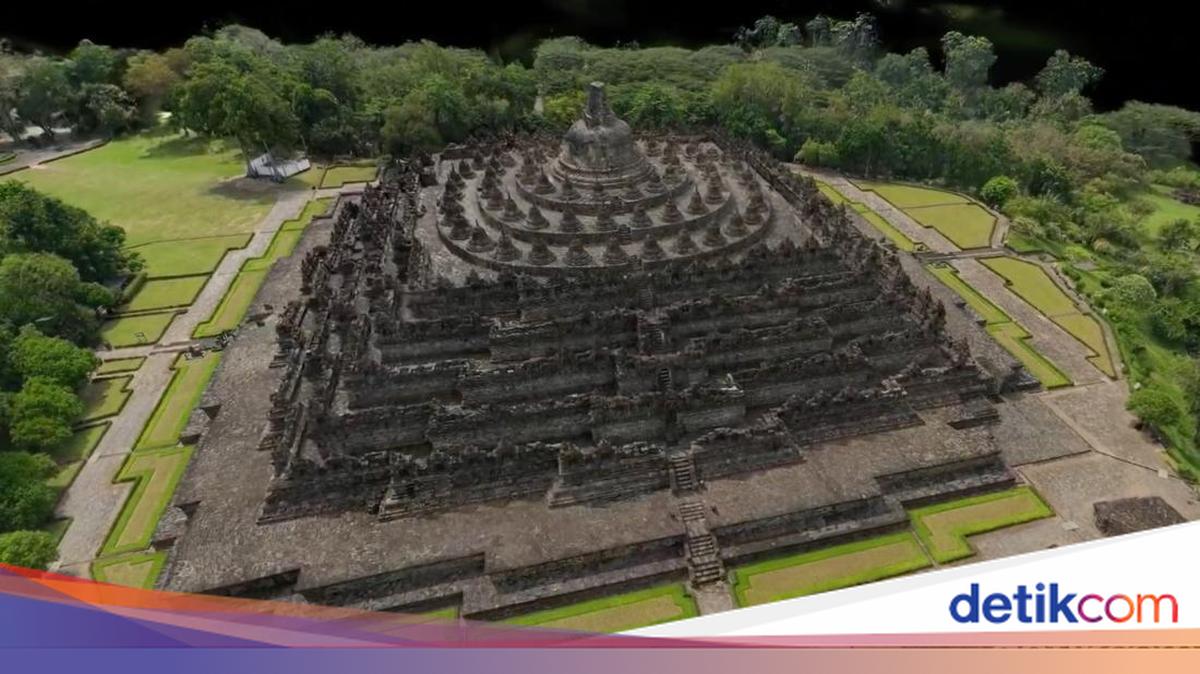
Borobudur has officially joined Project ETERNAL, a global digital heritage preservation initiative spearheaded by Antigravity and Insta360. The project documents Borobudur using next-generation 3D technology to create an immersive digital archive of its cultural spaces.
Borobudur serves as a significant representation of Asian civilisation and a source of Indonesian cultural pride within this global initiative. Previously, Project ETERNAL documented historical sites such as Pompeii and Civita di Bagnoregio in Italy.
During documentation, the team employed 3D Gaussian Splatting (3DGS) technology and the Antigravity A1, the world’s first 360° drone with 8K recording capabilities for spatial capture.
This technology enables historical sites to be recorded as detailed, interactive three-dimensional digital spaces that can be virtually explored. The approach ensures Borobudur’s spatial memory is documented and preserved across generations.
Cultural Preservation in the Era of Spatial Computing
The selection of Borobudur holds significant meaning as it is not merely a tourist destination but a symbol of Indonesia’s globally recognised civilisation.
“Borobudur is more than just a historical structure. This site is part of Indonesia’s cultural identity and a testament to the remarkable Nusantara civilisation. Through Project ETERNAL, we hope such heritage can continue to be preserved digitally and passed on to future generations,” said Haris, a representative of the Borobudur management.
As a UNESCO World Heritage site, Borobudur faces preservation challenges, including weathering and volcanic activity. At the same time, tourism regulations are being tightened to protect the temple’s structural integrity.
In response, Project ETERNAL aims to document and reconstruct Borobudur along with its surrounding cultural life using 360° drone technology and 3D Gaussian Splatting. The technology is expected to support long-term preservation while creating a digital archive accessible to a wider public.
Gaussian Splatting technology is increasingly used in spatial computing development due to its ability to produce high-detail digital models with lighter real-time rendering compared to traditional 3D methods.
During documentation, the team utilised the Antigravity A1, a lightweight 360° drone designed for spatial capture and immersive imaging. The 360° panoramic technology allows for more efficient data collection for large-scale digital reconstruction.
“With advancements in 360° drones and Gaussian Splatting technology, we believe this breakthrough can help document and experience historical spaces more authentically,” said Sissi Chen, Japac Antigravity Marketing Manager.
Project ETERNAL Challenge
As part of the initiative, Project ETERNAL has launched the Project ETERNAL Challenge, inviting creators from around the world to document spaces and stories using immersive visual approaches.
The competition features three main categories: Living Spaces, Cultural Spaces, and Creative Spaces, with total prizes amounting to hundreds of millions of rupiah.
Submissions will be accepted until 24 June 2026, with winners announced on 1 July 2026.