
Boredom with Archives Leads Foreigner to 100 Gold Bars in Indonesian Waters
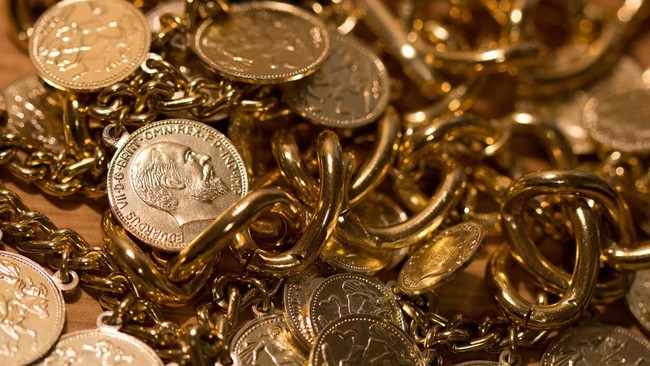
Wealth in the form of treasure scattered across various regions of Indonesia often sparks curiosity. Many have managed to achieve significant profits through such search activities.
One of the most famous treasure hunters is Michael Hatcher, a man whose name became world-renowned due to his deep-sea expeditions. Born in 1940, Hatcher pursued the rare profession of maritime explorer, a job that ultimately led him to immense success and wealth.
Hatcher’s career as a treasure hunter began in 1975. While browsing the Dutch National Archives, he read Dutch records regarding shipwrecks from the VOC (Dutch East India Company) and the Dutch East Indies government. He realised that sunken ships left behind more than just skeletons, but also precious goods at the seabed, such as gold bars, valuable vases, and silver. He understood that if these items could be recovered and sold, they would be worth a fortune. From then on, he began mapping Indonesian regions where ships were likely to have run aground.
However, retrieving treasure is no easy feat. Hatcher had to descend to depths of more than 50 metres, where the risks increased with depth due to limited visibility and strong currents.
In 1986, Hatcher succeeded. He discovered the VOC ship, the Geldermalsen, which sank in the waters of Karang Heliputan, Riau. He managed to recover 100 gold bars and 20,000 pieces of Chinese porcelain (other sources suggest 225 gold bars and 160,000 ceramics) from the Ming and Qing Dynastries.
This operation was conducted illegally and secretly to avoid government detection. All the items were auctioned at Christie’s in Amsterdam, selling for 15 million US dollars (equivalent to approximately Rp 210 billion), according to Widiati in ‘Ancient Ceramics from the Seabed of Indonesian Waters’.
He argued that the venture should not have been problematic, claiming he had permission from the Dutch government, which allegedly received a 10% share of the sales. He stated to Tempo in 1986 that the Dutch government told the Indonesian government that the treasure was located in international waters, thus avoiding any disputes from the Netherlands.
Hatcher’s success and the resulting US$15 million profit inspired many Indonesians, both individuals and groups, to attempt similar feats. Conversely, this news angered the Indonesian government. President Soeharto, unaware of the massive potential for underwater treasure, felt bypassed. In the 1980s, Rp 210 billion was a substantial sum; for context, the construction cost of TMII (Taman Mini Indonesia Indah) was approximately Rp 10 billion, meaning the New Order regime could have built 20 TMII complexes with that amount.
Consequently, Soeharto issued Presidential Decree (Keppres) No. 43 of 1989 regarding the National Committee for the Recovery and Utilisation of Valuable Items from Sunken Ships. Through this regulation, Soeharto formed a team led by the Coordinating Minister for Political, Legal, and Security Affairs to hunt for treasure—a regulation that remains in effect today.
Hatcher’s success did not end there. In 1999, he successfully explored the Chinese ship, the Tek Sing, in the waters of Bangka. The ship, measuring 42x10 metres and weighing 900 tonnes, was largely intact. Before sinking in February 1822, the ship was recorded to be carrying 350,000 Chinese ceramics, thousands of iron, brass, and bronze cannons, all produced in Fujian during the 19th century.
Hatcher recovered these items and transported them to an auction in Stuttgart, Germany, in November 2000. The treasure was estimated to be worth Rp 500 billion, making it the largest shipwreck treasure discovery in history.
According to archives from Detik.com, the man dubbed ‘The Wreck Salvage King’ attempted another hunt. He was reportedly detected in the Subang waters attempting to dredge Ming Dynasty treasure worth US$ 200 million. However, this time, the government successfully intervened to prevent it.
Source: jawawa.id (https://jawawa.id/newsitem/boredom-with-archives-leads-foreigner-to-100-gold-bars-in-indonesian-waters-1781423467)
Originally published by CNBC Indonesia (https://www.cnbcindonesia.com/news/20260614105854-4-742668/iseng-baca-arsip-bule-ini-dapat-100-batang-emas-di-laut-ri), translated from Indonesian