
Border School: A Beacon of Hope for Children on Indonesia's Frontier
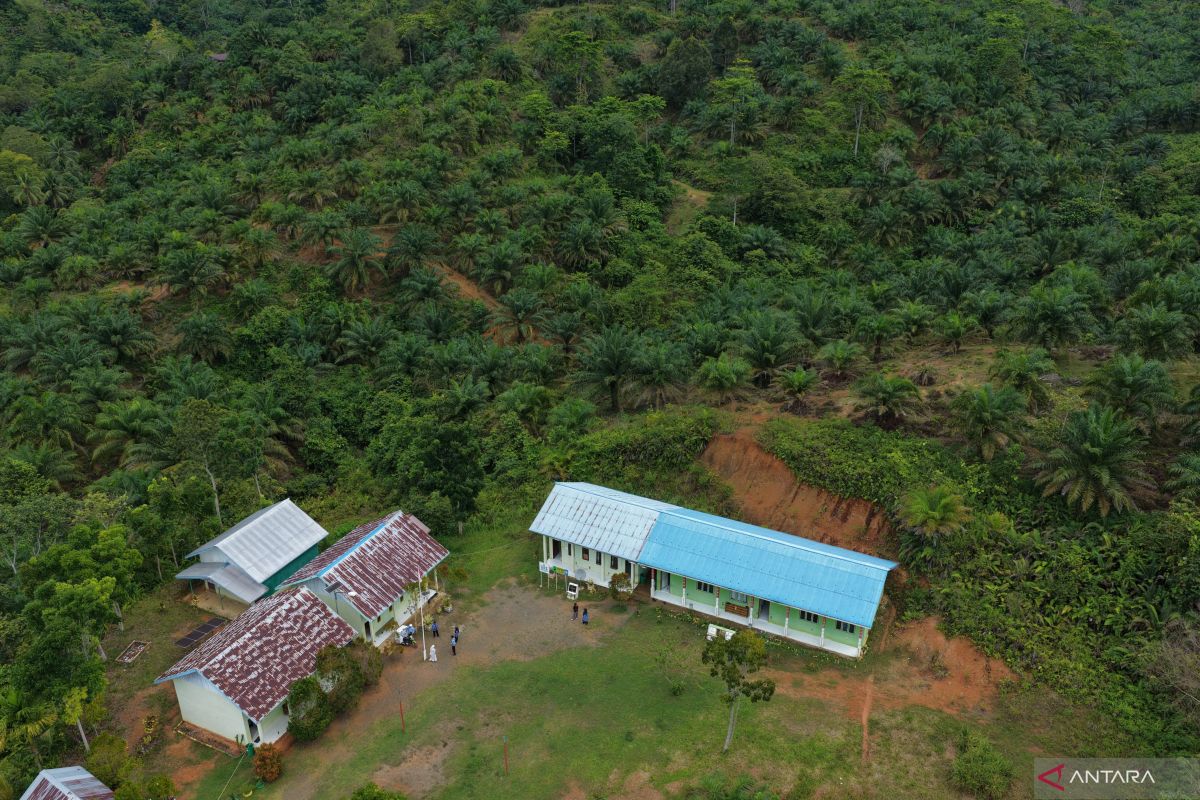
Not many would imagine that amidst dense palm oil forests, rugged roads, and far from residential areas, stands a modest school serving as a place of learning for 37 madrasah ibtidaiyah (MI) students, equivalent to primary school level. The school is named Madrasah Ibtidaiyah Darul Furqan, but it is better known as the Border School. The nickname stuck because of its location on the edge of the Indonesia–Malaysia border, precisely in Sungai Limau Village, Sebatik Island, Nunukan Regency, North Kalimantan. The school’s journey began in 2012. Starting with a disused grocery warehouse owned by a resident, Suraidah, who works daily as a midwife, decided to open an early childhood education (PAUD) centre in Central Sebatik District. Suraidah then gathered children to learn. During conversations with her pupils, the woman originally from Sulawesi was stunned to discover that one of her students came from a village in Malaysian territory. To attend the learning sessions, the child had to walk for hours through palm oil plantations. The child was the offspring of Indonesian workers employed at plantations in Malaysia. After gathering various information, Suraidah found that many children of Indonesian migrant workers were not attending school and remained illiterate. This occurred because there were no schools specifically for Indonesian citizens in the Sebatik region of Malaysia. Through a long struggle, Suraidah eventually resolved to dedicate herself to guiding these children so they could receive an education. She offered parents the opportunity for their children to be cared for and educated during school days, free of charge. Suraidah also coordinated with the foremen of the palm oil plantations in the area. The children study and stay in the dormitory from Monday to Friday. On weekends, parents pick up their children to go home, and they return to school on Monday. The former grocery warehouse was converted into a space for both learning and living. The ground floor is used for play and study, while the upper floor serves as a residence for Suraidah and the children. In running the educational activities, the woman affectionately called Ummi is assisted by two teachers. Suraidah’s struggle did not stop there. Worried that her students would be unable to continue their education after completing PAUD, she went on to establish a madrasah ibtidaiyah and obtained an operational permit from the Ministry of Religious Affairs. For context, the Malaysian side of the Sebatik region is dominated by palm oil plantations, and the nearest town is Tawau, Sabah, which can be reached in about 15 minutes by speedboat from Sebatik.