
Boosting the Economy of Coastal Border Communities Through Fishermen's Villages
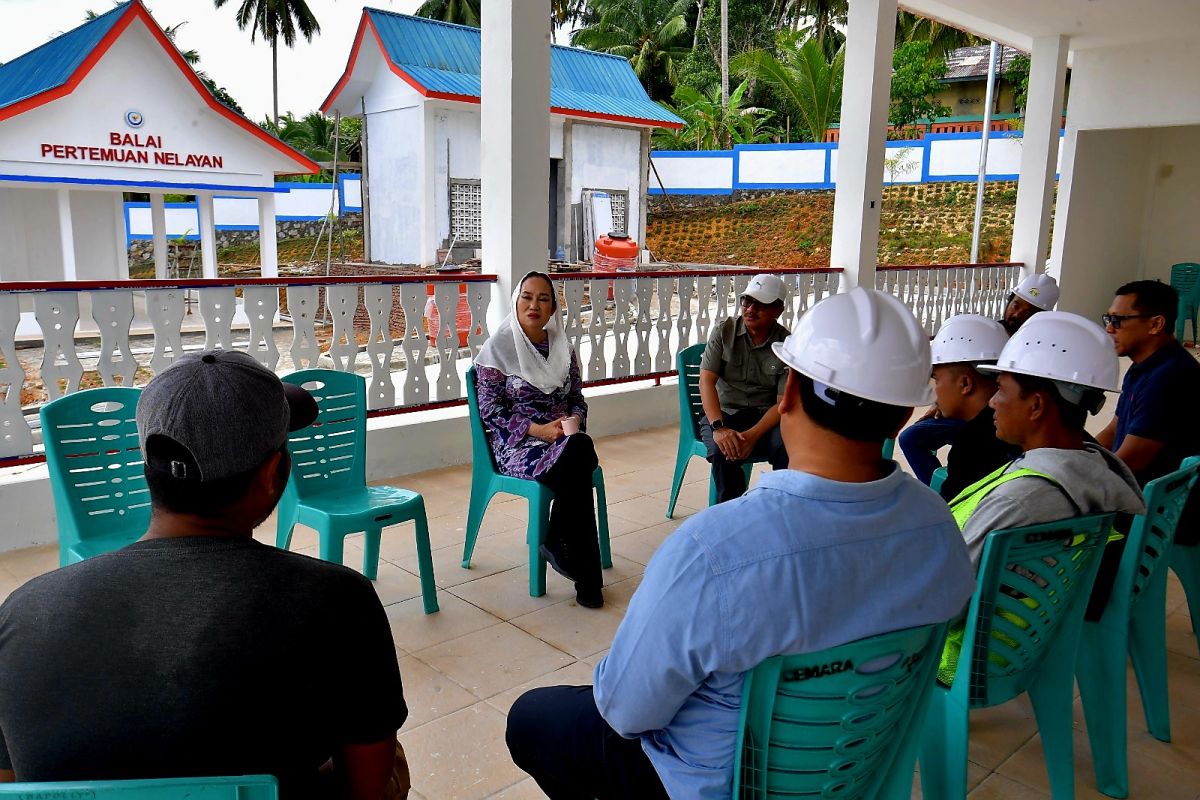
In Natuna Regency, Riau Islands Province, the sea serves as a living space, a source of livelihood, and an identity for thousands of fishing families who depend on marine resources daily. However, the substantial fisheries potential in Natuna has not fully translated into fishermen’s welfare. Limited facilities, high operational costs, and the suboptimal distribution of catches remain major challenges for coastal communities in increasing their income and standard of living. Another issue is the limited authority of the regional government to manage the sea, which hampers this district—Indonesia’s front porch bordering Malaysia and Vietnam—from fully utilising its resources. Despite this, the region is not remaining passive. In 2025 and 2026, the district is relying on central government programmes, one of which is the Kampung Nelayan Merah Putih (KNMP). For the Natuna Regency government under the leadership of Regent Cen Sui Lan and Vice Regent Jarmin, this programme represents a strategic opportunity to strengthen the economy of the fishing community. The Natuna Regency Government has proposed several locations deemed suitable for the Kampung Nelayan Merah Putih area. In 2025, out of several proposals submitted, one location was approved by the Ministry of Marine Affairs and Fisheries (KKP), namely Cemaga Utara Village in South Bunguran District. The approval was granted after the location was assessed to meet all technical, social, and readiness requirements for integrated fisheries area development. Construction in Cemaga Utara Village began in 2026 and is now nearly complete, with progress reaching 96 percent. The Natuna Regency Government is targeting the construction to be finished by the end of July 2026 so that it can be immediately utilised by the fishing community. The KNMP in Cemaga Utara is not built as an ordinary fisheries area but is designed as a Fisheries Activity Hub (HAP) that serves as an integrated service centre from the upstream to downstream sectors of the fisheries industry. In this concept, all supporting facilities are placed in one area, including an ice factory, cold storage warehouse, boat and fishing gear repair area, canteen, culinary area, and management office. Everything is designed to create efficiency in the fisheries business chain for coastal communities. The presence of these facilities is expected to reduce the operational costs of fishermen, which have been quite high. Many fishermen are forced to sell their catch at low prices because they lack adequate storage facilities to maintain fish quality. With cold storage, fish can be kept longer without quality degradation. This condition gives fishermen the flexibility to determine a more profitable time to sell, potentially increasing their income significantly. The ice factory is also a vital facility in supporting fishing activities. Previously, fishermen had to travel considerable distances to obtain ice before going to sea, which added to operational costs and reduced work time efficiency.