
Boosting Palm Oil Productivity: BPDP Intensifies Competency Training for Independent Smallholders
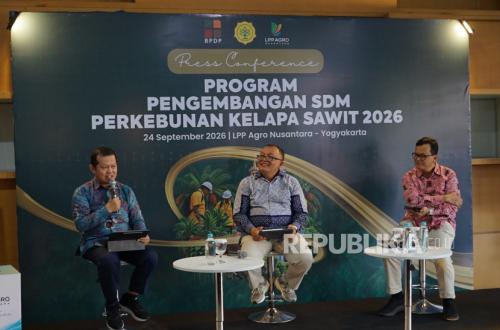
National palm oil plantation productivity still has significant room for improvement. Currently, Indonesia’s palm oil productivity averages only 3.6 tonnes per hectare, while several other palm oil producing countries are capable of reaching 4 to 5 tonnes per hectare.
This condition is one of the reasons why the Palm Oil Fund Management Agency (BPDP), in collaboration with the Directorate General of Estates of the Ministry of Agriculture, continues to implement the Palm Oil Plantation Human Resources Development Programme. This programme targets independent palm oil farmers spread across 2öss6 palm-producing provinces.
The Director of Oil Palm and Miscellaneous Palms at the Ministry of Agriculture, Iim Mucharam, stated that increasing farmer competence is a vital part of driving productivity, especially since smallholders play a massive role in the national palm oil industry.
“Palm oil is no longer viewed merely as an export commodity, but also as a strategic instrument to strengthen national energy independence. Palm oil serves not only as a driver for national food security but also as a livelihood for millions of farming families,” said Iim on Thursday (24/09/2026).
Iim noted that in 2025, national palm oil production reached approximately 51 million tonnes across an area of 16.83 million hectares. Of this total area, about 42 per cent consists of smallholder plantations. He added that one of the challenges faced by independent farmers is the implementation of Good Agricultural Practices (GAP), access to certified seeds, and understanding evolving regulations.
Therefore, the human resource development programme is not only aimed at providing technical knowledge but also serves as a link between farmers and various government programmes. Farmers are encouraged to understand opportunities such as the Palm Oil Replanting Programme (PSR) as well as obligations and sustainability certification standards like Indonesian Sustainable Palm Oil (ISPO).
“Beyond targeting knowledge, this programme acts as a bridge for farmers to stay informed about the latest issues and regulations in the palm oil business,” said Iim.
The programme targets approximately 2.6 million independent palm oil farmers managing nearly 7 million hectares of land. Capacity building is considered essential as this group forms a large part of the national palm oil ecosystem, including in facing industrial developments and the implementation of downstreaming and biodiesel policies.
“The focus is indeed on how we meet the needs for competent, innovative, and adaptive human resources. We must acknowledge that our current level of human resource development still needs improvement,” he added.
The Head of the Human Resources Fund Distribution Division of BPDP, Sudi Bawa Suwita, stated that human resource development is a long-term investment for the sustainability of the palm oil industry, both in the upstream and downstream sectors.
“The downstreaming of the palm oil industry requires the support of human resources who possess modern competence, are adaptive to technology, and understand global sustainability standards,” said Sudi.
He continued that BPDP ensures that the distribution of human resource development funds in 2026 is targeted and accountable, providing benefits for institutional capacity building as well as the standard of living for farmers and palm oil practitioners.
Human resource strengthening is also conducted through collaboration with the Ministry of Agriculture and training institutions, including LPP Agro Nusantara. Sudi stated that farmers who understand good plantation management are expected not only to increase productivity but also to be better prepared for digitalisation, sustainability demands, and global supply chain competition.
“Farmers equipped with good agricultural practices and downstream management insights will not only be able to increase productivity but also be ready to compete in the global supply chain. We know the challenges facing the palm oil industry ahead are increasingly complex, ranging from sustainability issues and international market regulations to digitalisation demands. To answer these challenges, the key lies in collaboration,” he said.
Meanwhile, the Director of LPP Agro Nusantara, Pranoto Hadi Raharjo, stated that human resource development should not stop at knowledge transfer through training. Programmes must be able to encourage a change in the working behaviour of farmers so that the knowledge gained is truly applied in the field.
“LPP Agro Nusantara understands the grand vision of this programme, which is not merely training to increase knowledge. This is a step that we hope will bring a significant impact to farmers,” said Pranoto.
The human resource development programme includes education, training, mentoring, and facilitation targeting extension officers, mentors, workers, civil servants, farmer institutional leaders, and the wider community related to the palm oil sector. In the last three years, LPP Agro Nusantara has organised 211 training classes with a total of 6,439 participants. In addition to training, human resource development is also carried out through the Palm Oil Human Resource Scholarship programme.
The Ministry of Agriculture, together with BPDP and LPP Agro Nusantara, will distribute scholarships to 5,000 students across 42 universities in 2026. The primary target is the younger generation from palm oil plantation hubs, particularly in Sumatra and Kalimantan.
Pranoto emphasised that the programme’s achievements are not measured solely by the number of participants. Furthermore, the programme is directed so that the knowledge and skills obtained can transform the way farmers work in the field.
“This is not just about training to add knowledge. This is a step that we hope will bring a significant impact to farmers,” concluded Pranoto.