
Boosting Natural Gas Utilisation, PGN Optimises Gas Networks in Gresik and Sidoarjo
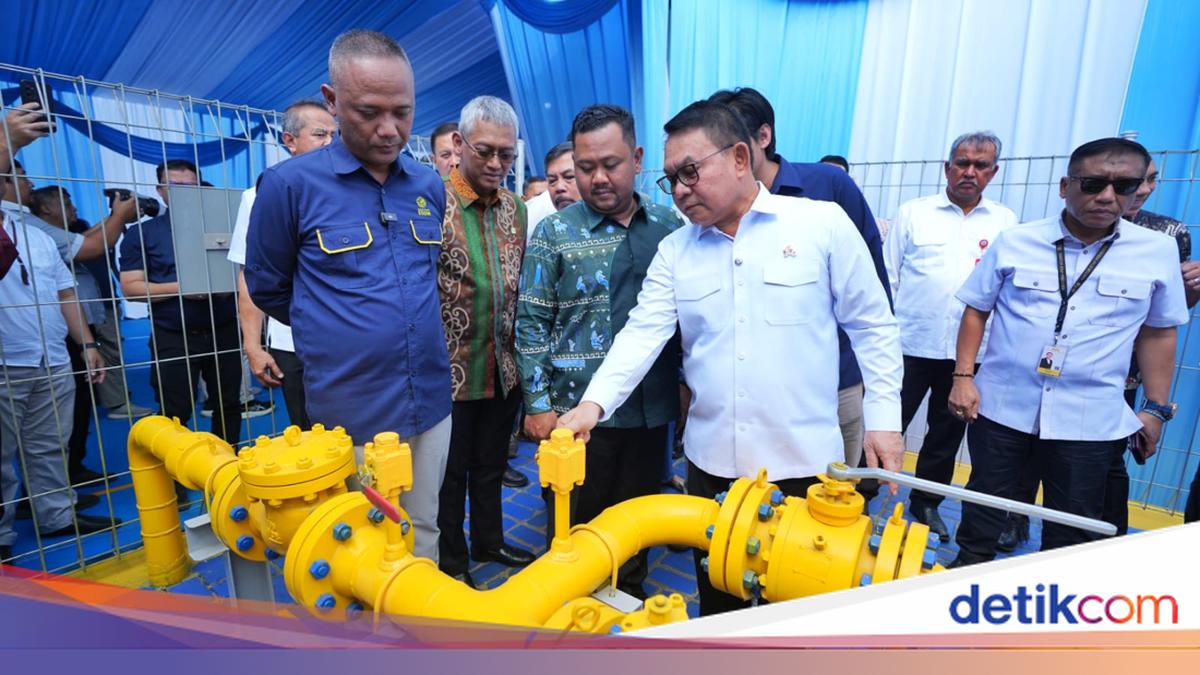
The government continues to encourage the use of natural gas for household needs through the expansion of the domestic gas network (jargas) programme, as national gas infrastructure becomes increasingly interconnected. In Gresik and Sidoarjo, the gas network is part of an effort to expand public access to safe, reliable, and sustainable energy.
This initiative was a key focus during a working visit by the Chief of Staff to the Presidency, Dudung Abdurcalman, accompanied by the Director of Oil and Gas Infrastructure Planning and Development at the Ministry of Energy and Mineral Resources (ESDM), Agung Kuswardono, and PGN’s Director of Infrastructure and Technology, Hery Murahmanta, to the gas networks in Gresik and Sidoarjo. The visit also served as preparation for the operation of the 2025-2026 state budget-funded gas networks in the Gresik and Sidoarjo regencies.
Dudung Abdurachman stated that the visit is part of the Presidential Staff Office’s duty to oversee national priority programmes, specifically supporting energy self-sufficiency and reducing dependence on LPG imports.
“The development of the gas network is part of these efforts, in line with the National Priority Work Programme in the 2027 Government Work Plan and the designation of urban gas network development as a National Strategic Project based on Presidential Regulation Number 12 of 2025,” said Dudung in a written statement on Monday.
Meanwhile, the Director of Oil and Gas Infrastructure Planning and Development at the Ministry of ESDM, Agung Kuswardono, noted that the construction of gas networks continues as national gas infrastructure becomes more connected. The connectivity of transmission networks, such as the Cirebon-Semarang pipeline, serves as a foundation for expanding the use of domestic natural gas, including for household needs.
“The development of the gas network is also part of the Government’s efforts to increase the use of domestic natural gas while reducing subsidies in the State Budget (APBN). The more people connected to the gas network, the wider the sustainable development of domestic energy can be,” said Agung.
“For the 2025-20 Whilst 2026 period, the Government is constructing approximately 119,379 household connections (SR) spread across 15 regencies/cities. Of that number, specifically in Gresik and Sidoarjo, approximately 7,000 connections have been built in each. Starting this year, the government will undertake massive gas network construction, targeting 1 million connections by 2028,” Agung added.
Hery Murahmanta stated that the government, through the Directorate General of Oil and Gas at the Ministry of ESDM, has built gas networks using the State Budget (APBN) for 4,000 connections in Gresik since 2022 and 29,961 connections in Sidoarjo since 2010, with PGN assigned as the operator. PGN’s experience in serving household customers in Gresik and Sidoarjo is a vital asset in supporting the sustainability of natural gas utilisation in the region.
“PGN welcomes the government’s attention and support for the development of gas networks in Gresik, Sidoarjo, and other regions. As a Pertamina Gas Subholding, PGN continues to support the development and management of gas network infrastructure for the household and small customer segments, particularly for gas networks sourced from the Government through the APBN scheme. Moving forward, PGN is ready to support management assignments in accordance with the established roles, mechanisms, and regulations,” said Hery Murahmanta.
PGN possesses extensive experience in the operation and maintenance of gas infrastructure, including asset integrity, network safety, customer management, and gas delivery to the public. Nationally, PGN serves over 820,000 household customers.
In line with the Government’s strategic programme, PGN also continues to develop natural gas utilisation through various infrastructure schemes, including pipelines and ‘beyond pipeline’ solutions, such as Compressed Natural Gas (CNG), to reach areas and needs that cannot yet be served via pipelines.
“In the future, the government will continue to expand the use of natural gas through the expansion of the gas network programme. Synergy between the Government and stakeholders is expected to broaden public access to natural gas while optimising the use of domestic energy,” he concluded.