
Boosting Agricultural Productivity: Coordinating Minister Zulhas Reveals Government Measures
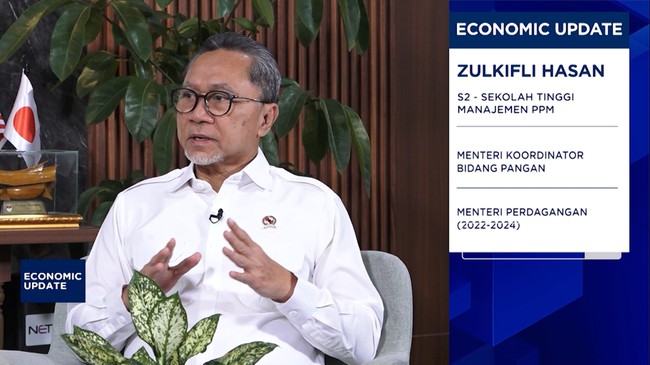
The government, through the Coordinating Ministry for Food, is continuing efforts to improve the management of subsidised fertiliser to make it more accessible to farmers. At the same time, the government is also highlighting the importance of improving irrigation so that agricultural productivity can increase. Coordinating Minister for Food Zulkifli Hasan, known as Zulhas, stated that the realisation of subsidised fertiliser uptake reached 9.55 million tonnes, an increase of around 58% in 2025. With improvements to fertiliser regulations and distribution, agricultural productivity was able to increase by approximately 7%-8%. Beyond fertiliser, the government is also working to fix the irrigation network, which has remained imperfect. To accelerate these irrigation network repairs, the projects have been taken over directly by the government through the issuance of a new regulation. “The President immediately issued a Presidential Regulation; the Public Works budget of nearly Rp20 trillion was redirected to complete irrigation. However, irrigation takes time, so in 2025 most of the irrigation will not yet be finished,” he said during the CNBC Indonesia Economic Update 2026. Zulhas further explained that the government has also adjusted the policy on grain purchasing. Previously, grain from farmers was only priced at around Rp4,000 per kilogram. This time, the government decided to set the reference purchase price for grain at Rp6,500 per kilogram without any moisture content conditions, which had previously often been a loophole for price manipulation at the farmer level. “We decided to raise the grain price to Rp6,500 for any quality. No notes about 14-18% moisture content. The point is, at harvest, buy it at Rp6,500 per kg, full stop,” Zulhas said. According to him, this policy has successfully increased farmers’ interest in planting rice, as the profits obtained have become better. The combination of fertiliser and grain pricing policies has provided a significant production boost. This was also supported by friendly weather conditions and the use of water pumps to anticipate the risk of drought. As a result, Indonesia recorded a rice surplus of up to 4.2 million tonnes in 2025, meaning it no longer imports rice. Looking ahead, the government is preparing a number of measures to ensure that rice self-sufficiency remains sustainable. These include a programme to create new paddy fields in several regions such as Merauke, Central Kalimantan, and South Sumatra, protecting sustainable agricultural land from conversion, and developing superior rice varieties together with the National Research and Innovation Agency. These various measures are expected to maintain national food security amidst a continuously growing population.