
Boosting Agricultural Productivity and Downstreaming in Lamongan
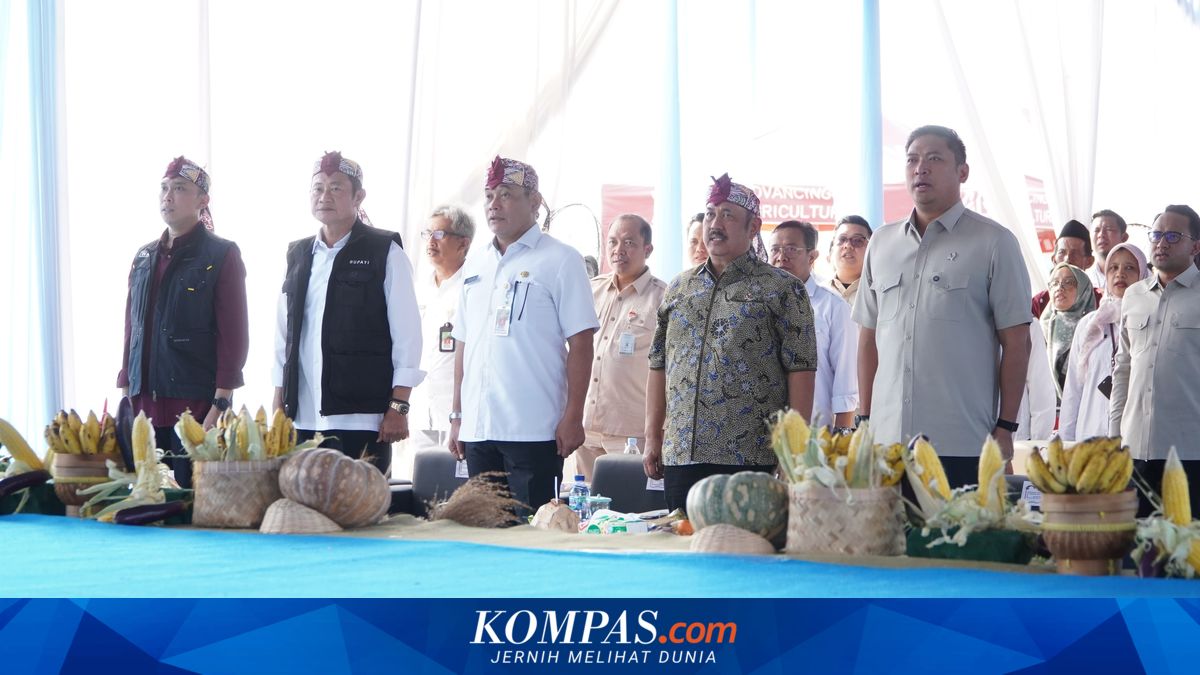
Minister of National Development Planning (PPN)/Head of the National Development Planning Agency (Bappenas) Rachmat Pambudy outlined President Prabowo’s policy on agricultural downstreaming during the Rice Planting Movement event in Kebalan Kulon Village, Sekaran District, on Saturday, 30 May 2026. He was accompanied by Deputy Minister of Agriculture Sudaryono, Lamongan Regent Yuhronur Efendi, and Vice Regent Dirham Akbar Aksara.
Pambudy stated, ‘The President has directed downstreaming; Regent, the rice production is good. I am pleased that rice planting now uses seedling trays rather than directly in the fields, with transplanters, drones for fertilisation, and combine harvesters for harvesting. After harvest, the rice is properly selected, stored, and distributed through our cooperatives. Thus, downstreaming benefits not only downstream workers but also paddy farmers.’
He added that Lamongan excels in multiple areas, not just in corn and rice production but also in downstream processing. ‘Lamongan is not only strong in corn and rice, but also in downstreaming,’ he said.
Lamongan, despite limited paddy field area, has become East Java’s largest food hub and surpassed the central government’s 2025 planting area target. Deputy Minister Sudaryono stated that Lamongan deserves recognition and presented agricultural machinery, including combine harvesters, tractors, and drones, as rewards. He emphasised that Lamongan farmers’ spirit should serve as a model for other regions to achieve food self-sufficiency.
Sudaryono added that expanding planting areas is key to abundant harvests. ‘Essentially, what we harvest is what we plant; the key to increasing harvests is simply planting more, with no alternative. To plant more, all necessities must be met—water, fertiliser, agricultural machinery—and Insha’Allah, planting and harvests will increase,’ he said.
Regent Yuhronur Efendi stated Lamongan remains committed to meeting the government’s 2026 planting target of 233,000 hectares by maximising available resources and infrastructure support. ‘In response to seasonal changes, we will maximise existing irrigation systems, utilising pump assistance and continuing improvements and normalisation of irrigation channels,’ he said. ‘The government continues to improve seed quality and planting patterns, transforming planting, fertilisation, and pest control using modern technology.’