
Booming Chip Turns to Disaster: Citizens Skip Meals to Cover Investment Losses
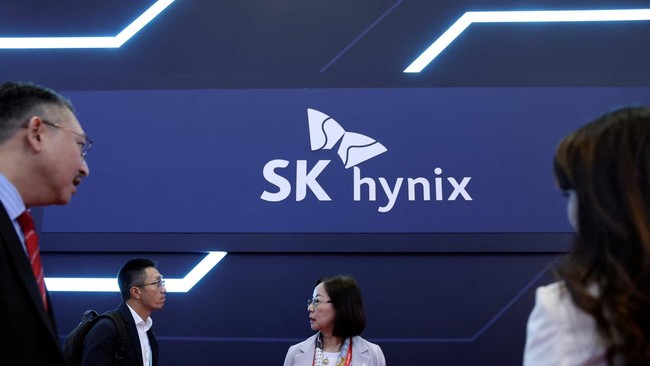
The South Korean stock market, once a global darling thanks to the wave of artificial intelligence (AI) euphoria, has now turned into a nightmare for millions of retail investors. The Kospi index, which had previously soared more than threefold, collapsed by around 40% in just six weeks during June-July 2026, wiping out approximately $2.5 trillion in market wealth.
This fall has hit individual investors hard. They are nicknamed ‘ants’ because they are small individually but powerful collectively. They account for 60-70% of daily Kospi transaction volume and largely placed great trust in two giant memory chip producers, Samsung Electronics and SK Hynix.
One victim is a 30-year-old English teacher who lost up to $19,000 and is now forced to cut daily spending, including reducing meal portions. A similar story was experienced by a 44-year-old sound engineer who lost $7,200 within a week after investing half of his severance pay in semiconductor stocks.
The surge in volatility was triggered by the launch of South Korea’s first single-stock leveraged ETFs in May 2026. These products allow investors to multiply bets on Samsung and SK Hynix using debt instruments and derivatives - if the stock rises 5%, the ETF can rise 10%, but if it falls 5%, the loss also doubles to 10%.
When demand for AI chips began to be questioned and competition from China became increasingly tight, the bubble burst. Many investors who had already joined the FOMO (fear of missing out) wave were left biting their fingers. One of them is a 30-year-old accountant whose investment value plunged 69% within weeks after entering through a leveraged ETF.
The Kospi had soared to breach 9,000 points in June 2026, or three times its 2025 level, before eventually going into freefall. Throughout 2025, the Kospi was even recorded as the best-performing stock index in the world with a 76% gain, pushing South Korea up to the position of the world’s fifth-largest stock exchange, surpassing the United Kingdom and France.
President Lee Jae Myung, who claims to be an ‘ant’ investor and had promised the Kospi would breach 5,000 points by 2030, now faces political pressure. His public approval rating has slumped to its lowest level since taking office, at 43.3%, amid accusations that his government’s regulatory easing helped trigger this market disaster.
The impact has even spread to the United States. An AI-based hedge fund was reported to have lost around 67% in July 2026 due to large exposure to SK Hynix shares, and was forced to liquidate most of its stock portfolio to repay debts to creditors.
The popularity of Korean chip stocks had also attracted US investors, especially after Interactive Brokers became the first US broker to open direct trading access to Korean stocks in May 2026. A new ETF with the ticker DRAM focusing on memory chip producers was even recorded as the most successful ETF launch in US history in terms of raising new investor funds.
Responding to this turmoil, South Korean authorities took a number of emergency measures. Approval of new single-stock leveraged products was temporarily halted, the minimum capital requirement for trading this type of ETF was tripled to around $21,000, and mandatory training for retail investors was expanded.
A number of investor groups even sent funeral wreaths to parliament as a symbolic protest over the large losses they suffered. The head of the Korea Stockholders’ Alliance, an organisation representing around 14 million retail investors in South Korea, called for single-stock leveraged ETFs to be abolished entirely and for the government to prepare rescue measures for victims.
Nevertheless, not all parties are pessimistic. The Head of Asia Division at Federated Hermes assessed that the earnings fundamentals of Korean memory chip companies will remain strong over the next two years, so investors have the potential to recover most of their capital in the long term.
The Kospi 200 volatility index itself has declined from its peak of 86.18 on 30 July to 56.76 this week, indicating that market turmoil is beginning to subside although retail investor confidence remains fragile. The exchange, once nicknamed ‘Rollerkospi’, has now become a stark reminder of the risks of excessive AI euphoria.
Source: jawawa.id (https://jawawa.id/newsitem/booming-chip-turns-to-disaster-citizens-skip-meals-to-cover-investment-losses-1787712701)
Originally published by CNBC Indonesia (https://www.cnbcindonesia.com/market/20260826084117-17-762217/booming-chipjadi-petakawarga-skip-makan-demi-nutup-rugi-investasi), translated from Indonesian