
Bontang City Ensures All Eid al-Adha Sacrificial Animals Are Healthy and Safe
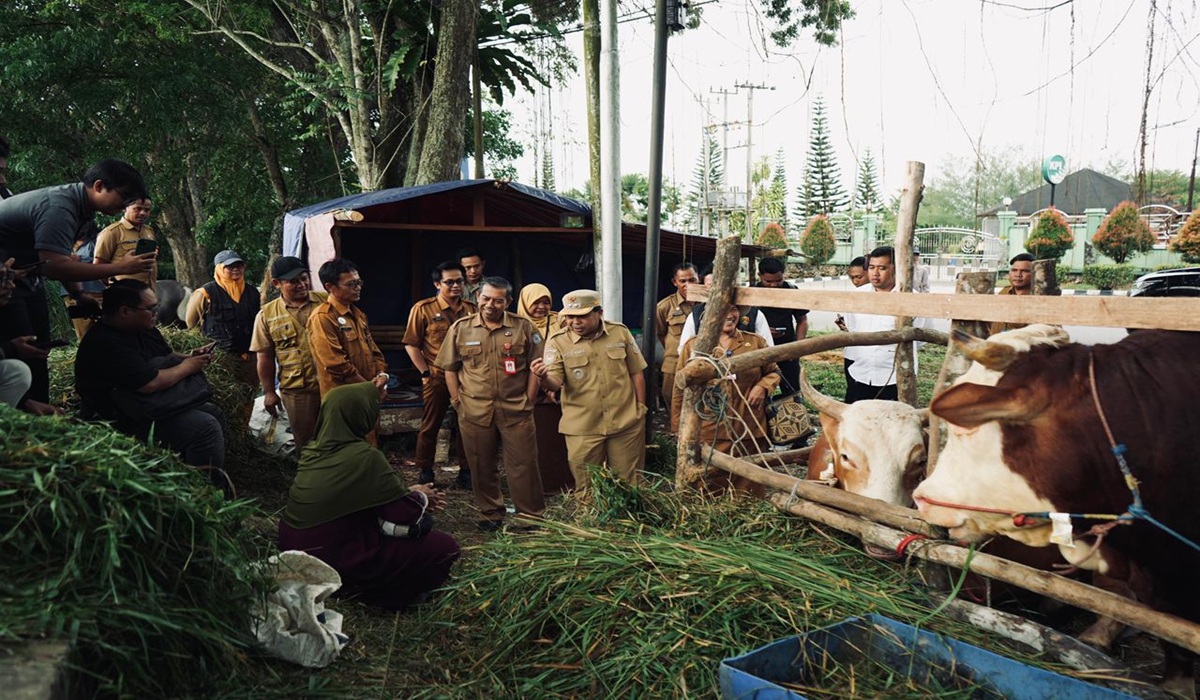
Leading up to Eid al-Adha 1447 Hijriah, sales of Eid al-Adha sacrificial animals in Bontang City have increased. Livestock stalls are busier as public demand for these animals rises. To ensure all sold animals are healthy and fit for sacrifice, Deputy Mayor Agus Haris conducted inspections at various livestock sales locations in Bontang, East Kalimantan.
The inspection, centred at a temporary cattle sales stall on Jalan Pupuk Raya, saw Haris accompanied by the Head of the City’s Food Security, Fisheries, and Agriculture Department (DKP3), Ahmad Aznem, and relevant officials monitoring animal conditions on-site.
Thorough checks were carried out, including animal health, feed availability, pen cleanliness, and stock readiness ahead of peak pre-Eid purchases.
“We are ensuring that all Eid al-Adha sacrificial animals sold in Bontang are healthy, safe, and sufficient to meet public demand,” Haris stated on Monday (25 May).
According to DKP3 data, current stock stands at 1,502 cattle, 1,522 goats, and 97 sheep — deemed adequate for this year’s Eid al-Adha.
Most goats and sheep are sourced from East Java. Despite being from outside the region, Bontang City Government ensures all livestock undergo strict health inspections before sale.
The city mandates all sacrificial animals undergo health protocols, including vaccinations, veterinary checks, and quarantine periods before reaching consumers. These steps guarantee the animals are disease-free and safe for consumption.
Bontang is currently free from contagious animal diseases, allowing unrestricted import of cattle from other regions. This situation benefits traders and residents seeking quality sacrificial animals.
During the visit, the city government engaged in dialogue with local farmers and traders. Haris noted the livestock sector continues to show positive development, with ongoing programmes creating new business opportunities and strengthening collaboration between farmers and traders. This has not only benefited livestock businesses but also contributed to improved community welfare. (RO/H-4)