
Bonnie Triyana Invites Gen Z to Revive Discussion Spaces Through Marhaenism Book Review
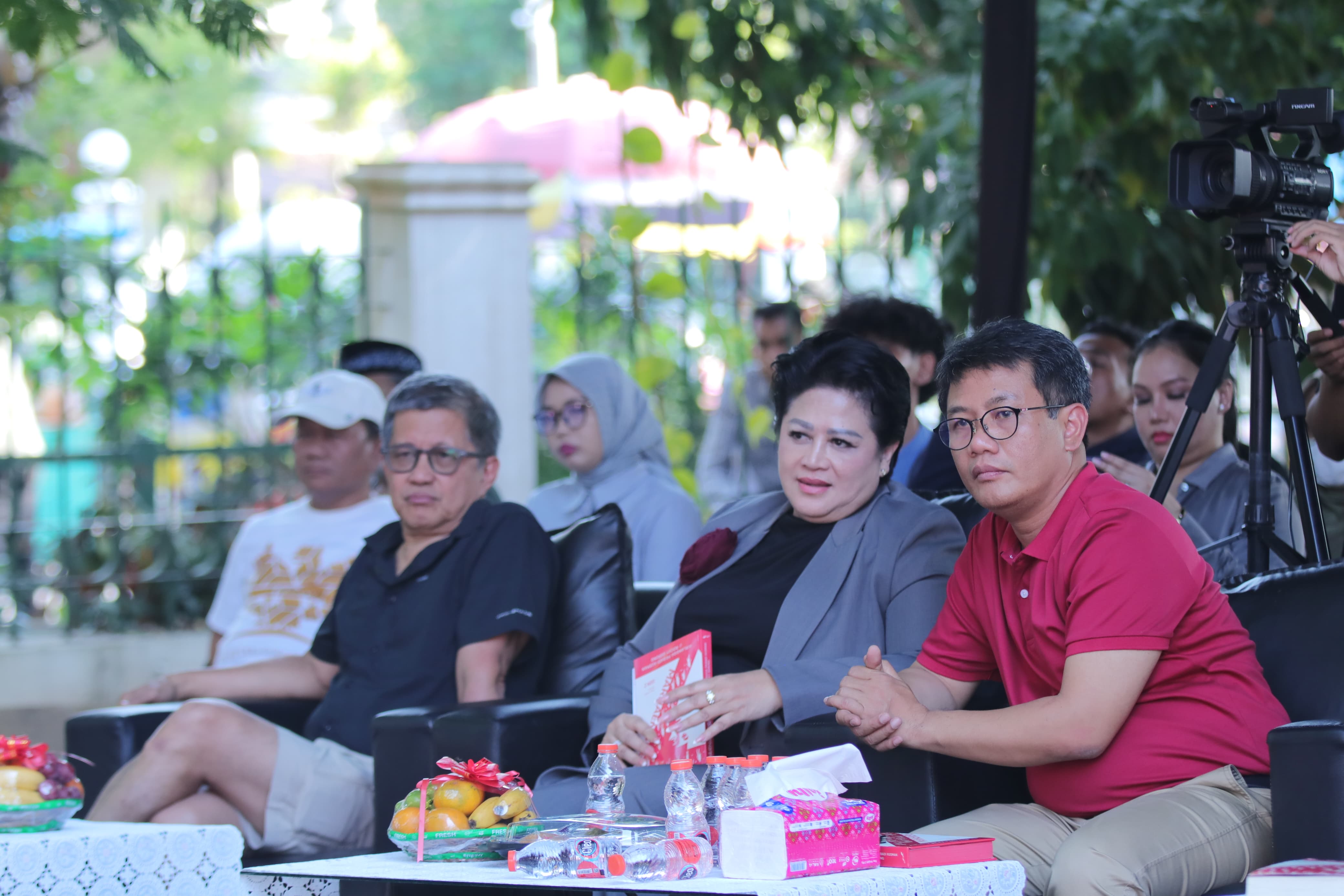
A member of the Indonesian House of Representatives Commission X from the PDI-P faction, Bonnie Triyana, has called on the younger generation to revive public discussion spaces. He made the statement during a book review event for ‘Marhaenism: A New Proposition for Gen-Z’ by Airlangga Pribadi and Rocky Gerung at the Multatuli Museum in Rangkasbitung, Lebak Regency, on Saturday. Bonnie said the book presents a new interpretation of the Marhaenism concept initiated by Indonesia’s first president, Sukarno, so that it remains relevant for addressing the social, economic, and political challenges of the current era. ‘Often when we talk about Marhaenism, the reference is a small farmer who owns simple means of production. This book is interesting because it offers a new interpretation so we can rejuvenate and refresh Bung Karno’s thoughts to make them relevant to today’s circumstances,’ said Bonnie. Bonnie considered the Multatuli Museum an appropriate venue to discuss Marhaenism because of its connection to the story of Saijah and Adinda in the novel Max Havelaar, which depicts ordinary people as victims of colonial oppression and feudalism. Bonnie also invited participants, particularly young people, to read and discuss the book so that critical thinking skills continue to develop. ‘This book is important for young friends to read. After the discussion, buy the book, read it, and then discuss it again with friends to sharpen our critical thinking about the current situation,’ he said. One of the book’s authors, Airlangga Pribadi, said Marhaenism needs to be understood not merely as a historical legacy, but as a method of thinking to read contemporary problems, ranging from digital capitalism and ecological crises to social inequality. According to him, the various problems faced by the younger generation today are often perceived as individual failures, whereas they are rooted in systemic issues. ‘All the problems faced by Gen Z cannot be fought only as personal problems. Bung Karno taught from the beginning that these are systemic and structural problems that must be fought through political means,’ said Airlangga. Airlangga cited the example of digital economy workers who own mobile phones, motorcycles, and applications as means of production, yet still live in job insecurity. Airlangga also assessed that the excessive exploitation of natural resources has given rise to an ecological crisis, which Sukarno had actually warned about through his critique of extractive capitalism. ‘What is happening today is not just a natural disaster, but a disaster driven by human greed in accumulating wealth, thereby destroying the earth and humanity itself,’ he said. Professor of International Relations Connie Rahakundini Bakrie stated that the forms of oppression against the people are now far more complex than during the colonial era. If in the past the contested objects were land and natural resources, now the objects of contention are data, algorithms, information, and even human ways of thinking. ‘In the past, land was contested; now, the human mind is contested. Once the mind has been successfully controlled, the nation no longer needs to be physically colonised,’ said Connie. Connie reminded the younger generation to be able to distinguish between fact and propaganda, especially ahead of national political dynamics. ‘We must be able to distinguish between fact and propaganda, between information and manipulation. If we lose the ability to think independently, that is more dangerous,’ she said. Meanwhile, book author Rocky Gerung said the book was written as an effort to preserve the tradition of critical thinking so that it is not lost to pragmatism and consumerism. ‘Ideological discourse, if not nurtured, will be consumed by pragmatism and consumerism. This book aims to nurture that aspect,’ said Rocky. Rocky also revealed that the book manuscript had been stored for nearly three decades before finally being published. According to him, the storage was related to the political dynamics experienced by the PDI ahead of the 27 July 1996 riot, or Kudatuli. ‘The book and its contents were kept in the new PDI safe for 30 years. The one who opened the safe was not a police officer, but a politician, named Bonnie Triyana,’ he said. According to Rocky, the republication of the book is an effort to revive the ideas of Marhaenism so that they can be read and debated by the younger generation in accordance with the challenges of the times. Rocky also stressed the right of citizens to oversee state officials through questions and criticism. ‘The first core of education is to ensure that citizens have the right to ask questions. All state apparatus must be accountable to the citizens,’ said Rocky. Rocky cited the polemic over the alleged diploma of Indonesia’s 7th President Joko Widodo as a form of a citizen’s question to the head of state, which he believes must be answered within a democratic framework. ‘Asking is the right of a student to a professor. Asking is the right of a citizen to the head of state,’ Rocky said.
Source: jawawa.id (https://jawawa.id/newsitem/bonnie-triyana-invites-gen-z-to-revive-discussion-spaces-through-marhaenism-book-review-1783788653)
Originally published by Media Indonesia (https://mediaindonesia.com/humaniora/909961/bonnie-triyana-ajak-gen-z-hidupkan-ruang-diskusi-lewat-bedah-buku-marhaenisme), translated from Indonesian