
Bonded Zone Companies Urged to Prepare Systems for CEISA 4.0 Rules
SEMARANG – Bonded Zone companies are being urged to prepare their systems and internal data for host-to-host (H2H) integration with the CEISA 4.0 customs system. The preparation is considered important before the mechanism becomes compulsory for businesses.
The Directorate General of Customs and Excise (DJBC) has introduced CEISA 4.0 in stages through a series of decisions making the system mandatory for customs and excise services. One such decision is Director General of Customs and Excise Decree No. KEP-163/BC/2026 on the full implementation (mandatory) of the twenty-fifth phase of CEISA 4.0, which took effect on 27 July 2026.
Jarot Wibowo, head of the Semarang branch of the Bonded Zone Entrepreneurs Association (APKB), said the use of an IT Inventory system integrated through H2H was still relatively new for a number of companies in the Semarang area. Businesses therefore needed to understand their system requirements early, rather than wait until implementation became mandatory.
“Let’s not wait until the mandatory decision is made—say, in 2027—and then find that our colleagues do not know what to do,” Jarot said in a written statement on Monday (19 October 2026).
Jarot said system readiness needed attention because IT Inventory was directly linked to companies’ operations. The system is used to record stock movements every day.
System readiness is important because technical problems can affect business operations. Widia Kristina, APKB Semarang’s southern regional coordinator, made a similar point, saying businesses should anticipate technical issues that could disrupt administrative processes, including the receipt and release of goods.
H2H integration enables a company’s system to connect and exchange data with the customs system. It can simplify document submission and improve time efficiency.
The DJBC plans to roll out CEISA 4.0 in stages as part of efforts to integrate customs and excise services within a single digital ecosystem. The system is intended to support services that are more transparent, accurate and trackable in real time.
For Bonded Zone companies, integration requires not only application readiness but also accurate and consistent internal data. Records of raw material receipts, inventory, production processes and goods dispatches need to be linked within the system.
Companies can begin by reviewing their inventory-recording processes, ensuring data is consistent across departments and assessing whether their current systems can connect to the customs platform. They should also test the integration and ensure relevant staff understand changes to workflows before implementation.
Anang Ind Pratama, chief executive of PT Eka Reka Palakerti Indonesia (ERP Indonesia), said integrating IT Inventory with an Enterprise Resource Planning (ERP) system was beneficial because it could help companies connect data across different functions.
“This is one reason IT Inventory needs to be connected to an ERP system. Integration allows inventory data to be shared by purchasing, warehousing, manufacturing, sales and accounting. In practice, system integration can help companies reduce the need to enter the same data repeatedly across different functions,” Anang said.
Anang said IT Inventory implementation also needed to be adapted to each company’s business processes. Differences in standard operating procedures, production patterns and inventory management mean that companies do not all have the same requirements.
“We do not see IT Inventory implementation as an effort to make every company follow the same processes. What matters is that the system can accommodate a company’s standard operating procedures while still meeting customs requirements. In other words, technology should adapt to the business, not force the business to adapt to the technology,” Anang said.
Because companies have different requirements and business processes, systems cannot always be adapted in the same way. Assessing needs, customising systems and testing integration are important to ensure IT Inventory supports customs requirements while remaining aligned with business operations.
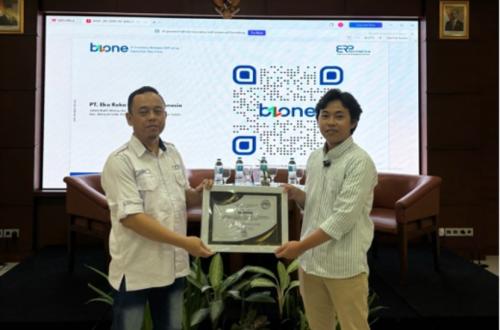
To support these requirements, ERP Indonesia has developed Bzone, or Bonded Zone, an IT Inventory module integrated through a host-to-host API with the DJBC’s CEISA 4.0 and the INSW portal.
Bzone is designed for businesses using customs facilities, including Bonded Zones, Bonded Warehouses, Bonded Logistics Centres, Import Facilities for Export Purposes, and Special Economic Zones.
Anang said Bzone connects inventory, procurement, accounting, manufacturing and sales functions in one system.
“Bzone’s main purpose is to ensure compliance with Customs. But because it is built on an ERP platform, the module can also connect with other business processes, including inventory, purchasing, sales, manufacturing and accounting,” Anang said.
As CEISA 4.0 is introduced in stages, Bonded Zone companies need to ensure their systems and data are ready before integration becomes mandatory. Early preparation is expected to reduce disruption to operations when the H2H mechanism is introduced.
Source: jawawa.id (https://jawawa.id/newsitem/bonded-zone-companies-urged-to-prepare-systems-for-ceisa-4-0-rules-1792428646)
Originally published by Republika (https://ekonomi.republika.co.id/berita/tn5w5e490/aturan-ceisa-40-perusahaan-kawasan-berikat-dinilai-perlu-siapkan-sistem), translated from Indonesian