
Bond Vigilantes Punish Trump as US Treasury Yields Surge
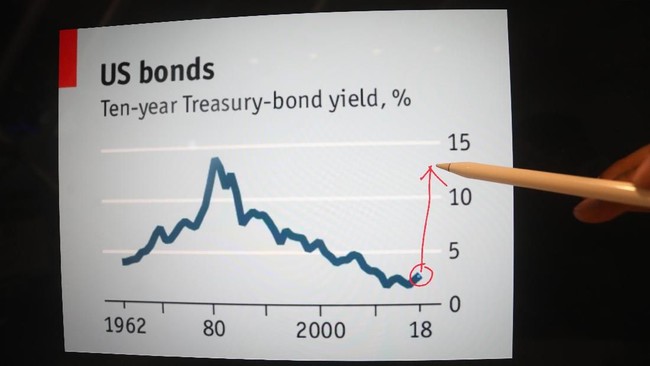
US Treasury yields have experienced another increase, even as the US Treasury Department announced plans for a larger-scale debt buyback programme.
According to Refinitiv data, at the close of trading on Wednesday (9/10/2026), the 10-year US Treasury yield rose by 4 basis points to 4.845%, marking its highest position since 1 November 2023, when yields reached 4.935%. Similar increases were seen across other maturities: the 30-year yield rose by 3 basis points to 5.295%, while the 2-year yield climbed nearly 4 bps to 4.436%.
As a reminder, bond prices and yields move in opposite directions; when bond prices fall due to selling pressure, yields rise. This movement follows US Treasury Secretary Scott Bessent’s announcement that the government would buy back long-term debt worth up to US6billion(approximatelyRp105trillionatanexchangerateofRp17, 500/US). This amount is three times the normal limit of US$2 billion per operation.
However, the value of the buyback remains below the expectations of some market participants, failing to alleviate pressure in the US bond market. The plan to expand the buyback was first introduced by Bessent on 19 August 2026, stating that long-term debt repurchases would be increased at least twofold from the normal limit. This policy applies from 9 September until the end of the quarterly refindng period on 4 November 2026.
The specific amount for the first operation was announced on Wednesday (9/9/2026), with the Treasury setting a maximum purchase of US$6 billion for Thursday (10/9/2026), targeting debt with remaining maturities between 10 and 20 years. The government will primarily target older, ‘off-the-run’ Treasuries, which are typically less frequently traded than newer issues. The official aim of the buyback programme is to enhance liquidity by providing market participants with regular opportunities to sell older securities, while also assisting in government cash management and reducing long-term funding costs.
This buyback is conducted by the Federal Reserve Bank of New York under the instruction of the US Treasury. It differs from central bank bond purchases or quantitative easing, as it is not intended as monetary policy easing. The US Treasury continues to issue new debt through auctions to fund government needs; therefore, repurchasing old debt does not automatically reduce total debt or the overall supply of bonds.
Why do yields continue to rise? Simply put, a buyback can increase demand for the targeted bonds, potentially raising prices and lowering yields. However, the impact depends on the scale of the purchase and market conditions. In this instance, the US$6 billion value was deemed insufficient to counter ongoing selling pressure. Peter Boockvar of The Boaching Report noted that some market participants had previously anticipated buyback values between US$7 billion and US$8 billion. Mizuho Securities, as quoted by CNBC International, stated that the US Treasury’s announcement was smaller than market expectations, prompting investors to sell US Treasuries again, driving prices down and yields up.
The market is also weighing US economic fundamentals, including the scale of government financing needs, rising inflation, and the direction of Federal Reserve interest rate policy. Total US government debt reached US$40 trillion for the first time in August 2026. Compared to the massive market size and financing requirements, a US$6 billion buyback provides only limited support.
Rising global oil prices are also exerting pressure on US Treasuries. Brent crude rose 3.36% to close at US$101.21 per barrel, while West Texas Intermediate (WTI) strengthened 3.25% to US$96.05 per barrel, both marking their highest closing prices since May. Rising oil prices heighten concerns that inflationary pressures in the US may resurface. If inflation remains high, the Fed will have less room to cut interest rates and may even consider hikes. Expectations of prolonged high interest rates lead investors to demand higher yields to hold US government bonds, particularly long-term ones.
Nevertheless, the yield increase eased briefly after a 10-year US Treasury auction showed strong demand. “US Treasuries faced selling pressure following this morning’s buyback announcement. However, after the auction results were released, the market strengthened, and that strength continued,” said Ian Lyngen of BMO, as quoted by CNBC International. The market response suggests the buyback programme is not yet large enough to withstand rising yields amidst inflationary pressures, oil prices, government financing needs, and interest rate uncertainty.
Is this a sign of the return of the ‘Bond Vigilantes’? In fiction, one of the most famous vigilante characters is Batman, who punishes criminals in Gotham City. In financial markets, the term ‘bond vigilantes’ describes bond investors who ‘punish’ governments by selling their debt.
Source: jawawa.id (https://jawawa.id/newsitem/bond-vigilantes-punish-trump-as-us-treasury-yields-surge-1789023598)
Originally published by CNBC Indonesia (https://www.cnbcindonesia.com/research/20260910102210-128-766823/bond-vigilante-menghukum-trump-bunga-obligasi-as-makin-liar), translated from Indonesian