
Bogor's Katulampa Dam Dries Up, Water Level Hits Zero Centimetres
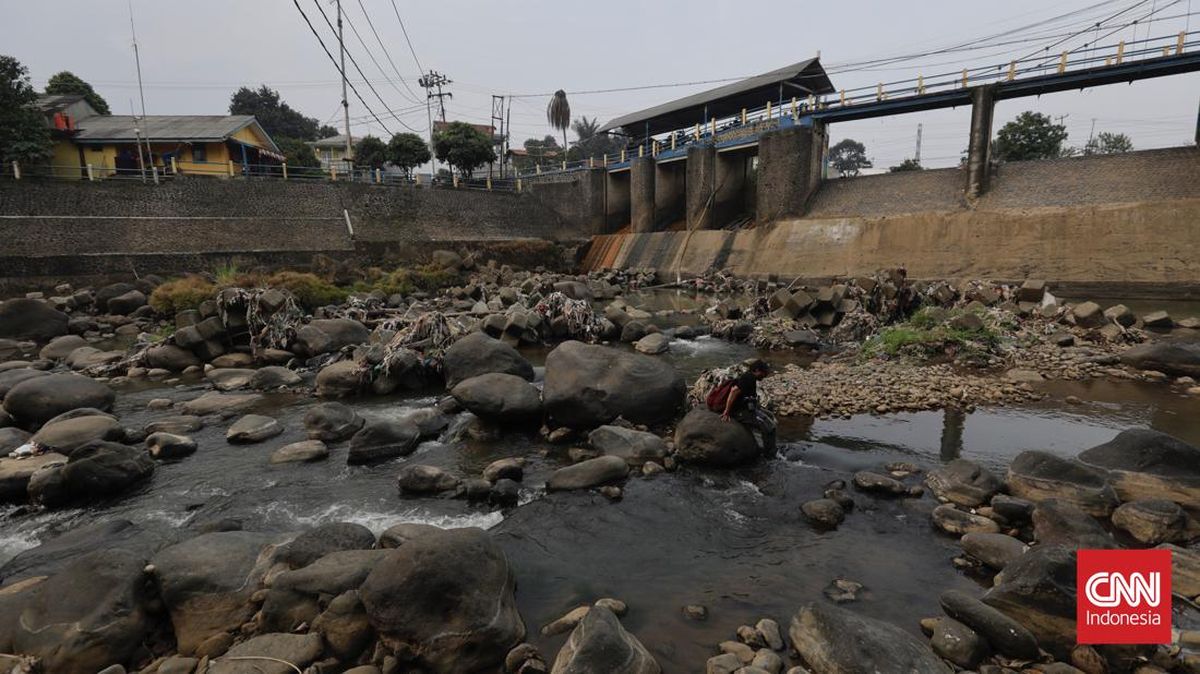
The flow of the Ciliwung River at the Katulampa Dam in Bogor City has shrunk drastically due to reduced rainfall during the dry season. This condition has caused the water level at the Katulampa Dam to reach zero centimetres for the past two days.
Katulampa Dam officer Subhan said the zero-centimetre water level persisted until Friday (16/7). ‘The water level at Katulampa Dam has indeed been at zero centimetres since two days ago. Yes, until now it remains at zero centimetres,’ Subhan said on Friday (16/7).
The receding water has exposed large rocks on the Ciliwung riverbed in the Katulampa Dam area. The landscape, usually filled with strong currents during the rainy season, has now turned into small puddles beneath the dam’s foundation. ‘That’s right, you can see the rocks, that’s how much it has receded. The water level is zero centimetres, so the riverbed is visible,’ Subhan said.
According to Subhan, the condition also reveals sedimentation on the riverbed that is normally covered by water flow. He said his team plans to organise a community work event with residents and local groups to remove the sediment deposits. ‘Indeed, in this condition, the sedimentation on the riverbed is visible. We usually do community service with residents and communities, and that will likely be held to remove the sediment, so we will dig it out,’ he added.
Subhan explained that the water depletion was triggered by a lack of rain in the upstream area of the Ciliwung River, Puncak, over the past two weeks. As a result, the water supply flowing to the Katulampa Dam has continued to decrease. ‘This condition is an impact of entering the dry season. Since June, rain has been rare, sometimes only once a week, and this week it hasn’t rained yet,’ Subhan said. ‘If there is no rain upstream for a week, the water flowing to the dam will certainly recede,’ he continued.
Amid these conditions, the Katulampa Dam management is prioritising the upstream water flow to be channelled to the Kali Baru River through irrigation channels. This step is taken to prevent the river from drying up completely while maintaining the area’s ecosystem. ‘That’s right, in conditions like this, because the upstream flow is receding, we prioritise channelling it to the irrigation channels, so we continue to flush water into Kali Baru, into the irrigation channels,’ Subhan said. ‘We do the flushing to maintain the river ecosystem (in Kali Baru), so it doesn’t dry up,’ he added.