
Bogor Selected as Pilot for 'Red and White' Sharia Housing Programme
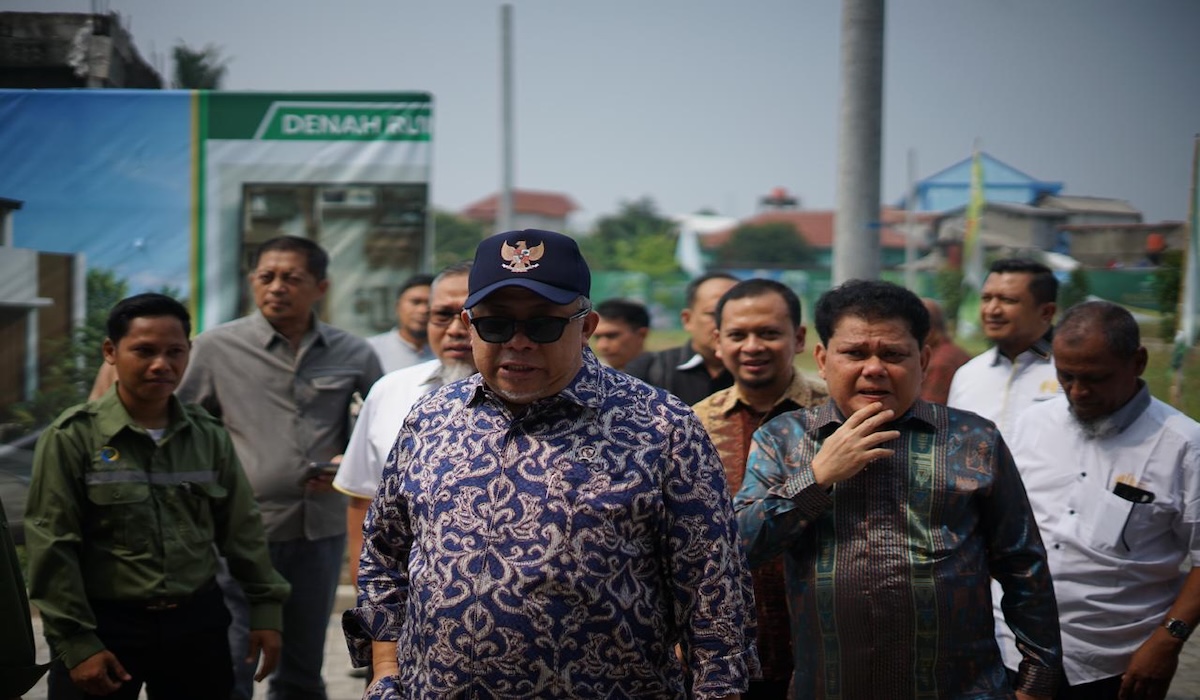
The Ulema Council’s Economic Empowerment Institution (LPEU MUI) has designated Green View Residence 2 in Bogor as the pilot project for the ‘Perumahan Merah Putih’ (Red and White Housing) programme, a housing model that combines sharia financing, cooperative strengthening, and community economic empowerment. The programme is designed to support the target of building 3 million homes while expanding public access to decent housing. In its implementation, LPEU MUI involves the government, sharia banks, cooperatives, developers, and the community as prospective beneficiaries.
Rully Muliarto, Deputy Secretary of LPEU MUI for Housing and Settlement Areas, stated that the programme is not only directed at physical construction but also at forming an economic ecosystem within residential areas. According to him, the concept offered uses sharia and halal housing principles, with transactions sought to be free from riba (usury), gharar (uncertainty), and maisir (speculation). ‘We are not just building houses, but building an ecosystem, the people’s economy, and civilisation,’ Rully said during the launch in Bogor.
The Perumahan Merah Putih programme provides two financing schemes: through sharia banking and independent financing. However, LPEU MUI has not detailed the target number of units, the income groups of prospective residents, house prices, down payment amounts, or the construction timeline for the pilot project. Clarity on price components and instalment schemes is crucial, as affordability remains a major issue in providing housing for low-income communities (MBR). The sharia financing model offered must also ensure that instalments remain within the community’s financial capacity, not just differ in contract type.
Green View Residence 2 was chosen as the initial implementation site. The project is developed by PT Elang Group, a company claiming to have built more than 10,000 housing units since 2007. Founder and investor of PT Elang Group, Elang Gumilang, said the area is designed not only as a place to live but also to include places of worship, community development centres, and an environment that supports residents’ social activities. ‘We are not just selling houses, but building a civilisation village,’ Elang stated.
M. Azrul Tanjung, Chairman of the MUI for Economic and Environmental Affairs, stated that MUI’s involvement in the programme is part of an effort to apply sharia economic principles to the community’s basic needs. According to Azrul, MUI’s role does not stop at issuing religious guidance; the council also wants to encourage economic schemes that help the public obtain housing through sharia-compliant financing mechanisms.
The programme received support from Deputy Minister of Housing and Settlement Areas, Fahri Hamzah. He assessed that collaboration between the government, community organisations, sharia banks, cooperatives, and developers could be one approach to accelerating housing provision. According to Fahri, access to decent housing is part of social justice and a constitutional mandate. The model implemented in Bogor can be replicated in other regions if it proves capable of providing affordable housing with a sustainable financing scheme.
However, the success of the pilot project will not be determined solely by the number of houses built. The government and programme organisers must also ensure land legality, building quality, availability of basic infrastructure, transportation access, and the long-term ability of residents to pay instalments. The Perumahan Merah Putih programme is one of the agendas of LPEU MUI’s Housing and Settlement Areas division. The institution was established based on the mandate of the 11th MUI National Congress in 2025 and has eight strategic fields directed at driving the people’s economy. Following the pilot project in Bogor, LPEU MUI targets the nationwide implementation of this collaborative model. However, expansion will depend on the evaluation of the initial phase, particularly regarding price affordability, financing transparency, housing quality, and the accuracy of beneficiary targeting.