
Bogor Police Prepare Traffic Engineering at 6 Peak Route Points During Mudik
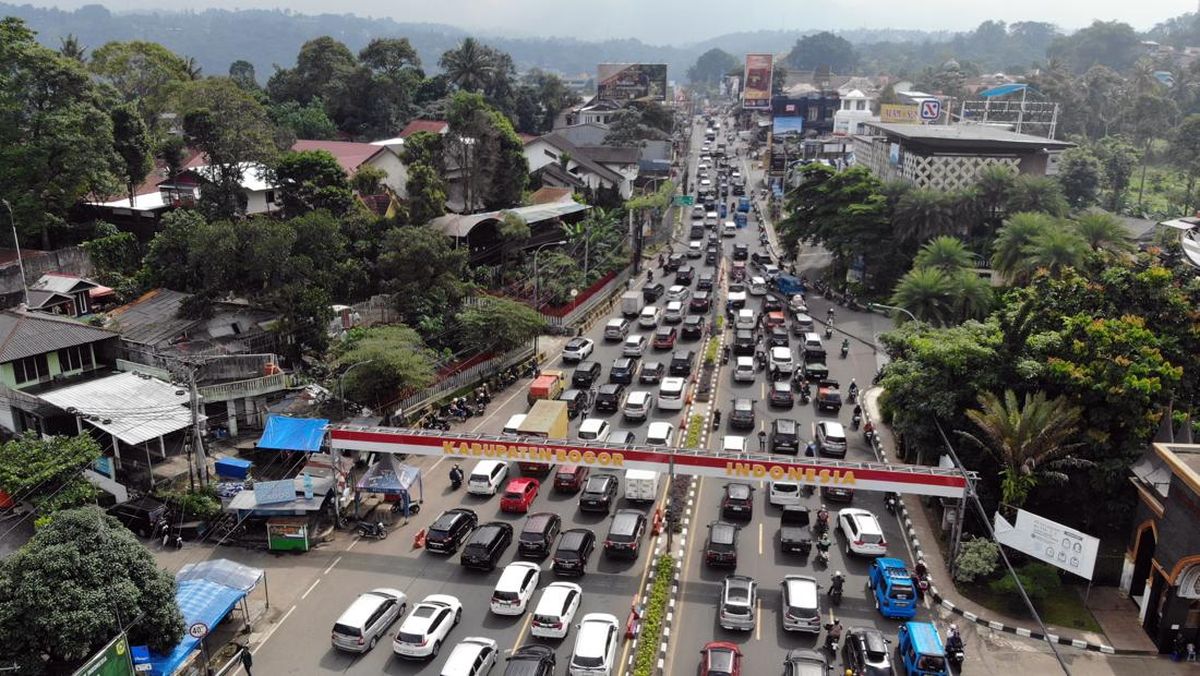
The Traffic Police Unit of Bogor Police Resort has prepared a series of traffic management schemes to anticipate vehicle congestion on routes leading to the Puncak tourist area in West Java during the 2026 Lebaran mudik (homecoming) period. One of the measures being prepared is the implementation of one-way systems or partial road closures at several congestion-prone points.
Iptu Ardian Novianto Azhari, Head of Operations at Bogor Police’s Traffic Unit, explained that the traffic engineering would be implemented if vehicle queues at any given point reached one to 1.5 kilometres.
“If traffic flow slows and queues reach one to one and a half kilometres, we will implement partial one-way or partial road closure systems,” Ardian said at the Integrated Post at Simpang Gadog, Ciawi District, Bogor Regency, on Saturday (14 March).
He stated that traffic management measures are situational in nature and will only be applied at locations experiencing vehicle congestion on the Puncak route.
Six points have been identified as accident-prone during congestion: Pasir Muncang, Simpang Megamendung, Pasar Cisarua, Simpang Lokawiratama, Jatiwangi, and Gunung Mas.
Ardian explained that the implementation of partial one-way systems typically lasts for short periods, approximately 30 minutes, to help ease vehicle congestion.
“We usually implement it for 30 minutes, then reopen the road. So it is not too lengthy, just to disperse the queue so it does not become too long,” he said.
However, should vehicle volume increase significantly, police have also prepared the option of implementing a full one-way system from Simpang Gadog to the Cianjur border.
Based on the implementation of Operasi Ketupat 2025, full one-way systems are rarely applied during Ramadan and are generally only implemented when the peak mudik flow approaches Hari Raya (Eid).
Such measures typically begin when traffic congestion increases at H-3 to H-2 before Eid (three to two days before the holiday).