
Bogor Line Passenger Growth Keeps Rising, KAI Extends Bogor Station Platform
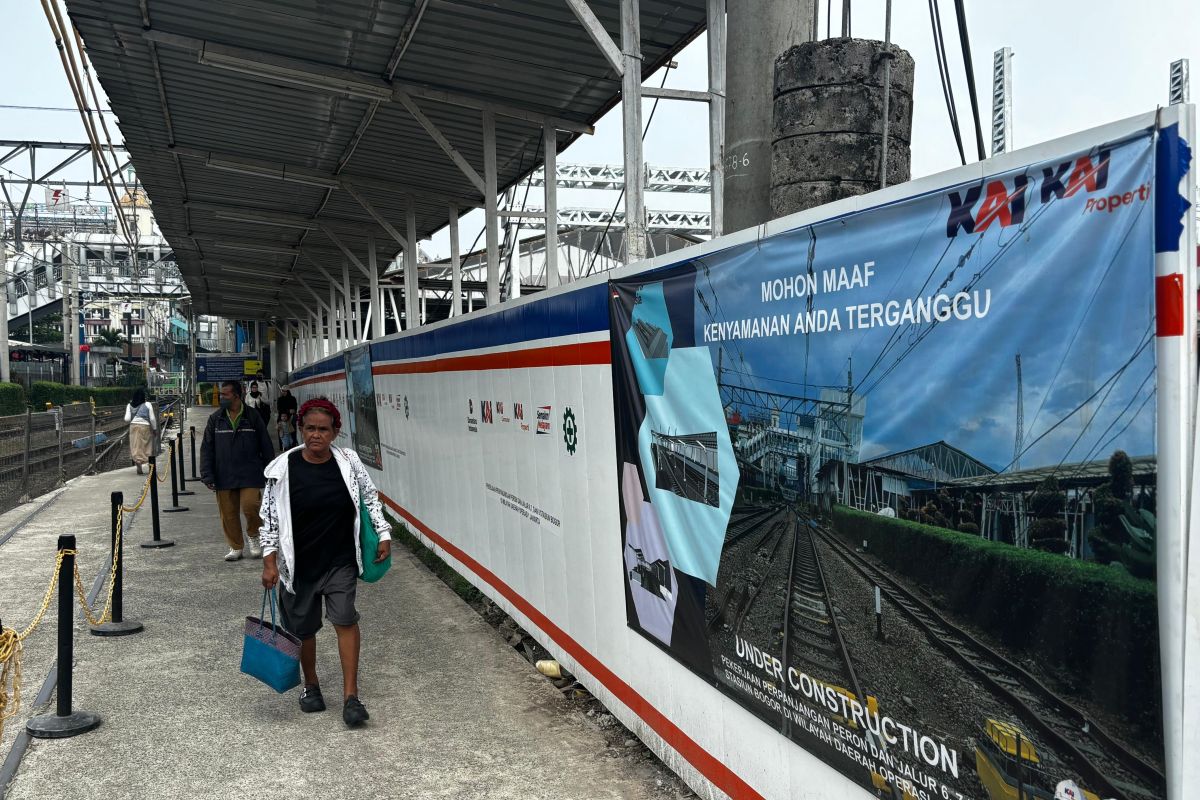
Bogor Station, Jakarta — PT Kereta Api Indonesia (Persero) together with KAI Commuter is revitalising and extending platforms on tracks 6, 7, and 8 at Bogor Station as part of enhancing Commuter Line capacity in the Bogor Line area. The works have been underway since 15 April 2026 and are targeted for completion in July 2026.
The revitalisation aims to support operations of a twelve-car train formation (SF12), so passenger capacity per trip can be increased in step with rising mobility along the Bogor Line.
Anne Purba, Vice President of Corporate Communications at KAI, said upgrading the Bogor Station facilities is a key step in ensuring smooth mobility of Commuter Line passengers whose numbers continue to grow year on year.
“Bogor Line is one of the lines with the highest passenger mobility in the Jabodetabek area. The growth in passenger volume needs to be matched by station capacity readiness and service operation patterns to keep services running smoothly for customers,” Anne said.
Currently, the frequency of Commuter Line services at Bogor Station reaches 392 trips per weekday and 373 trips per day on weekends. The high service frequency makes Bogor Station one of the busiest passenger facilities in the Jabodetabek Commuter Line network.
Ridership data shows an ongoing year-on-year growth. In the January–April 2026 period, the number of passengers performing gate-in at Bogor Station reached 6,140,074, while gate-out reached 5,959,832.
In 2025, gate-in at Bogor Station totalled 18,199,619 passengers and gate-out 18,171,350. These figures rose from 2024 when gate-in was 17,124,802 and gate-out 17,276,284.
Ridership growth is also evident for Bogor Line as a whole. In 2022, the number of passengers was 102,054,022; it rose to 133,040,885 in 2023, then to 145,920,264 in 2024, and reached 155,009,997 in 2025.
Meanwhile, from January to April 2026, Bogor Line passengers totalled 51,868,066. The high mobility demonstrates the Commuter Line’s role as the main urban transport mode in supporting daily activities.
Anne explained that operating a 12-car formation will provide greater capacity per journey, enabling better distribution of passengers, especially during peak hours.
“The addition of capacity through 12-car operation is prepared to meet the needs of growing passengers. With greater capacity per trip, services are expected to run more smoothly and the passenger journey will be more comfortable,” Anne said.
In addition to platform extension and track adjustments, the revitalisation also includes constructing new canopies over tracks 6, 7, and 8. The canopies are designed to connect directly to the station concourse area to improve passenger comfort while waiting or transferring between lines, particularly during rain and heat.
Currently, the revitalisation works have entered the stage of reinstalling Overhead Line Equipment poles and constructing the new proposed platforms. All works are targeted to be completed and operable by July 2026.
During the revitalisation, operational patterns and passenger flow in the station area are being adjusted. KAI and KAI Commuter continue to coordinate passenger movements, optimise staff services, and strengthen travel information to ensure passenger mobility remains safe, orderly, and smooth during the works.
To support smooth mobility, a temporary pedestrian area has been prepared on the station concourse side, and passenger flow has been redesigned during peak hours. Passengers heading to West Hall can be directed via the Paledang pedestrian overpass, while others are directed to the Taman Topi Hall and the East Entrance of Bogor Station.
“We will continue to develop and improve service facilities gradually while prioritising safety of the Commuter Line journey and passengers. All works are carried out carefully so as not to disrupt train operations. During the revitalisation, we acknowledge there may be adjustments affecting passenger comfort. We apologise and urge passengers to remain vigilant and follow staff instructions in the station areas,” concluded Anne.