
Bogor Line Growth Reinforces Urgency of Electrification to Sukabumi
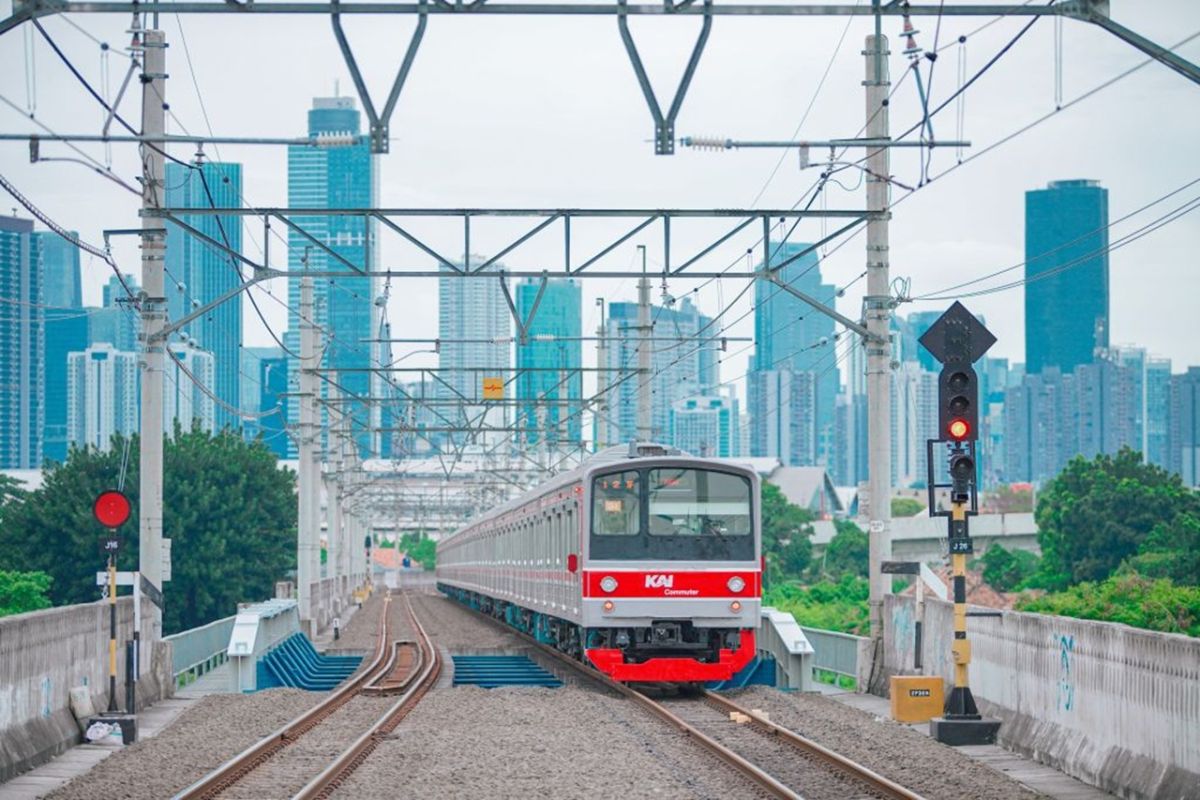
The expansion of connectivity drives decent housing and opens up space for more structured regional growth.
Jakarta (ANTARA) - PT Kereta Api Indonesia (Persero) observes the continuously rising trend in public mobility along the Bogor route, which is the highest in the Jabodetabek region. This movement demonstrates how buffer areas are increasingly playing a role in forming new activity centres.
The number of KRL Jabodetabek users on the Bogor Line was recorded at 102,054,022 passengers in 2022, increasing to 133,040,885 passengers in 2023, then 145,920,264 passengers in 2024, and reaching 155,009,997 passengers in 2025. From January to March 2026, the number of users has reached 38,203,481 passengers.
This consistent growth shows that the Bogor Line has become the backbone of public mobility, while also reflecting a changing travel pattern that is increasingly widespread and no longer centred on a single area.
KAI Vice President of Corporate Communication Anne Purba stated that this development serves as an important basis for looking at the direction of service strengthening moving forward.
“Public mobility continues to evolve following increasingly dispersed activities. Transportation services need to move in tandem with that change to reach broader public needs,” said Anne.
Currently, the electrification of the Jakarta Kota–Bogor route has reached 54.674 km of track with double lines. This development is the result of collaboration between KAI and the Directorate General of Railways of the Ministry of Transportation, which is also accompanied by improvements in infrastructure such as station development and enhancements to the operational system.
This condition makes the services on the Bogor route increasingly reliable in serving large-scale public movements, with more efficient travel times and continuously strengthened capacity.
At the same time, growth potential is also evident on the Bogor Paledang–Sukabumi route through the KA Pangrango service. The number of passengers increased from 786,001 in 2023 to 874,789 in 2024, and reached 1,109,398 passengers in 2025. In the first quarter of 2026, the number has reached 281,659 passengers.
This growth indicates that the Sukabumi area and its surroundings are increasingly connected to activity centres, along with the development of housing, tourism, and economic activities in the region.
“The trend on the Bogor to Sukabumi route shows continuously opening growth opportunities. This is part of the direction for future service development, including through electrification-based strengthening,” added Anne.
Extending electrification to Sukabumi will bring broader service improvements, starting from travel time efficiency, greater capacity, to travel frequency that can be adjusted to public needs.
The impact does not stop at transportation services. Stronger connectivity will drive the growth of new economic centres and expand public activities to various regions, allowing growth to occur more evenly.
From the housing perspective, more affordable transportation access provides options for the public to live in more comfortable areas. This pattern opens opportunities for the formation of new settlements that are more orderly, while reducing density pressure in the city centre.
This direction aligns with the policy conveyed by President Prabowo Subianto in a limited meeting at Merdeka Palace on 6 April 2026 regarding the acceleration of the national people’s housing programme.
“Transportation and housing areas are interconnected in shaping public life patterns. With increasingly broad connectivity, growth can occur more evenly, opening space for developing areas that are neater, more comfortable, and increasingly livable,” concluded Anne.
KAI continues to strengthen collaboration with the government and all stakeholders in delivering transportation services that can keep up with the dynamics of public mobility, while supporting more developed regional growth in various areas.