
Bo’ Sangaji Kai: Bima’s Knowledge Heritage That Resonates Across the World
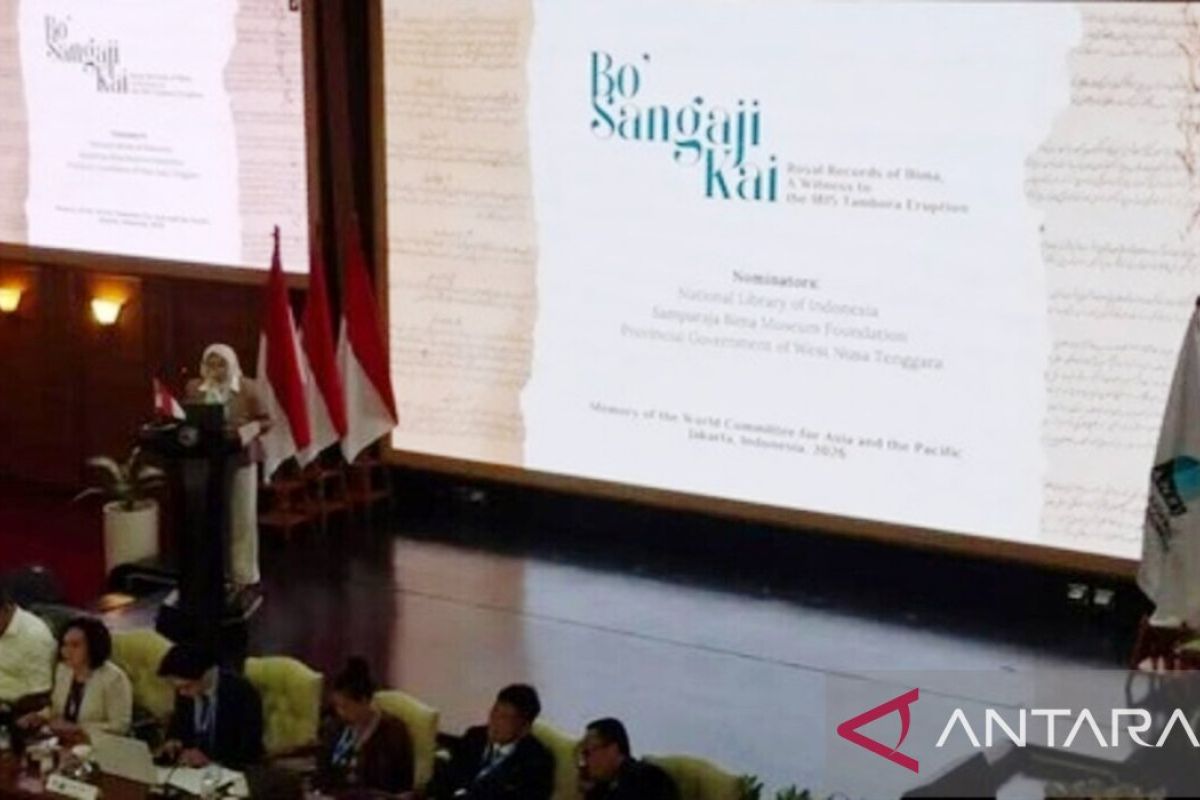
Long before the world came to know the eruption of Mount Tambora as one of the largest volcanic events in history, the people of the Sultanate of Bima had recorded the disaster in an ancient manuscript.
The account preserves not only memories of the 1815 eruption, but also records the life, thought and governance of a civilisation on Sumbawa Island.
The manuscript is called Bo’ Sangaji Kai. The legacy of the Kingdom and Sultanate of Bima, in West Nusa Tenggara (NTB), received international recognition when it was added to UNESCO’s Memory of the World Register for Asia and the Pacific (MOWCAP) on 5 November 2026.
The recognition is more than an award for a document hundreds of years old. Bo’ Sangaji Kai offers a local community’s perspective on world history and shows that Bima had a developed tradition of literacy and knowledge long before the modern era.
“Alhamdulillah, our hope and dream of Bo’ Sangaji Kai receiving UNESCO Memory of the World recognition has finally come true,” said Dr Dewi Ratna Muchlisa, head of the Samparaja Bima Museum and a descendant of Bima’s 14th Sultan, Muhammad Salahuddin, on Sunday.
For Dewi, the recognition demonstrates that Bima’s ancestors possessed advanced ideas and knowledge. The manuscript, passed down through generations, records many aspects of life, including government, law, trade, social relations and the protection of women.
Bo’ Sangaji Kai comprises two words in the Bima language. Bo’ means book, while Sangaji Kai was a title for the ruler of Bima before the kingdom became a sultanate. The title can therefore be understood as a book of records of the Kingdom and Sultanate of Bima.
The historical record-keeping tradition initially used lontar palm leaves and the Bima (Mbojo) language and script. During the reign of Sultan Abil Khair Sirajuddin, who ruled from 1645, writing shifted to Malay using the Arabic script.
The manuscript documents events from the 17th to the 19th centuries. One of its significant entries concerns the eruption of Mount Tambora in April 1815, whose effects spread widely and influenced the climate and people’s lives in many parts of the world.
For Bima’s history, the record is important because it provides testimony from a community close to the centre of the events. Tambora’s history can be read not only through the accounts of foreign researchers and explorers, but also through documentation passed down by local people.
Dewi said Bo’ Sangaji Kai’s significance goes beyond its chronicle of the Tambora eruption. It also contains Bima harbour law, customary land law and the Malacca Maritime Code, reflecting Bima’s connections with trade and maritime governance in the past.
Other entries document the community’s social life and culture, including the Hanta Ua Pua tradition, which is still known today. This breadth of information makes Bo’ Sangaji Kai a source for research across disciplines, from history, politics, economics and religion to agriculture, forestry, geography and astronomy.
Source: jawawa.id (https://jawawa.id/newsitem/bo-sangaji-kai-bimas-knowledge-heritage-that-resonates-across-the-world-1794149518)
Originally published by Antara (Indonesian) (https://www.antaranews.com/berita/5840255/bo-sangaji-kai-warisan-pengetahuan-bima-yang-menembus-ingatan-dunia), translated from Indonesian