
BNSP Certification Becomes Standard for Hajj and Umrah Guide Competency
Competency certification based on the National Professional Certification Agency (BNSP) is considered essential to ensure that Hajj and Umrah guides possess measurable abilities in accompanying pilgrims. This need is increasingly relevant as guides face pilgrims with diverse backgrounds in terms of age, physical condition, and level of religious understanding.
The importance of such certification was evident in the Skill Upgrading and Competency Testing Programme for Hajj and Umrah Worship Guides, organised by PT Akbar Ghani Wisata (Aghata Travel) in collaboration with the Indonesian Sharia Tourism Professional Certification Body (LSP Parsya) and the Indonesian Association of Hajj and Umrah Muthawwif Guides (IPMHUI).
The programme, held at Graha Aghata Tour in Depok, West Java, was attended by 12 participants from various regions. Briefings were conducted on Monday (14/09/2026), while the competency test before assessors took place on Thursday (17/09/2026).
The Head of LSP Pariwisata Syariah Indonesia, Wardi Taufik, stated that competency certification serves as an instrument to recognise the abilities of officers working within Hajj and Umrah services. “Competency certification is not merely a piece of paper, but a form of state recognition that a guide, tour leader, or tour guide for Hajj and Umrah truly possesses the competence required to serve pilgrims professionally, safely, comfortably, and in accordance with Sharia guidelines,” Wardi said, according to a press release on Saturday (19/09/2026).
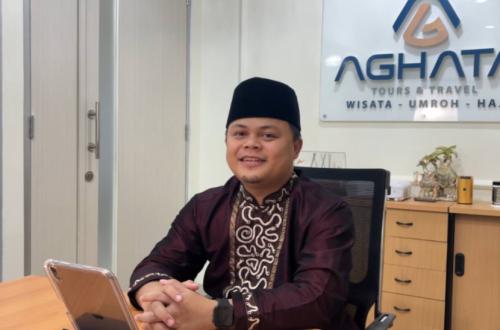
One of the participants, Ustaz Ferli Romansyah—who is also the leader of the Al Qur’an Bani Syahid Islamic Boarding School in Depok and a Brand Ambassador for Aghata Travel—noted that the certification process provides an opportunity to re-evaluate the knowledge used when accompanying pilgrims. “Certification for guides and tour leaders is very important, not only to legalise and recognise our competence in the field, but also because the competency test by assessors reminds us of things we might have forgotten or details that we may not have previously considered,” said Ferli.
Ferli noted that the challenges in accompanying pilgrims relate not only to the execution of the journey but also to the varying levels of knowledge regarding pilgrimage rituals (manasik) and jurisprudence (fiqh). This situation requires guides to understand the pilgrims’ circumstances and adjust their assistance throughout the pilgrimage.
“The most frequent challenge I face when accompanying Hajj or Umrah pilgrims is the inequality of knowledge between one pilgrim and another. Pilgrims are constantly reminded from before departure, through the rituals, and even while in the Holy Land; many pilgrims sometimes forget the contents of the rituals despite attending several sessions. It is this heterogeneity of pilgrims that challenges a guide to understand and respond to every situation and condition,” Ferli explained.
For Ferli, certification must be accompanied by continuous capacity building. A guide’s knowledge must be constantly updated to meet the diverse needs of pilgrims. “Naturally, we must be more accountable for the certification we have achieved. We must continuously seek knowledge, learn from anyone more competent, and not forget to study books regarding Hajj and Umrah worship. The point is to never stop learning to become better,” said Ferli.
The President Director of PT Akbar Ghani Wisata, Haryanti Sonda, stated that certification is necessary so that the capabilities of officers do not rely solely on experience. “Hajj and Umrah officers are not only responsible for organising the journey but also for accompanying pilgrims in performing their worship,” said Haryanti.