
BNPT strengthens student defences against digital extremism exposure
Jakarta (ANTARA) - The National Counter-Terrorism Agency (BNPT), in collaboration with the Ministry of Primary and Secondary Education (Kemendikdasmen), is strengthening student resilience against the risks of violence-based extremism, including those developing in digital spaces.
BNPT Head Eddy Hartono stated that strengthening student resilience is being conducted through education, literacy, character building, and enhancing students’ ability to recognise and respond to various risks in the digital realm.
“Currently, there is a phenomenon of risk to minors in digital spaces. We have conducted mitigation alongside Densus 8 Cap and the Ministry of Communication and Digital Affairs (Komdigi); over the last two years, there have been hundreds of children exposed through social media and online games,” said Eddy when confirmed in Jakarta on Saturday.
Eddy noted that strengthening synergy with the Ministry of Primary and Secondary Education is part of the implementation of the National Action Plan for the Prevention and Countering of Violent Extremism Leading to Terrorism (RAN PE) for 2026–2029.
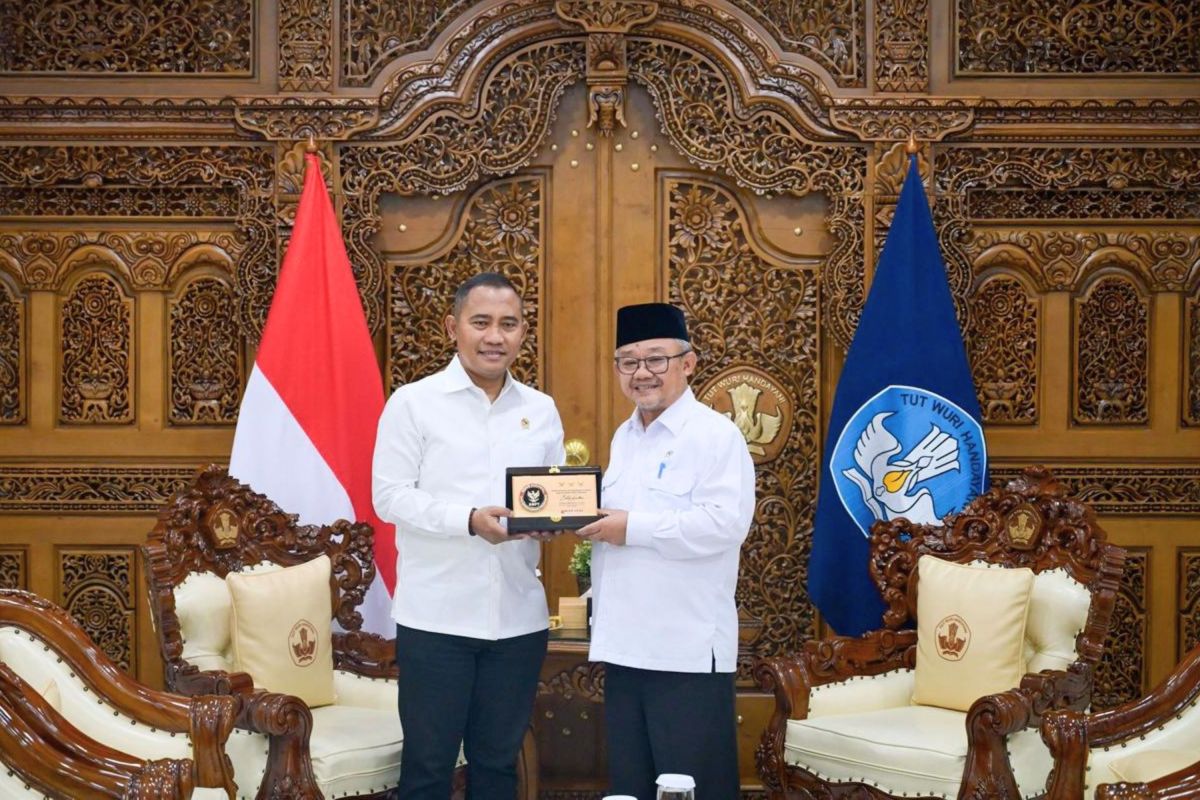
This synergy was discussed during an audience between the BNPT and the Ministry of Primary and Secondary Education in Jakarta on Monday (31/8).
RAN PE 2026–2029 was established through Presidential Regulation Number 8 of 2026 as a national policy framework to synchronise the prevention and countering of violence-based extremism leading to terrorism.
Eddy stated that the implementation of RAN PE requires the involvement of ministries and agencies according to their respective duties, functions, and authorities.
In the education sector, the Ministry of Primary and Secondary Education is considered to have a strategic role in strengthening student resilience through a safe educational environment that supports character development.
RAN PE 2026–2029 comprises nine themes, one of which includes education, community skills, and job facilitation.
He assessed that a collaborative approach is necessary because the potential for exposure to violence-based extremism can develop through various interaction spaces, including educational environments and digital spaces.
Meanwhile, the Minister of Primary and Secondary Education, Abdul Mu’ti, stated that preventing extremism in educational environments requires a comprehensive approach and cannot be the burden of a single institution.
According to him, in addition to educational units, families play a vital role in accompanying children when interacting with digital information and content.
“Institutionally, we are beginning to conduct socialisation given the significant influence of social media,” said Abdul Mu’ti.
The collaboration between the BNPT and the Ministry of Primary and Secondary Education will further be developed through several steps within the RAN PE 2026–2029 framework, involving ministries/agencies, local governments, educational units, families, and the community.
One of the planned agendas is a joint declaration for the educational ecosystem involving school committees, educators, students, and other relevant parties.
The BNPT hopes that this declaration will not merely remain a ceremonial activity, but rather serve as a momentum to build commitment and drive action to create an educational environment that is safe, inclusive, tolerant, and possesses resistance against violence-based extremism.