
BNPT Strengthens National Resilience Starting from the School Environment
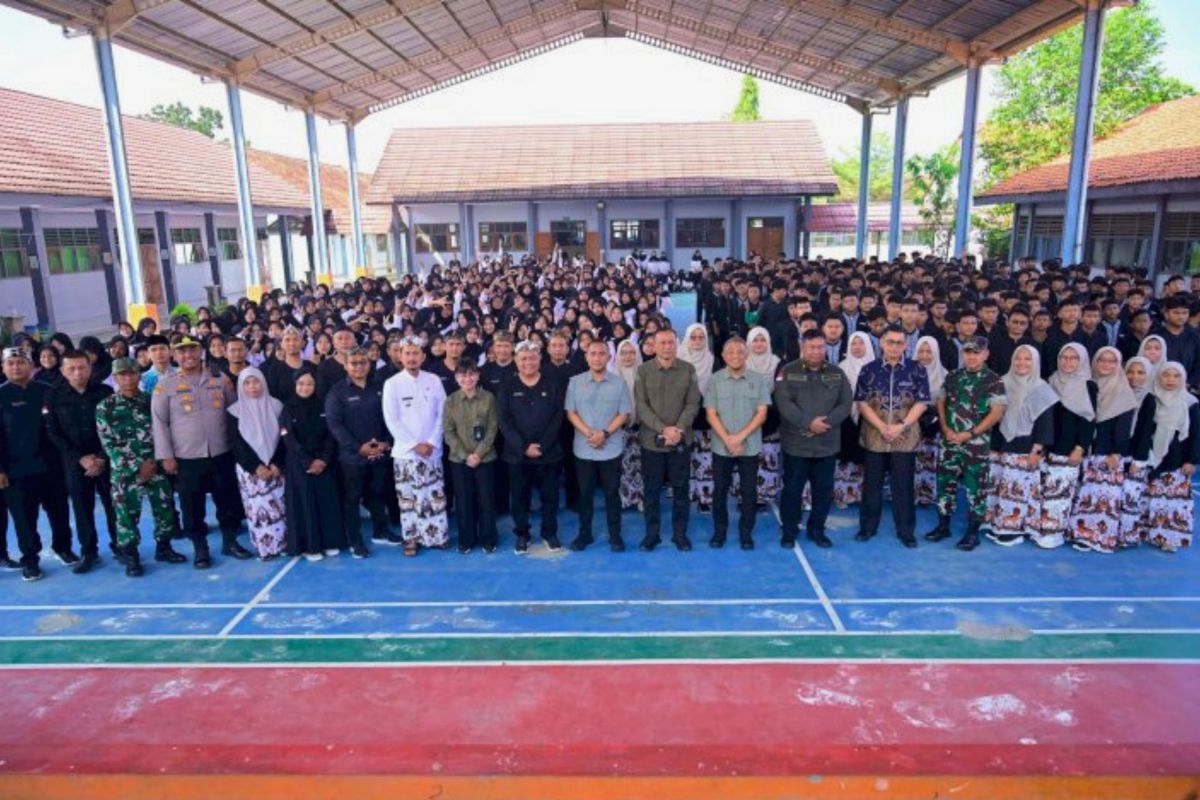
Jakarta (ANTARA) - The National Counter-Terrorism Agency (BNPT) is strengthening national resilience starting from the school environment through the Socialisation Activity for Preventing Violent Extremism Leading to Radicalism at SMAN 1 Jamblang, Cirebon, West Java, on Thursday (16/4).
BNPT Head Eddy Hartono stated that the activity is intended to equip students with strong digital literacy skills so they are not easily provoked by various violent contents.
“Contents that cause students to be exposed to their material are mostly influenced by elements leading to violence,” said Eddy during the socialisation event, as confirmed in Jakarta on Wednesday.
Eddy revealed that based on research, there are at least three main factors making students vulnerable to radicalism content on social media: bullying and having no place to seek help, thus turning to social media; parental conditions; and economic factors.
In addition to receiving briefing from the BNPT Head, students also received material from representatives of the Terrorism Prevention Coordination Forum (FKPT) and the Peace Ambassador of West Java Province.
The event concluded with the collective creation of a video slogan “Reject Radicalism” as a commitment from students to maintain peace.
Previously, Eddy had disclosed that extreme violent content can indoctrinate children in just 3-6 months.
The acceleration of exposure in the digital space, said Eddy, forms understanding much faster than in previous years, which took 3-6 years through face-to-face meetings.
“In the past, radicalisation at the face-to-face level, before the digital era, took up to 3-6 years, but in this digital era, it only takes 3-6 months. People can have their brains washed to become extremists or radicals,” he said during a press conference at the Bareskrim Polri Building, Jakarta, on Wednesday (7/1).
He also stated that children and women are groups vulnerable to extreme violence understanding in the digital space.
“We previously conducted research showing that women and children are indeed vulnerable groups, exposed to both violent ideologies and terrorist radicalism understandings. This is continuously interconnected,” he said.
The exposure to such extreme violent content, according to Eddy, comes from social media such as YouTube, Telegram, TikTok, and similar platforms.
Additionally, according to Eddy, BNPT has found such extreme violent content through the dark web in one community, besides through social media.