
BNPT: Strengthening deradicalisation to prepare inmates for post-prison life
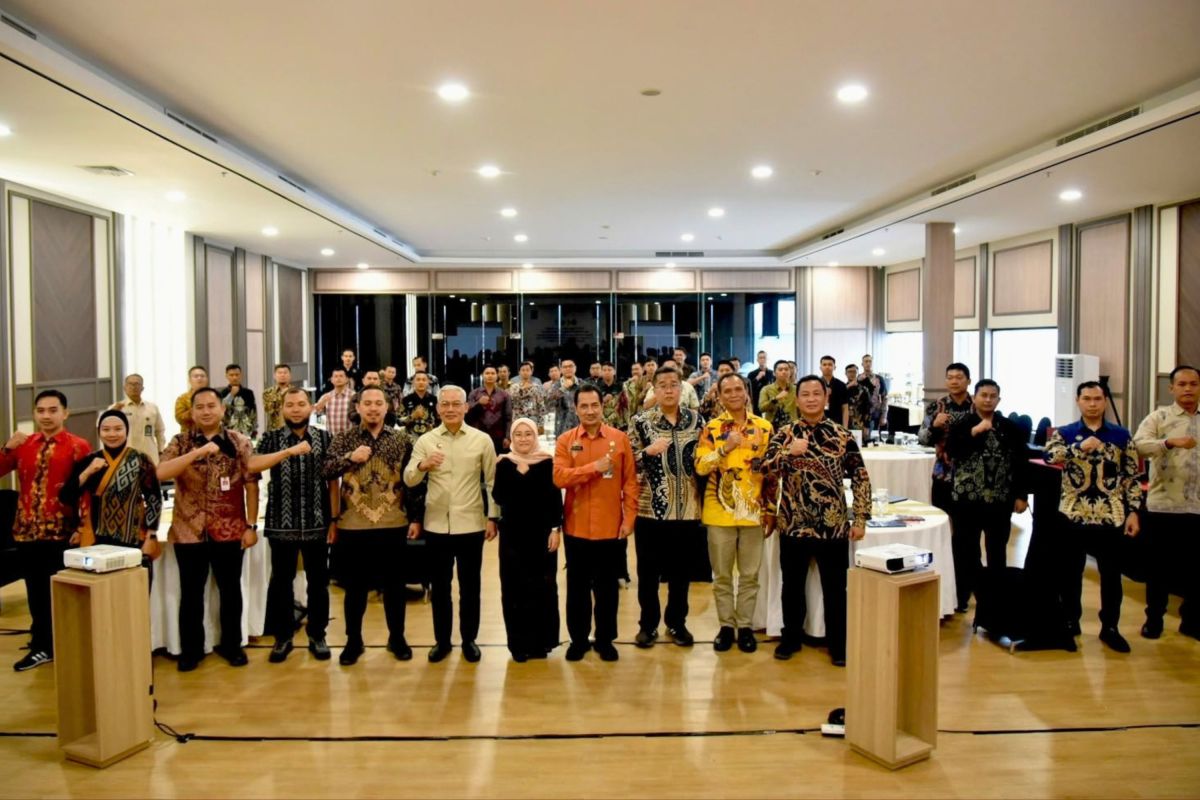
The National Counter-Terrorism Agency (BNPT) has stated that the strengthening of deradicalisation efforts is aimed at building the readiness of inmates to lead productive lives after completing their prison sentences.
Opening a Focus Group Discussion (FGD) in Purwokott, Banyumas Regency, Central Java, on Saturday (26/9), BNPT Deputy for Deradicalisation, Police Inspector General Arif Makhfudiharto, stated that these measures include strengthening mental resilience and economic independence.
“Deradicalisation is a programme implemented in a planned, systematic, integrated, and continuous manner to change the mindset or behaviour of target individuals so they can return to society, the state, and religion correctly,” said Arif, as quoted from a statement confirmed in Jakarta on Monday.
Consequently, he noted that this work cannot be performed in isolation but must involve collaboration and synergy. He remarked that as a partner from the civil society sector, the Prasasti Perdamaian Foundation (YPP) can provide tangible support to the Deradicalisation Implementation Coordination Team.
He emphasised that the involvement of various parties is crucial because the deradicalisation process does not end with rehabilitation while inmates are still within correctional institutions. He added that the programme must also prepare them for life within the community after their sentences are served.
The discussion was part of the ‘Series 2 Nusakambangan-Purwokerto Zonation’ held on 24-25 September 2026. The Nusakambangan-Purwokerto focus was specifically directed towards mapping best practices, identifying coordination challenges, and aligning follow-up steps in the implementation of deradicalisation in the region.
Arif argued that placement in Nusakambangan serves as a continuation for terrorist inmates who have undergone assessment and are identified as having high radicalism levels or being recidivists. “On the other hand, they will eventually return to society, so we need to provide an integrated deradicalisation programme,” said the man who also serves as the Chairman of the Deradicalisation Implementation Coordination Team.
Meanwhile, the Executive Director of the Prasasti Perdamaian Foundation (YPP), Khariroh Maknunah, stated that the involvement of civil society organisations can provide field perspectives and experience to strengthen deradicalisation implementation. YPP is committed to continuing its support for the Deradicalisation Implementation Coordination Team, including the BNPT, the Directorate General of Corrections (Ditjenpas) under the Ministry of Immigration and Corrections, and the National Police’s Anti-Terrorism Special Detachment (Densus 88).
“We are focused on supporting the concrete action plans resulting from this FGD to maximise the services for detainees, the handling of inmates, and the guidance of correctional clients in terrorism cases to ensure a long-lasting impact,” said Khairoh.
She assessed that strengthening deradicalisation requires a collaborative working mechanism that goes beyond administrative coordination to ensure continuity in the process and learning from one stage of handling to the next. This includes strengthening assessment and case management, necessary information exchange, clarity in the division of roles, and increasing the capacity of implementers.
The implementation of deradicalisation requires continuous handling, from assessment and rehabilitation within correctional institutions to preparation for reintegration into society. To ensure every stage is integrated, the Deradification Implementation Coordination Team—comprising the BNPT, Densus 88 AT Polri, and Ditjenpas—is strengthening collaboration with civil society organisations (CSOs), such as YPP.
This collaboration is part of an effort to strengthen deradicalisation implementation in the Nusakambangan region and its surroundings through enhanced coordination, exchange of experience, and the formulation of follow-up steps tailored to field needs. The forum also serves as a space for implementers to share direct field experiences so that policies and coordination mechanisms can be continuously adjusted to meet handling requirements.
A total of 38 participants attended the event, including representatives from nine correctional units in the Nusakambangan area, correctional elements from Purwokerto and Cilacap, Probation Offices (Bapas), Central Java and Nusakambangan Task Forces, as well as elements from the BNPT, Ditjenpas, and Densus 88 AT Polri. This cross-sector involvement demonstrates that deradicalisation is a process requiring sustained roles. The government and relevant authorities carry out mandates according to their respective duties and powers, while civil society provides support based on their experience and capacity.