
BNPT: Cooperation with Partner Countries Needed to Counter Borderless Digital Threats
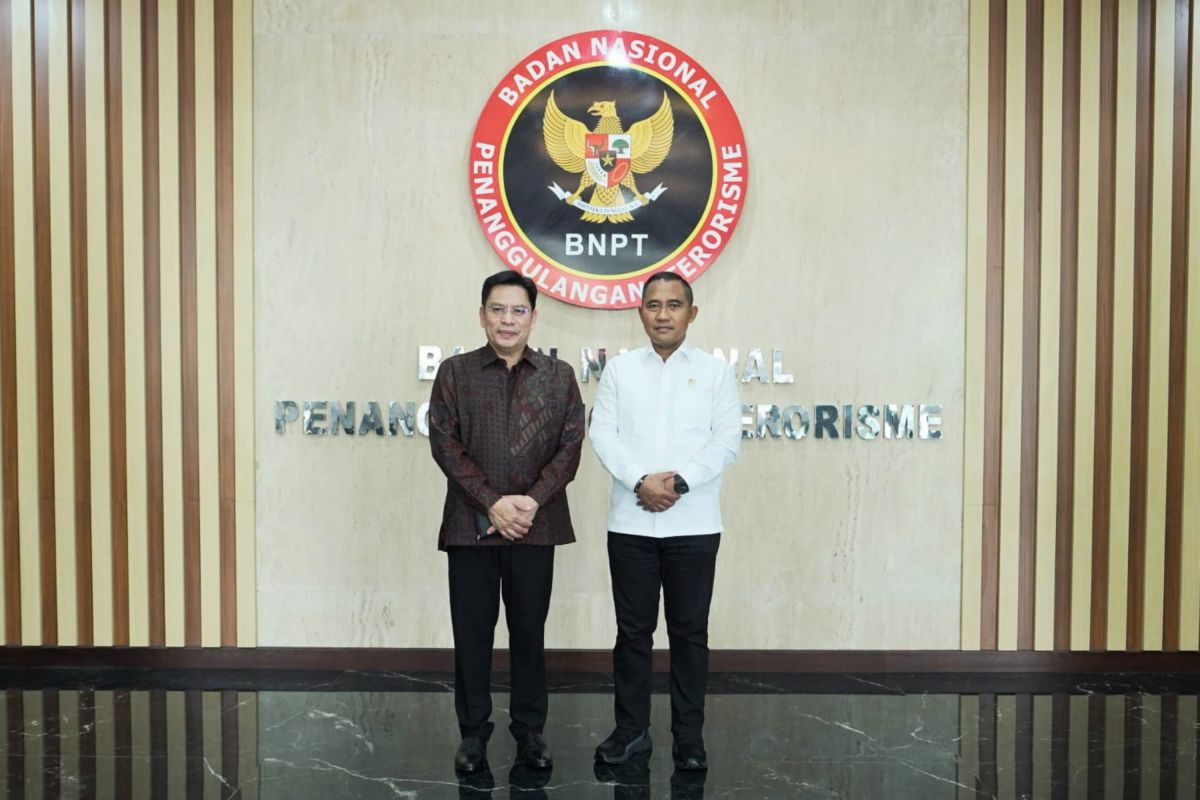
Jakarta (ANTARA) - The National Counter-Terrorism Agency (BNPT) has affirmed that cooperation with partner countries is essential because the character of digital threats knows no national borders.
According to BNPT chief Eddy Hartono, the exchange of information, experience and best practices is needed to anticipate the evolving patterns of violent ideology spread that continuously adapts to technological developments.
“Given that the terrorist threat is persistent, resilient and adaptive, cooperation and the exchange of information between countries is becoming increasingly important,” Eddy said when contacted in Jakarta on Tuesday.
He said the development of terrorist threats is no longer confined to physical spaces, but also operates in the digital sphere, which is borderless and can reach communities rapidly.
Although no terrorist attacks have occurred in Indonesia since 2023, BNPT remains vigilant against developing threats.
To that end, he stated that Indonesia continues to strengthen its efforts in prevention, early detection, information exchange, preventing terrorism financing, and protecting the younger generation from extremism in the digital sphere.
According to him, digital technological developments present new challenges in counter-terrorism.
It was noted that the digital space, including social media, online gaming platforms and artificial intelligence (AI), has the potential to be exploited to spread propaganda, build influence and reach young people.
On the other hand, Eddy revealed that protecting the younger generation requires shared attention. Digital literacy, the ability to recognise propaganda and strengthening community resilience are important elements in preventing the younger generation from exposure to violent extremism.
Facing these developments, Indonesia is strengthening collaboration to improve vigilance and the capability to counter terrorism and violent extremism in the digital sphere, including with Brunei Darussalam.
That commitment emerged during a meeting between the BNPT chief and the Brunei Research Department (BRD) delegation led by Asmawee Muhammad in Bogor Regency, West Java, on Thursday (27/8).
In agreement, Asmawee said digital technological developments pose new challenges that must be anticipated together.
“Brunei has a very high level of internet penetration, and children and young people are among the most active groups using the internet, including playing games. This is a concern because they can be approached or influenced through gaming platforms,” he said.
Asmawee also highlighted the development of artificial intelligence, which can be exploited to produce and disseminate propaganda more quickly and widely.
According to him, this situation demonstrates the importance of improving both countries’ capabilities to understand threat patterns in the digital sphere whilst strengthening preventive measures so that communities, particularly the younger generation, are not easily influenced by violent extremist narratives.
Beyond addressing domestic threats, he believes international cooperation is also needed to improve the protection of citizens abroad, especially when visiting countries or regions with higher levels of terrorist threat.
“Our concern is not only about threats occurring in Brunei, but also about Bruneians in other countries with higher levels of terrorist threat, including the places they visit,” he revealed.
The meeting between BNPT and BRD served as momentum to strengthen cooperation between Indonesia and Brunei Darussalam in responding to the changing landscape of terrorist threats.
The collaboration between the two countries is directed not only at information exchange, but also at improving mutual understanding of threat patterns, technological developments and adaptive prevention strategies.
Such cooperation also affirms that confronting terrorist threats in the digital era requires cross-border collaboration. When propaganda can spread without regard to territorial boundaries, public vigilance and resilience must likewise be built through cooperation that transcends national borders.
For communities, especially the younger generation, strengthening international collaboration is part of ensuring the digital space remains a safe environment for learning, creating and interacting without becoming a target of propaganda or violent extremist recruitment.