
BNPP Urges Border Areas to Become Part of Regional Transformation to Synchronise Papua's Accelerated Development
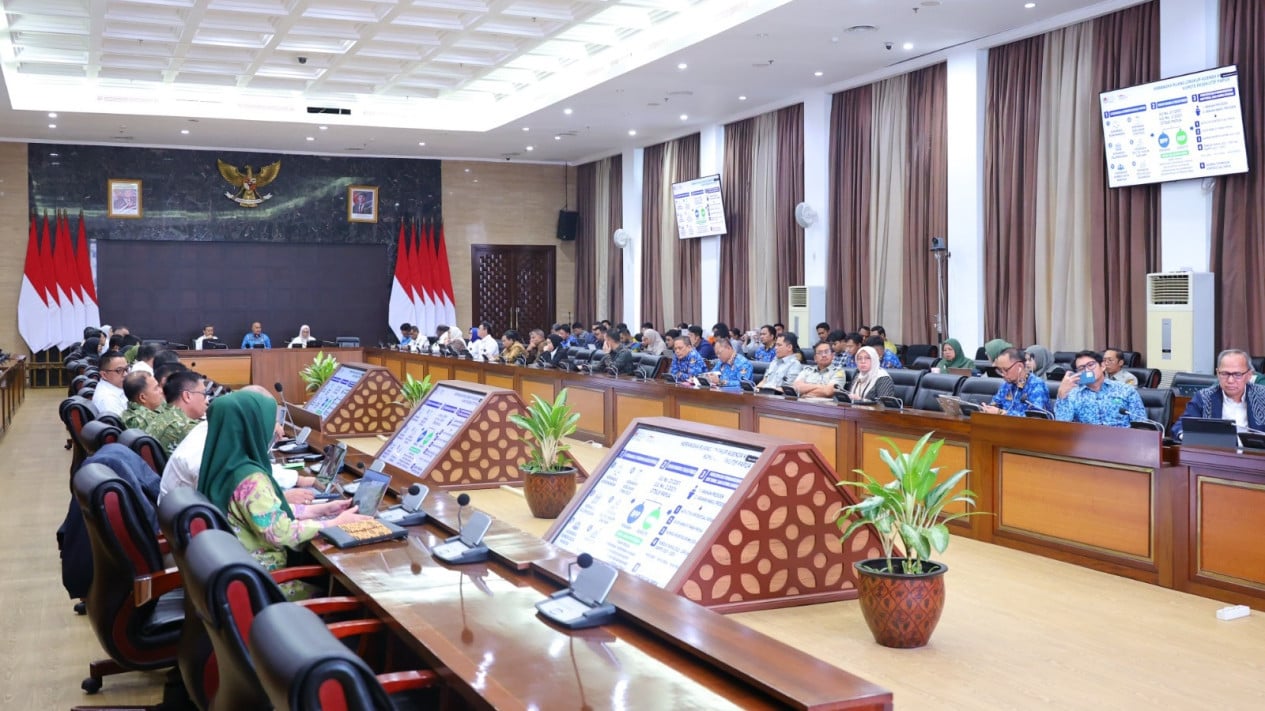
The Government recently held the Forum for the Synchronisation of Planning and Implementation of the Papua Accelerated Development Action Plan (RAPPP) 2025–2029. The forum, organised through the Executive Committee for the Acceleration of Papua Special Autonomy Development and relevant ministries/agencies, took place at the Ministry of State Secretariat on Thursday (1/10/2026).
The forum involved various cross-ministerial/agency elements, including the Steering Body for the Acceleration of Papua Special Autonomy Development (BP3OKP), the National Border Management Agency of the Republic of Indonesia (BNPP RI), the Executive Committee for the Acceleration of Papua Development, the TNI (Indonesian National Armed Forces), the Polri (Indonesian National Police), and BIN (State Intelligence Agency).
From a border management perspective, the Deputy for National Border Management of BNPP RI, Nurdin, stated that the current national gateway system in Papua includes three operational Integrated Border Posts (PLBN). These border gates include PLBN Skouw, PLBN Yetetkun, and PLBN Sota.
According to Nurdin, the development of border areas needs to be placed within a broader regional development framework, so that it is not limited solely to the function of the movement of people and goods.
“Border development should not merely be viewed as the development of exit-entry points, but also as part of the effort to open economic connectivity in the hinterland of Papua, particularly with Papua New Guinea,” Nurdin said in his statement on Friday (2/10/2026).
Nurdin noted that the development of connectivity must go hand-in-hand with addressing the issues facing border communities. This includes Papua residents currently in Papua New Guinea who wish to return, the fulfilment of indigenous peoples’ rights, and the strengthening of the social and economic conditions of communities in the border areas.
As an example, the Yetetkun area demonstrates community aspirations to improve the environment and develop sustainable agriculture. This, according to him, could serve as a reference for building a border development approach based on community needs.
“A family-oriented approach and the involvement of indigenous communities must proceed alongside the development of infrastructure and facilities. In doing so, the potential for friction at the community level can be minimised while simultaneously strengthening the reintegration process for citizens returning to their original territories,” said Nurdin.
Nurdin explained that the familial ties and connections between Papuan communities in PNG and the indigenous communities and customary lands in their original territories represent social capital that should be considered in voluntary repatriation approaches.
Source: jawawa.id (https://jawawa.id/newsitem/bnpp-urges-border-areas-to-become-part-of-regional-transformation-to-synchronise-papuas-accelerated-1790949256)
Originally published by VIVA.co.id (https://www.viva.co.id/berita/nasional/1932749-sinkronkan-percepatan-pembangunan-papua-bnpp-dorong-perbatasan-jadi-bagian-transformasi-kawasan), translated from Indonesian