
BNPP Strengthens Cross-Sector Coordination for Border Management
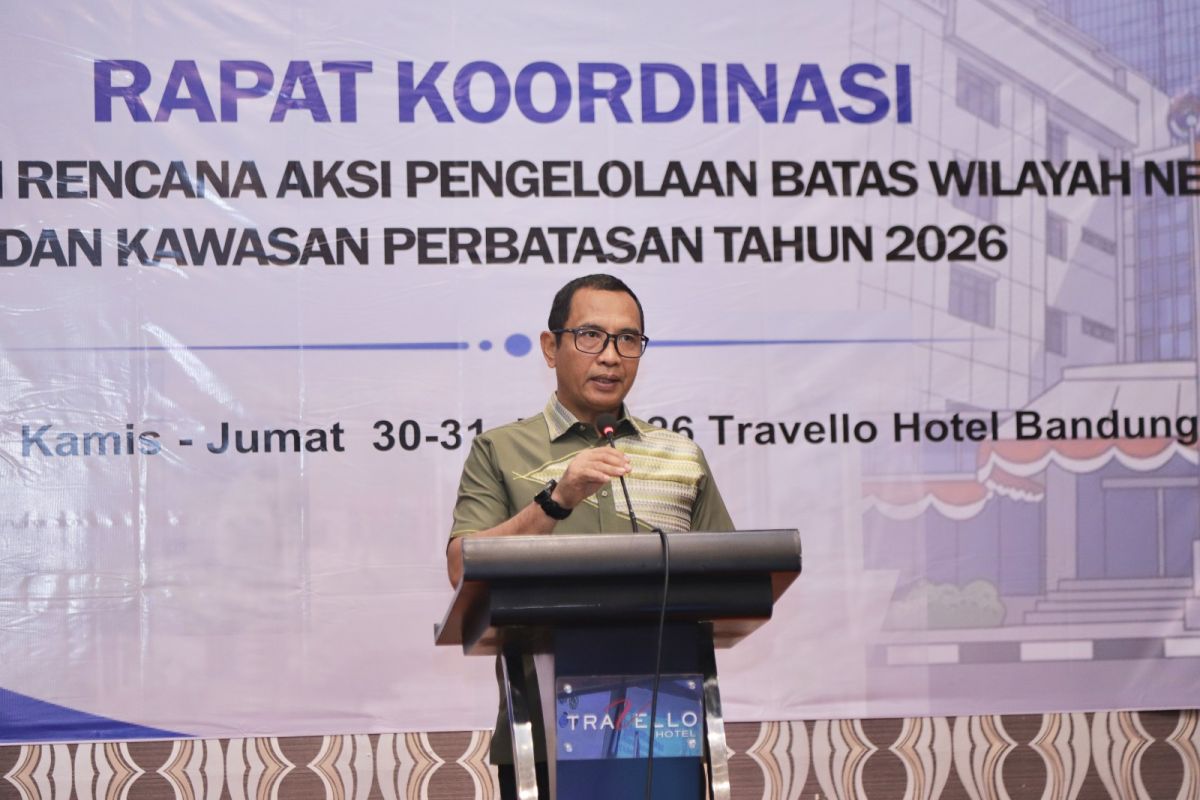
The National Border Management Agency (BNPP) of the Republic of Indonesia has emphasised the importance of cross-sectoral coordination and synergy in managing national borders and developing border regions. The Secretary of BNPP RI, Makhruzi Rahman, also urged for strengthened coordination between central and regional governments, alongside the refinement of border management regulations.
“The complexity of challenges in border areas cannot be resolved by a single agency. It requires collaboration, commitment, as well as integrated planning and programme implementation between ministries, agencies, and local governments,” Makhruzi stated in Jakarta on Friday.
These remarks were made during the Coordination Forum for the Implementation of the National Border and Border Area Management Action Plan (PBWN-KP) for 2026, held in Bandung on Thursday. Makhruzi viewed the forum as a strategic step to align programme implementation and policies across various sectors to accelerate integrated and sustainable development in border regions.
He asserted that border management for the 2025–2029 period still faces four strategic issues: equitable development of border areas, the resolution of national borders with neighbouring countries, the strengthening of cross-border management, and increasing the effectiveness of institutional coordination among stakeholders.
According to Makhruzi, development challenges in border areas are still dominated by limited connectivity infrastructure, transportation, telecommunications access, and the provision of basic services in underdeveloped, frontier, and outermost regions. Regarding national borders, Indonesia is still working to resolve several border segments with Malaysia and Timor-Leste, including managing the social impacts following the resolution of Outstanding Boundary Problems (OBP) in Simantipal, Sebatik Island.
Furthermore, the monitoring of unofficial routes that could be exploited for transnational crimes is a serious concern, alongside the accelerated construction of Integrated Border Posts (PLBN), including carry-over projects and proposals for new posts.
He explained that the implementation of the 2026 PBWN-KP Action Plan is legally grounded through BNPP Head Regulation Number 2 of 2026. This regulation serves as a common guideline for border area development while strengthening the functions of coordination, synchronisation, and policy control.
In 2026, Makhruzi noted, there are 552 programmes and activities to be implemented by 29 ministries/agencies across 18 border provinces, with a total budget allocation reaching Rp11.3 trillion. This figure represents an increase of approximately 77.46 per cent compared to the 2025 allocation of Rp6.4 trillion, reflecting the government’s growing focus on accelerating border area development.
He also revealed that the three ministries with the largest budget allocations in the 2026 PBWN-KP Action Plan are the Ministry of Social Affairs with Rp4.29 trillion for social protection programmes, the Ministry of Public Works with Rp3.93 trillion for strategic infrastructure development, and the Ministry of Agriculture with Rp949.29 billion to support agricultural development and food security in border regions.
Makhruzi expressed hope that this coordination forum would build a shared understanding among all ministries, agencies, and local governments regarding policy direction, division of roles, and individual responsibilities in executing the 2026 Action Plan. Through strengthened cross-sectoral coordination, BNPP RI continues to push for integrated, adaptive border management that enhances community welfare and reinforces national sovereignty.