
BNPP Strengthens Border Area Growth Centers
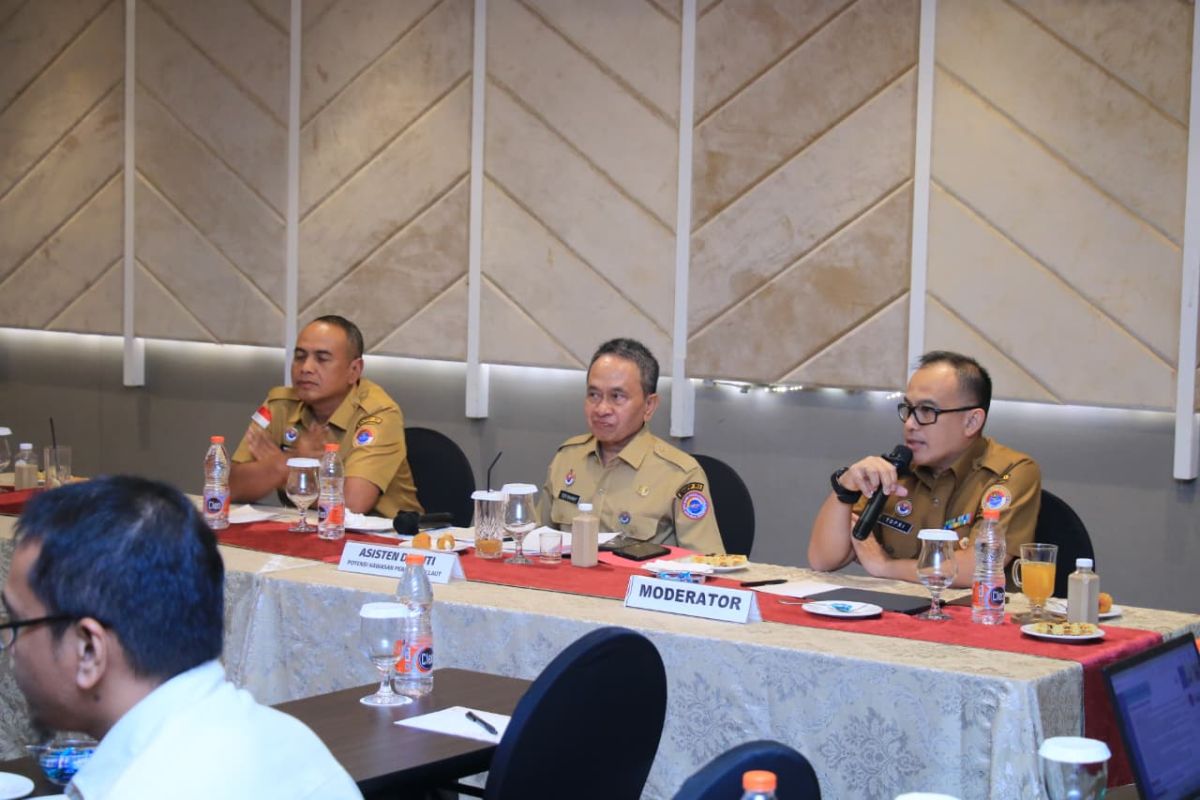
Jakarta (ANTARA) - The National Border Management Agency (BNPP) of the Republic of Indonesia held the 2026 Border Area Management Index (IPKP) Forum for Maritime Border Area Growth Centers.
This forum is a strategic step for the BNPP in updating the methodology and measuring the performance of the IPKP as an instrument to boost economic growth in maritime border areas in 2026.
“The 2026 IPKP measurement will align with efficiency policies. Of the 11 Maritime Border Area Growth Centers, seven will be measured directly in the field, and five will be conducted online,” said Deputy for the Management of Border Area Potential at the BNPP, Edfrie R. Maith, in a statement in Jakarta on Friday.
Maith affirmed that the target for completing the 2026 IPKP report is set for July 2026 so that it can be submitted to Bappenas in August 2026. He also emphasized the importance of following up on the recommendations from the previous year’s IPKP.
According to Maith, interventions from ministries/agencies (K/L) have not been fully reflected in the 2025 assessment results, so the BNPP will reconfirm with the K/L to ensure that the recommendations have a real impact on strengthening growth centers in maritime border areas.
The forum featured speakers from various sectors, including Andar Danova, Deputy for Improving the Capacity of Civil Servant Human Resources and Vocational Education at the Ministry of Tourism, who presented support for vocational education in the 11 Maritime Border Area Growth Centers.
He explained five flagship tourism programs for 2026, namely, improving tourism safety, developing tourism villages, promoting quality tourism, holding events by Indonesia, and implementing Tourism 5.0.
Andar added that border areas can establish cooperation for human resource development through tourism polytechnics with a memorandum of understanding. Furthermore, registration for events and tourist attractions can also be accessed through the official website of the Ministry of Tourism at kemenpar.go.id.
From the marine and fisheries sector, Dessi Arisandi, representing the Ministry of Marine Affairs and Fisheries, presented the vocational needs in maritime border areas. She revealed that around 85 percent of fishermen are not certified, with the level of education still dominated by elementary/junior high school graduates.
“Due to limited access to training facilities, the training that can be provided for fishermen includes priority training, covering fisheries management, modern fishing techniques, and post-harvest handling,” she said.
Meanwhile, Endah Riawati from the Central Bureau of Statistics presented the dynamics of economic growth in maritime border areas through the publication of the 2026 People’s Market Directory for the 11 Border Area Growth Centers. She explained the approach to calculating GDP/GRDP, which includes the production, expenditure, and income approaches.
In the presentation on the distribution and growth of the 2025 Regional Gross Domestic Product (GRDP) of Border Areas (c-to-c), the highest growth was recorded in Natuna Regency (10.49 percent), Sangihe Islands (5.67 percent), and Talaud Islands (5.19 percent), while the lowest growth was in Bengkalis Regency (2.93 percent), Biak Numfor (3.29 percent), and West Maluku (3.49 percent).
The forum was also attended by the Deputy for the Management of Maritime Border Areas at the BNPP, Yedi Rahmat, the Deputy for the Potential of Land Border Areas at the BNPP, Brigadier General TNI Topri Daeng Balaw, and the Deputy for Spatial Planning of Border Areas at the BNPP, Ismawan Harijono.
Through this forum, the BNPP reaffirmed its commitment to strengthening cross-sectoral policy synergy and data-driven approaches so that the 2026 IPKP becomes an effective instrument to promote equitable development, improve the competitiveness of the maritime economy, and ensure that growth centers in maritime border areas develop sustainably and inclusively.