
BNPP: Rp11.3 Trillion Allocated for Border Development
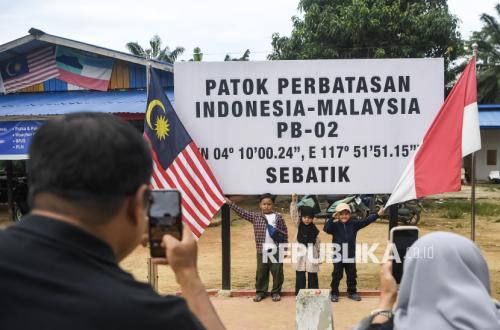
The government has significantly increased the development budget for border areas for 2026 to Rp11.3 trillion, an increase of nearly 77.5 per cent compared to the previous year. This budget surge reflects the government’s efforts to accelerate the development of Indonesia’s outermost regions amidst ongoing strategic challenges, ranging from border disputes with neighbouring countries and the prevalence of illegal crossing routes to the lack of basic infrastructure in border areas.
The Secretary of the National Border Management Agency (BNPP) of the Republic of Indonesia, Makhruzi Rahman, stated that the complexity of issues in border regions cannot be resolved by a single ministry or institution alone. According to him, border management requires strong cross-sector coordination to ensure integrated development while simultaneously strengthening national sovereignty.
“The complexity of challenges in border areas cannot be resolved by one agency alone. It requires collaboration, commitment, as well as integrated planning and programme implementation between ministries, agencies, and local governments,” said Makhruzi during the Coordination Forum for the Implementation of the State Border Management Action Plan and Border Areas (PBWN-KP) for 2026 in Bandung, Thursday (30/7), as per an official BNPP statement received in Jakarta on Friday (31/7).
The forum was organised to align the implementation of programmes across ministries, agencies, and local governments to accelerate the development of border areas, which have historically faced various inequalities compared to other regions in Indonesia.
Four Strategic Issues Still Looming
The BNPP has identified at least four strategic issues that remain major tasks for the government throughout the 2025–2029 period.
First, the equitable development of border areas, which currently lags behind in terms of road connectivity, transport, telecommunications networks, electricity, clean water, education, and healthcare services.
Second, the resolution of national borders with neighbouring countries, which has not yet been fully completed. Indonesia is still negotiating with Malaysia and Timor Leste regarding several border segments, including addressing the social impacts following the resolution of Outstanding Boundary Problems (OBP) in Simantipal, Sebatik Island.
Third, the strengthening of cross-border management. The government continues to face the issue of numerous unofficial crossing routes that have the potential to be exploited for smuggling, human trafficking, narcotics, and various other forms of transnational crime.