
BNPP RI Strengthens Border Surveillance with Timor Leste
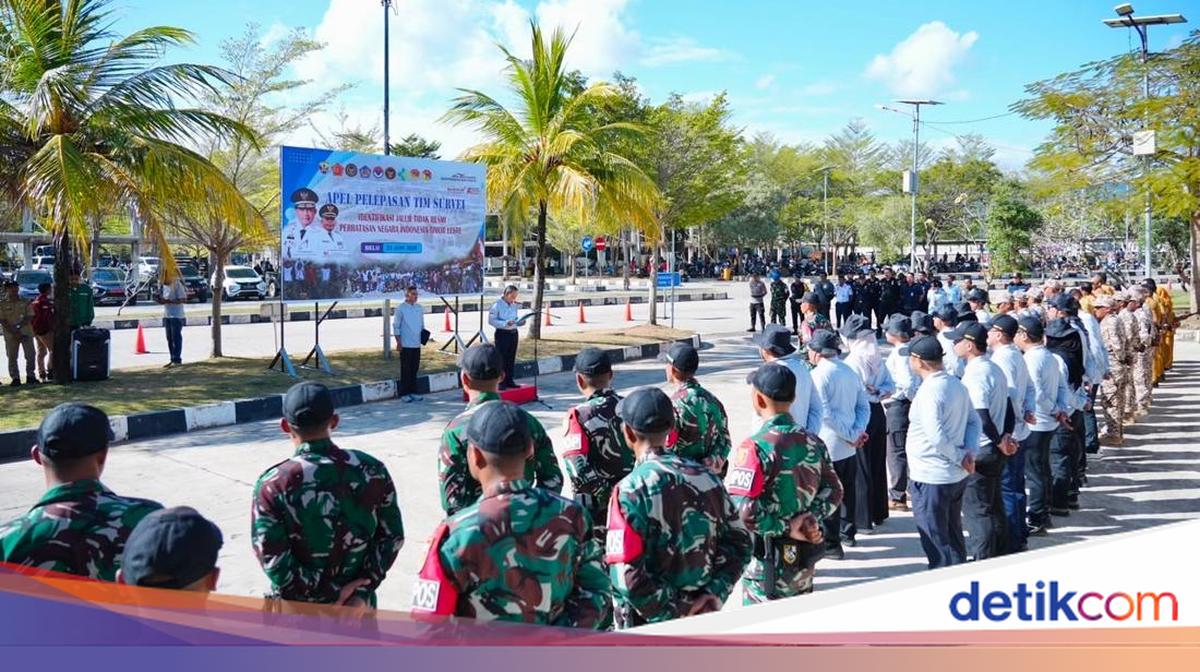
The National Border Management Agency (BNPP RI) has carried out a survey to identify unofficial state border crossing points (JTR) between Indonesia and Timor Leste in Belu Regency, East Nusa Tenggara. The three-day survey, conducted from 23 to 25 June 2026, represents a strategic move by BNPP RI to strengthen border surveillance, ensuring it is secure, orderly, and data-driven.
The activity was led by Deputy for State Boundary Management Nurdin, commencing with a team briefing at the Motaain Integrated Border Post (PLBN) on Tuesday (23/6/2026). The briefing was attended by members of the BNPP RI Cross-Border Deputy Team, managers of the Motaain, Motamasin, Wini, and Napan PLBNs, personnel from Yonarmed 12 Kostrad Eastern Sector, Belu Police, as well as representatives from Customs, Immigration, Quarantine, and other relevant agencies.
Nurdin stressed that border management should not only focus on defence and security aspects but must also understand the social, economic, and cultural realities of border communities that have existed for generations. “Border areas are not merely dividing lines between nations, but spaces for social, economic, and cultural interaction that have been ongoing for decades, even centuries,” Nurdin stated in a written release on Wednesday (24/6/2026).
He explained that BNPP RI has continuously identified and mapped unofficial routes in various border regions. The mapping results reveal diverse characteristics, ranging from routes used for social and family activities to those potentially exploited for smuggling, human trafficking, illegal crossings, and transnational crime. “This survey is not just about locating the routes, but comprehensively understanding their characteristics, from usage patterns and vulnerability levels to the factors driving communities to use these routes,” Nurdin elaborated.
According to him, Belu Regency holds a strategic position with a borderline stretching over 100 kilometres and high cross-border dynamics, necessitating integrated border management. The survey results will produce verified data on the location and distribution of routes, accessibility, usage intensity, vulnerability levels, and potential threats, serving as the basis for formulating proportional control policies. “The state must have a thorough understanding of all crossing patterns—official, traditional, and unofficial—so that policies on surveillance, services, and community protection can be formulated precisely,” he said.
Nurdin emphasised that handling unofficial routes does not always result in closure; options include upgrading them to official status, strengthening supervision, or tightening controls at vulnerable points. Based on initial inventory, there are 27 unofficial crossing points in the Belu area that will be handled selectively and based on bilateral agreements between Indonesia and Timor Leste.
He also expressed appreciation for the Indonesian National Armed Forces’ role in maintaining border security and stressed the importance of standardised cross-border services through the Customs, Immigration, Quarantine, and Security (CIQS) functions at integrated PLBNs. Currently, Indonesia and Timor Leste have agreed on nine official crossing points, four of which already have integrated PLBNs.
BNPP RI affirmed that this survey is part of its commitment to strengthening sovereign, secure, and humane border management. “Through enhanced field data and cross-sector synergy, the government is expected to formulate cross-border policies that safeguard state sovereignty while sustainably protecting the safety and welfare of border communities,” Nurdin concluded.