
BNPP RI Establishes Border Dialogue with 10 Neighbouring Nations
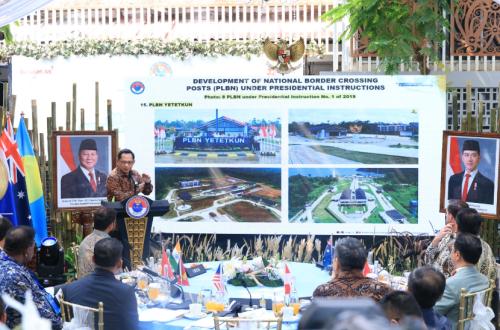
Border management involves more than just territorial security; it encompasses economic activities and the social relations of communities on both sides of the national boundary. This reality has prompted Indonesia to strengthen communication with neighbouring nations to discuss both challenges and opportunities for cooperation in border regions.
Indonesia shares borders with ten neighbouring countries, comprising three land borders—Malaysia, Papua New Guinea, and Timor-Leste—and seven maritime borders, namely Singapore, Australia, the Philippines, Vietnam, Thailand, India, and Palau.
The diverse characteristics of these borders mean that management involves various aspects, ranging from sovereignty and security to trade, population mobility, and socio-cultural relations. Consequently, communication with neighbouring countries is a vital element in managing border areas.
The National Border Management Agency of the Republic of Indonesia (BNPP RI) reinforced this communication through the ‘Indonesia Border Partnership Coffee Morning’ held at the BNPP RI Permanent Secretariat Office in Jakarta on Wednesday (16/09/2026). The forum, themed “Strengthening Cooperation in Managing Our Border to Promote Prosperity,” brought together BNPP RI and several diplomatic representatives from neighbouring nations.
The forum was led by the Minister of Home Affairs, Muhammad Tito Karnavian, in his capacity as the Head of BNPP RI. In his opening remarks, Tito stated that maintaining good relations with neighbouring countries is a crucial part of BNorkan BNPP RI’s mandate to coordinate ministries and agencies in managing border areas.
“First and foremost, it is to protect national sovereignty, specifically to guard and secure our territorial boundaries,” Tito said on Wednesday.
Border management involves several entities, including the Indonesian National Armed Forces (TNI), the National Police (Polri), immigration, customs, quarantine, as well as relevant ministries and agencies. BNPP RI also manages Integrated Border Posts (PLBN), which currently number 15 and are targeted to increase to 24.
Beyond security aspects, BNPP RI is mandated to develop border areas as zones for economic growth and international interaction. Tito believes this approach requires a shift in perspective regarding border regions.
“The border is no longer merely Indonesia’s ‘backyard’. We want to create the border as the ‘front yard’ of the nation,” said Tito.
According to Tito, developing border areas requires communication with neighbouring countries so that growing economic activities can benefit communities on both sides of the border. Social, cultural, and kinship ties across borders also influence population movement patterns for trade and family visits.
Tito cited the situation on the Papua New Guinea border, which features cross-border community relations. “In Papua New Guinea, there are citizens of Papua New Guinea living in Indonesian border areas; I have met them. Similarly, some Indonesians live in Papua New Guinea. This is quite unique for us,” he remarked.
In addition to regional development, resolving territorial boundary issues remains a priority. Tito expressed appreciation for discussions with Malaysia, which have resulted in the resolution of several disputed areas, although the issue of Sebatik Island remains a point of focus in bilateral relations.
BNPP RI, alongside relevant ministries and agencies, has formed a special team to discuss the Sebatik Island issue with the Malaysian government. These discussions demonstrate that border management encompasses not only the demarcation of boundaries but also the governance of the regions and the activities of the populations living around them.
Through this dialogue forum with neighbouring countries, border discussions are directed towards two parallel interests: maintaining territorial sovereignty and developing the region. This approach ensures that border management is increasingly linked to population mobility, international relations, and economic activities within the border zones.