
BNPP Pushes to Accelerate Seimanggaris Cross-Border Post Development in Nunukan
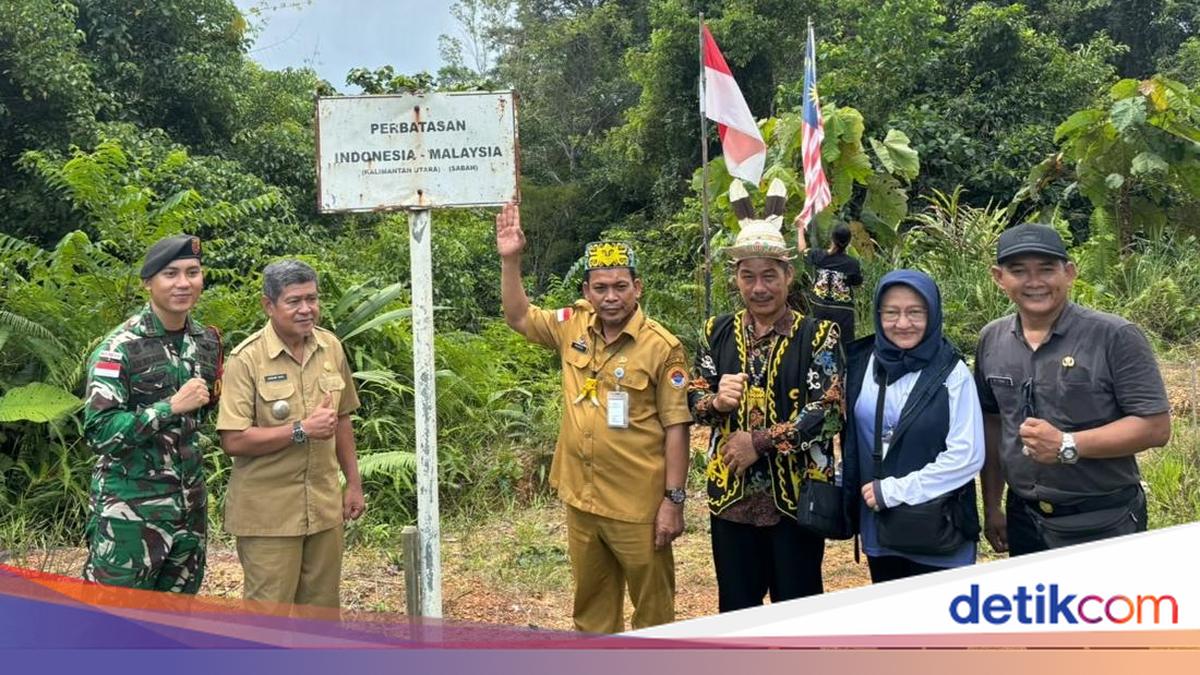
The National Border Management Agency (BNPP) of the Republic of Indonesia is pushing to accelerate preparations for the construction of the Seimanggaris Cross-Border Post (PLBN) in Nunukan Regency, North Kalimantan. The development of the PLBN is projected not only as an official Indonesia-Malaysia crossing point but also as part of strengthening the State Gateway. This initiative simultaneously aims to open up economic connectivity for North Kalimantan with the Brunei Darussalam-Indonesia-Malaysia-Philippines East ASEAN Growth Area (BIMP-EAGA) cooperation zone.
This effort was marked by an inspection of two alternative locations for the Seimanggaris PLBN by the BNPP Deputy for State Border Management, Nurdin, alongside the Assistant Deputy for State Border Crossing Management, Siti Metrianda Akuan. The inspection was conducted to ensure the readiness of the sites from various aspects, including land conditions, accessibility, cross-border connectivity, and alignment with the regional development plan.
Nurdin stated that the BNPP is currently assessing the most technically and strategically feasible location so that the Seimanggaris PLBN development can be integrated with the entry-exit point in Malaysia. “We have reviewed two alternative locations for the Seimanggaris PLBN. The next step is to determine the most technically and strategically appropriate point, including its compatibility with the entry-exit point on the Malaysian side, so that the gates of both countries can be connected in a single integrated crossing system,” he said in a written statement on Wednesday (22/7/2026).
He explained that the establishment of a joint crossing point between Indonesia and Malaysia is one of the main requirements for fulfilling the readiness criteria for PLBN construction. Therefore, the BNPP will continue to strengthen coordination with relevant ministries and agencies, the North Kalimantan Provincial Government, and the Nunukan Regency Government, as well as build bilateral communication with the Malaysian Government to accelerate the entire development preparation process.
Beyond inter-agency coordination, the BNPP is also pushing for the Seimanggaris PLBN development to become a priority agenda in the Malaysia-Indonesia Social and Economic (Sosek Malindo) meeting forum. Nurdin noted that this forum could serve as a strategic platform to expedite a mutual understanding between the two countries regarding the location of the crossing point. “We encourage the local government to bring the Seimanggaris PLBN discussion into the Sosek Malindo agenda. The sooner there is an understanding on the crossing point, the sooner the readiness criteria can be completed and the construction phases can proceed,” he said.
He further emphasised that the Seimanggaris PLBN development is not solely focused on building crossing infrastructure. Under the Indonesian State Gateway System (SGNI) concept, the PLBN is positioned as a governance hub that integrates customs, immigration, quarantine, security, connectivity, and the economic development of the border region. This development is also supported by spatial planning for the border area, featuring a State Gateway Service Centre (PPPGN) as a service zone and a National Strategic Activity Centre (PKSN) as an economic growth centre.
“We are not just constructing a PLBN building. We are building a State Gateway along with its economic area and network. The PLBN becomes a service and supervision node, the PPPGN becomes the gateway development zone, while the PKSN connects it to wider growth and service centres,” he explained. According to him, this approach ensures that the PLBN development is part of an integrated regional development strategy. For the Seimanggaris area, the State Gateway is expected to connect with various economic centres, including production hubs, oil palm plantations, CPO processing industries, seaweed cultivation, Sei Ular Port, North Kalimantan’s logistics network, and PKSN and other growth centres.
He added that the Seimanggaris PLBN development must be viewed within an economic corridor framework to enhance the efficiency of goods distribution while expanding market access for the region’s superior products. “We need to start thinking in terms of an economic corridor. The State Gateway must be connected to production centres, PKSN, ports, industrial zones, and logistics networks. This way, the PLBN development can truly create distribution efficiency while opening up broader markets for the region’s flagship products,” he stated.
From a regional perspective, Nurdin assessed that the Seimanggaris PLBN holds a strategic position to strengthen North Kalimantan’s economic connectivity with Sabah and the wider BIMP-EAGA region. He argued that border areas should not merely be seen as territorial boundaries but as opportunities to link cross-border economic activities. “We often seem to stop thinking at Tawau. In fact, from North Kalimantan, there are opportunities to connect with a much broader economic network, from Sabah and Sarawak to Brunei Darussalam and the Philippines through BIMP-EAGA. This regional perspective is what we need to start building,” he asserted.
Going forward, the BNPP will continue to oversee the acceleration of readiness criteria fulfilment, the determination of a joint crossing point with Malaysia, land preparation, regional planning, and the strengthening of connectivity and supporting infrastructure to ensure the Seimanggaris PLBN development proceeds in an integrated manner. Through this development, the Seimanggaris PLBN is expected not only to strengthen border service functions but also to drive economic growth and open new opportunities for communities in the North Kalimantan border region.