
BNPP Proposes 2027 Budget Plan, Calls for Strengthened Border Management
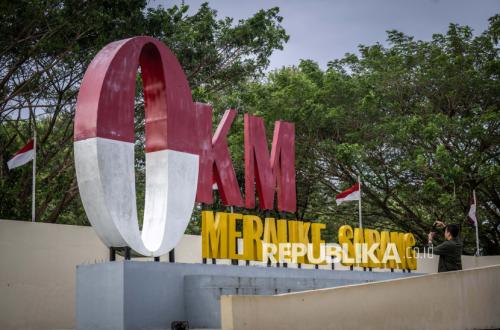
The National Border Management Agency (BNPP) of the Republic of Indonesia, through its Bureau of Planning and Cooperation, held a Coordination Forum for the Preparation of the 2027 Work Plan and Budget (RKA) on Monday (22/6/2026). This forum represents a strategic step by BNPP to ensure the continuity of programmes for managing state boundaries and border areas, keeping them aligned with national policy directions.
The coordination activity involved a number of cross-ministerial and institutional stakeholders, including the Directorate of Rural, Affirmative, and Transmigration Areas (PDAT) and the Directorate of Defence and Security under the Deputy for Political, Legal, Human Rights, Defence, and Security Affairs of the Ministry of National Development Planning/Bappenas.
Deputy for Border Area Potential Management at BNPP, Inspector General of Police Edfrie R. Maith, affirmed that the Minister of Home Affairs, as Head of BNPP, had submitted a proposal for additional budget to the Ministry of Finance, the Ministry of National Development Planning/Bappenas, and Commission II of the House of Representatives (DPR RI) during a Hearing Meeting on 11 June 2026. The proposal was made to address funding needs for managing state boundaries and border areas that have not been accommodated within the indicative budget ceiling.
“The current indicative ceiling does not yet accommodate the programmes and activities for managing state boundaries and border areas. Therefore, we encourage all work units to actively discuss, provide open input, and maintain enthusiasm in overseeing border programmes despite facing budget limitations or adjustments,” he stated in a written release. He added that all proposed programmes and activities for 2027 must refer to national priority programmes as mandated by the President, so that budget planning is not merely administrative but has a direct impact on strengthening sovereignty and the welfare of border communities.
Meanwhile, Head of the Bureau of Planning and Cooperation at BNPP, Budi Setyono, explained that the focus of BNPP’s Strategic Work Programme for Fiscal Year 2027 includes support for 11 National Priority Work Programmes in border areas through 13 activities, the implementation of three national priority activities assigned to BNPP, seven strategic and non-deferrable BNPP priority activities, 58 BNPP priority activities, and 26 management support activities.
“The indicative budget ceiling for BNPP in Fiscal Year 2027 is Rp213.92 billion, consisting of Rp193.92 billion in operational expenditure and Rp20 billion in non-operational expenditure. However, the programme for managing state boundaries and border areas has not yet received a budget allocation,” Budi Setyono revealed. He added that BNPP has proposed a budget requirement of Rp231.54 billion for 2027 to the Minister of Finance and the Minister of National Development Planning/Head of Bappenas, bringing the total proposed budget ceiling to Rp445.47 billion.
From the national planning perspective, First Expert Planner at the Directorate of Defence and Security of the Ministry of National Development Planning/Bappenas, MT. Noor Hafa, conveyed that border area development is part of Asta Cita National Priority 2, which emphasises strengthening the national defence and security system and enhancing national self-reliance. This focus includes developing defence posture, maritime security, strengthening intelligence and domestic security, as well as border diplomacy through resolving land and maritime boundaries with neighbouring countries. He also outlined three priority output plans to be implemented: construction of Border Security Posts, the Kalimantan Border Inspection and Patrol Route (JIPP), and construction of Navy Posts or Border Area Posts.
In a similar vein, representative from the PDAT Directorate of Bappenas, Muhammad Yudo, explained that border area development primarily falls under National Priorities 2 and 6, as well as the National Priority Work Programme (PKPN) for accelerating the development of disadvantaged, frontier, and outermost (3T) regions. Nationally, there are 30 disadvantaged districts and 204 border sub-districts, with 431 priority villages classified as disadvantaged and very disadvantaged being the focus of intervention, particularly in the education and health sectors.
Director of PDAT at the Ministry of National Development Planning/Bappenas, Mohammad Roudo, added that the government will soon issue a Joint Budget Ceiling Letter (SBPA). He therefore urged BNPP to accelerate coordination and confirmation so that the proposed budget can be optimally accommodated before the funding review process is completed.
The coordination forum also underscored the importance of strengthening supporting evidence for BNPP’s additional budget proposal, which will form the basis for Bappenas’ analysis paper in determining funding priorities. Through this forum, BNPP reaffirmed its commitment to continuously oversee border area development in a planned, integrated, and sustainable manner. Amid fiscal constraints, cross-ministerial and institutional synergy is expected to ensure that every rupiah allocated is effectively utilised to strengthen national sovereignty while improving the quality of life for communities on Indonesia’s front porch.