
BNPP Maps 27 Unofficial Crossings on Indonesia–Timor Leste Border
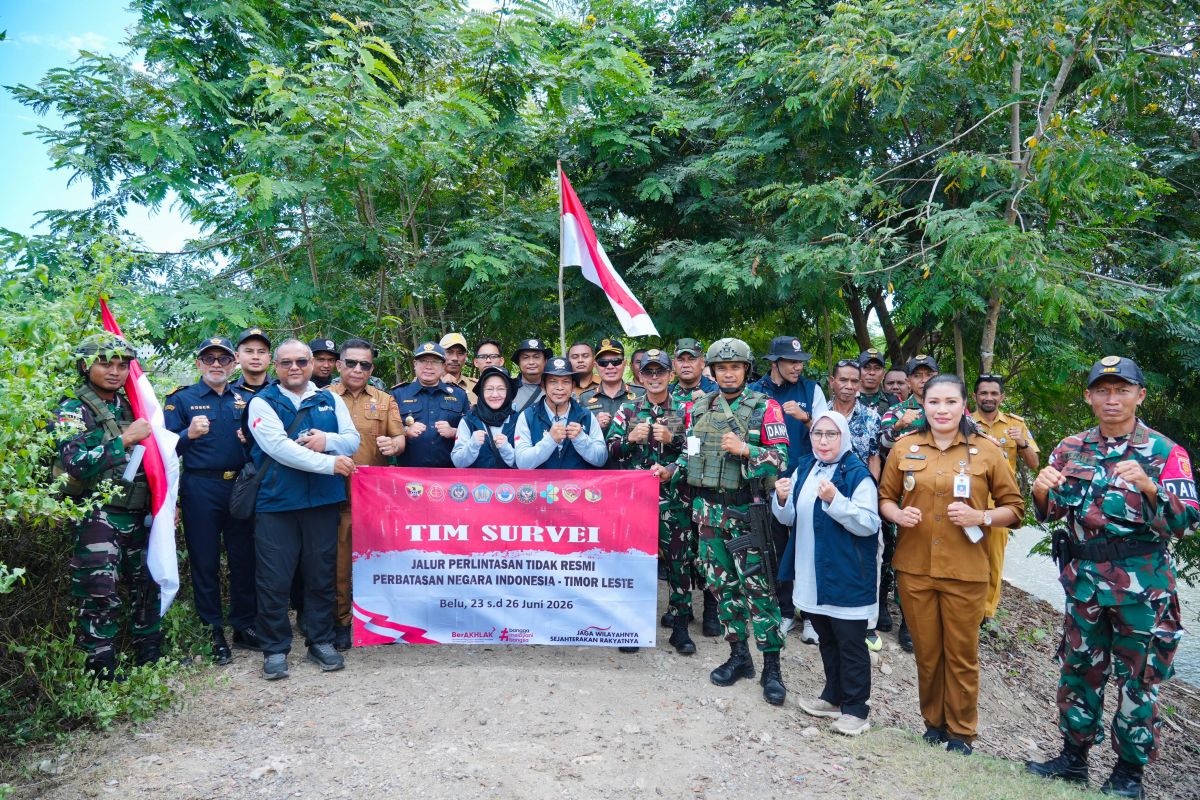
The National Border Management Agency (BNPP) of Indonesia has conducted a survey to identify crossing points on 27 unofficial routes along the Indonesia–Timor Leste border in Belu Regency, East Nusa Tenggara. The survey, led by Deputy for Border Area Management Nurdin, revealed diverse characteristics among the routes, from those used for social and family purposes to others with potential for misuse, including smuggling, human trafficking, illegal crossings, and other transnational crimes. “This survey is not merely about finding the routes, but understanding their complete characteristics, from usage patterns and vulnerability levels to the factors driving border communities to use them,” Nurdin stated in Jakarta on Wednesday. The three-day survey, conducted from 23 to 25 June 2026, represents a strategic step by BNPP to strengthen border oversight that is secure, orderly, and grounded in field data. The activity began with a briefing at the Motaain Integrated Border Post (PLBN) and involved personnel from the BNPP Deputy for Border Area Management, the Motaain, Motamasin, Wini, and Napan PLBNs, the 12th Kostrad Artillery Battalion, Belu Police, as well as representatives from Customs, Immigration, Quarantine, and other relevant agencies. Nurdin emphasised that border management must go beyond defence and security to encompass the social, economic, and cultural realities of communities that have interacted across the boundary for generations. He noted that Belu Regency, with a border length exceeding 100 kilometres and high cross-border dynamics, requires integrated management. The survey will produce verified data on route locations, accessibility, usage intensity, vulnerability levels, and potential threats, forming the basis for proportional control policies. “The state must have a comprehensive understanding of all crossing patterns—official, traditional, and unofficial—so that policies on oversight, services, and community protection can be formulated accurately,” he said. Nurdin added that handling unofficial routes does not always mean closure; options include upgrading them to official status, strengthening supervision, or tightening controls at vulnerable points. The initial inventory identified 27 unofficial crossing points in Belu, which will be addressed selectively and based on bilateral agreements between Indonesia and Timor Leste. He also commended the role of the Indonesian National Armed Forces (TNI) in maintaining border security and stressed the importance of standardised cross-border services through Customs, Immigration, Quarantine, and Security (CIQS) functions at integrated border posts. Currently, Indonesia and Timor Leste have agreed on nine official crossing points, four of which have integrated PLBN facilities. BNPP affirmed that this survey is part of its commitment to strengthening sovereign, secure, and humane border management, with the aim of formulating cross-border policies that uphold national sovereignty while sustainably protecting the safety and welfare of border communities.