
BNPP Indonesia Agrees to Accelerate Reopening of Temajuk-Telok Melano Border Crossing
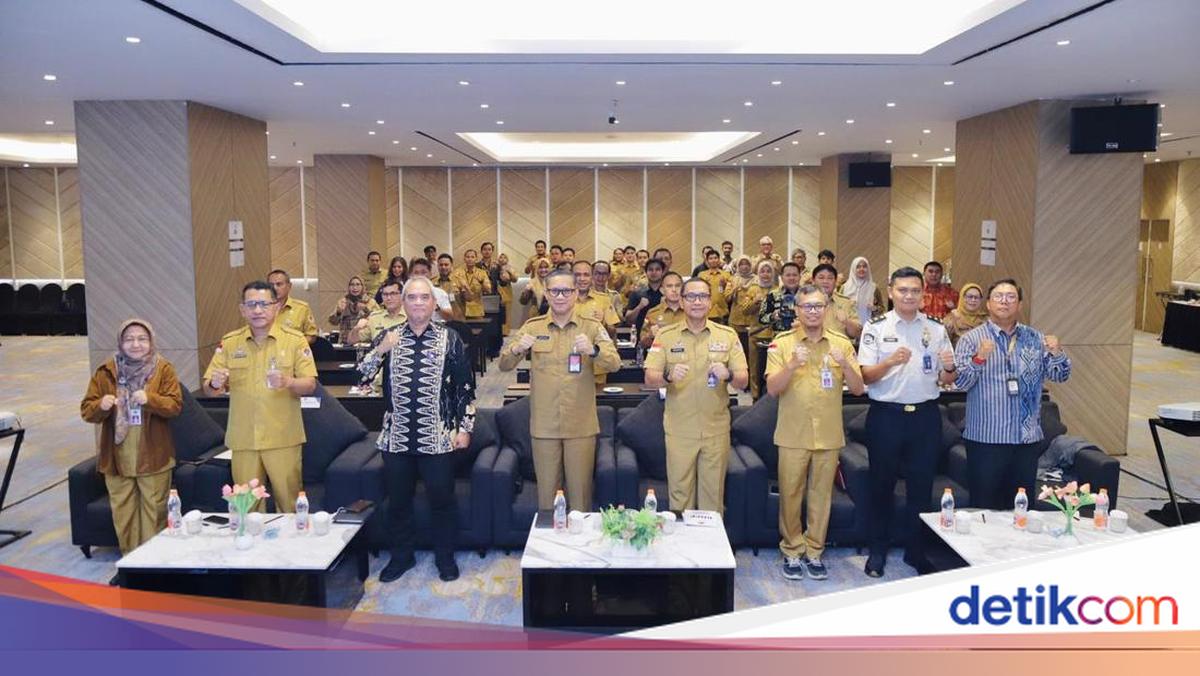
The National Border Management Agency (BNPP) of Indonesia, along with partner ministries and agencies, the West Kalimantan provincial government, and Sambas regency government, have agreed to accelerate the reopening of the Temajuk-Telok Melano border crossing on the Indonesia-Malaysia frontier. The agreement was reached during a cross-sector coordination forum held yesterday.
This coordination forum is part of BNPP Indonesia’s central role in coordinating national border area management policies, particularly to enhance connectivity, economic growth, and strengthen the strategic functions of border regions.
In addition to discussing the accelerated operation of the border crossing, the forum also agreed to support the proposal to designate Temajuk as a Special Economic Zone (SEZ) for border-based tourism.
Budi Setyono, Head of the Planning and Cooperation Bureau at BNPP Indonesia, stressed that accelerating the reopening of the Temajuk-Telok Melano border crossing requires synergy across ministries, agencies, and local governments. He stated that the coordination forum produced a shared understanding that forms the foundation for a unified action plan.
“This forum has agreed on concrete steps to accelerate the reopening of the Temajuk-Telok Melano border crossing, with an operational target of August 2026,” Budi said in a statement on Wednesday, 27 May 2026.
He explained that one of the key agreed focuses is accelerating the deployment of CIQS (Customs, Immigration, Quarantine, and Security) facilities. This includes preparing personnel, infrastructure, and enhancing border security to ensure the crossing operates optimally and meets service standards.
Beyond operational aspects, the forum also emphasised the importance of accelerating supporting infrastructure development. This includes improving road quality, providing clean water, strengthening telecommunications networks, establishing passenger transport routes, banking services, and boosting the tourism sector through enhanced amenities, accessibility, and attractions.
To optimise border area management, the forum also advocated upgrading Temajuk’s Border Crossing Post (PLB) to a National Border Crossing Post (PLBN). This status upgrade is deemed crucial for expanding capacity for people and goods crossing, and facilitating smoother border activities.
The Sambas regency government also expressed support for the central government, through BNPP Indonesia coordination, to manage and maintain the Temajuk PLB. This local government support is seen as a key factor in ensuring the long-term sustainability of the border crossing operations.
Alongside the border crossing reopening plans, relevant ministries and agencies have committed to strengthening synergies in investment promotion, tourism development, cross-border trade, and local MSME empowerment. These steps are expected to accelerate the realisation of a new inclusive and competitive border SEZ model.
Budi added that BNPP Indonesia will coordinate the formation of a Facilitation and Coordination Team to accelerate the opening of the Indonesia-Malaysia border crossing and the proposal for a SEZ in Temajuk, Sambas regency.
The team will oversee the implementation of cross-sector action plans to ensure operational readiness of the border crossing while accelerating the development of border economic and tourism zones.
“BNPP will ensure all action plans proceed in a coordinated and measurable manner, so that the reopening of the Temajuk-Telok Melano border crossing is not only operationally ready but also delivers tangible impacts on economic growth and border community welfare,” he concluded.
Through this agreement, BNPP Indonesia continues to coordinate the accelerated reopening of the Temajuk-Telok Melano border crossing in a unified manner. This step is expected to not only strengthen cross-border connectivity but also drive economic development and improve the welfare of border communities.