
BNPP Formulates Grand Design for Integrated Border Management Transformation
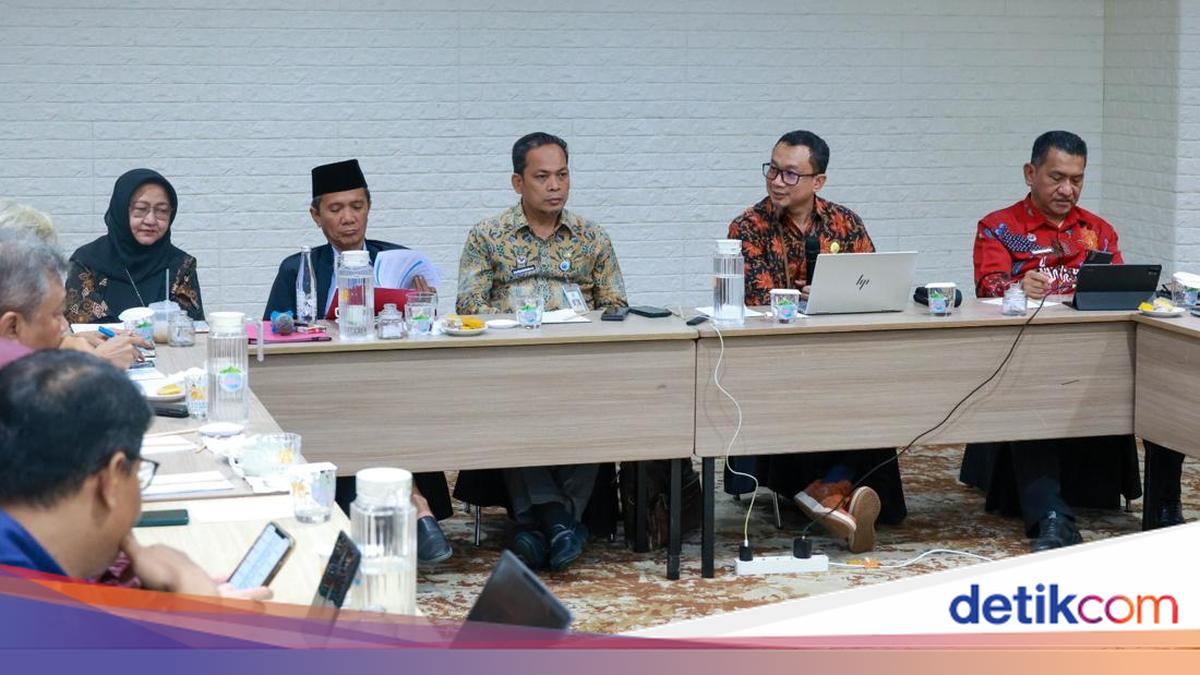
The National Border Management Agency (BNPP) of the Republic of Indonesia held a discussion forum on Friday (11/9) with partner ministries and agencies to draft a grand design for the transformation of National Border and Border Area management.
This forum is part of the BNPP’s efforts to build a national border governance system that is more integrated, measurable, and capable of connecting policy with field implementation. Nurdin, the Deputy for National Border Management at BNPP, stated that this transformation is necessary to change perspectives, working methods, and management systems. He noted that such changes are vital to overcome the current issue of sectoral-based management.
“The goal is for us to move in one direction, within one framework, and towards one unified result in the integrated management of national borders and border areas,” he said in a written statement on Saturday (1ly/9/2026).
Nurdin explained that one of the problems to be addressed is the sub-optimal implementation of the Master Plan for National Border and Border Area management. Consequently, the BNPP needs to establish a joint control mechanism that not only measures activity implementation but also ensures that cross-sectoral programmes provide benefits to the border regions and their communities.
According to Nurdin, border management transformation must evolve alongside changing management approaches. These approaches are no longer solely focused on boundary demarcation and security aspects, but are moving towards integrated border management that establishes borders as centres for economic activity and services. In the Indonesian context, this approach is reflected through the development of Integrated Border Posts (PLBN) and National Gateway Service Centres (PPGN).
“Since they function as gateways, they must be connected to production centres, service centres, and so on. This will eventually form economic corridors within the border regions,” Nundin explained.
Meanwhile, Adi Suhendra, Coordinator of the Cooperation and Partnership Working Team at the BRIN Centre for Domestic Government Research, assessed that the grand design for transformation needs to be strengthened with data and empirical evidence. He noted that the document should include information on border conditions, connectivity, spatial planning, basic services, institutional frameworks, and the socio-economic conditions of the community.
“The Grand Design must encompass three main pillars: Border as Resources, Trade Facilitation, and Cross-Border Governance,” said Adi. He explained that these three approaches position the border as an economic asset, increase the efficiency of cross-border flows, and build multi-level governance involving central government, regional authorities, technical agencies, and economic actors.
Adi also proposed eight aspects for the grand design: policy and regulation; governance and orchestration; the Indonesian National Gateway System (SGNI); border area development; digitalisation and data; performance and control; collaboration and partnership; and capability and change management. The proposed transformation is intended to take place in four phases leading up to 2045, starting from foundation and consolidation (2026-2028) to adaptive national border governance (2040-2045).
Istyadi Insani, Assistant Deputy for Politics, Law, Security, and Regional Government at the Ministry of PAN-RB, stated that the grand design must be aligned with national development goals, specifically the Asta Cita and the 2025-2029 National Medium-Term Development Plan (RPJMN). He noted that the transformation of border area development has become part of national policy to realise the borders as the nation’s ‘front porch’.
“The main challenge is how distributed authorities can work in an integrated manner to achieve the same national direction, priorities, targets, and results,” said Istyadi.
The preparation of this grand design is directed towards achieving integrated and effective national border governance. This effort represents a step by the BNPP to build a more connected management system while ensuring that development benefits are increasingly felt by the communities living on Indonesia’s frontiers.