
BNPP Discusses Strategies to Accelerate Status Upgrades for Border Area Villages
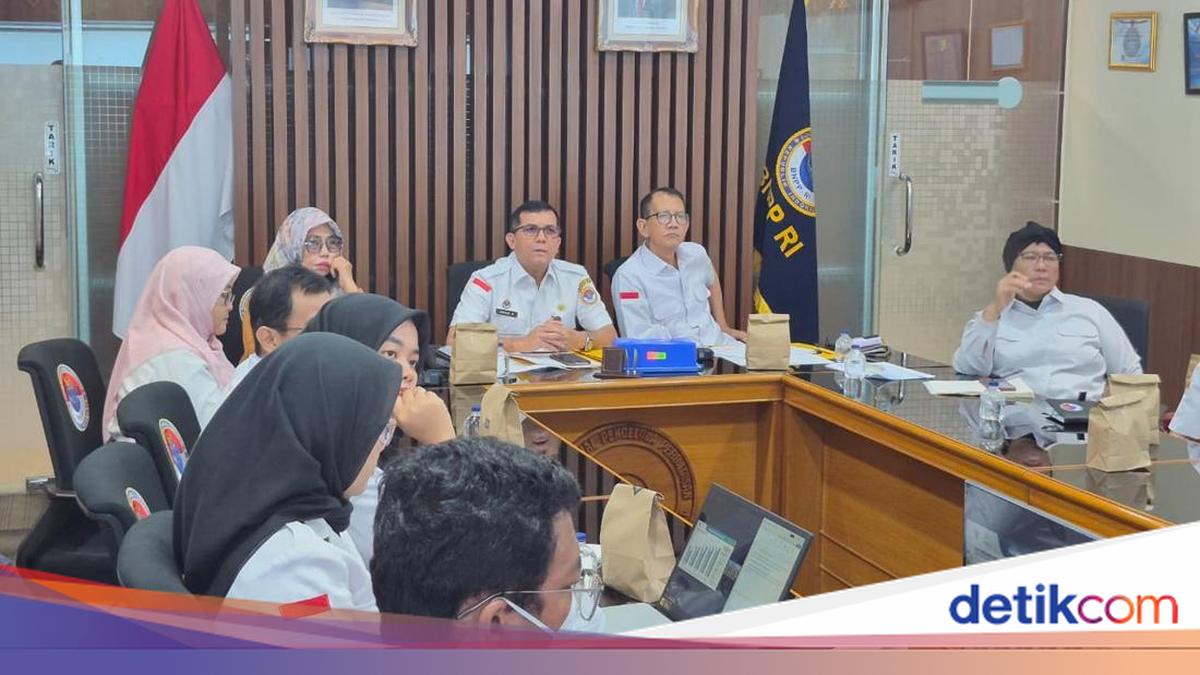
The National Border Management Agency of the Republic of Indonesia (BNPP RI) is discussing strategies to accelerate the status upgrade of villages located in border areas. This discussion was conducted through a coordination forum involving partner ministries and agencies.
The forum, led by the Assistant Deputy for Government Infrastructure of BNPP RI, Bakri Siddable, took place at the BNPP RI Permanent Secretariat Meeting Room on Wednesday (23/9). The activity served as a coordination space to formulate steps for accelerating the transition of disadvantaged and highly disadvantaged villages towards becoming developing, advanced, and ultimately independent villages in border regions.
Bakri stated that accelerating the upgrade of village status requires development interventions tailored to the specific conditions and needs of each village. “This forum is part of the coordination to formulate strategies for upgrading disadvantaged and highly disadvantaged villages towards advanced and independent villages in border areas,” Bakri said in a written statement on Friday (25/9/2026).
Bakri explained that mapping results show several dimensions still require intervention to accelerate the status upgrade of villages in border areas. These dimensions include economy, accessibility, environment, and basic services.
In the economic dimension, the need for intervention reaches approximately 40.6 per cent, particularly regarding productive activities and weak economic institutions. Meanwhile, the accessibility dimension requires intervention at approximately 43.1 per cent, relating to physical connectivity and service accessibility.
Intervention needs in the environmental dimension reach approximately 44.8 per cent, covering sanitation, waste management, and environmental resilience. The basic services dimension is also a major focus, with an intervention need of approximately 51.4 per cent, encompassing health, water, education, and housing.
According to Bakri, mapping based on the Village Index dimensions is a vital instrument for BNPP RI in conducting monitoring and evaluation of border area development. “Mapping these lever dimensions is necessary to determine interventions that can accelerate the status upgrade of villages in the borders. The results also serve as the primary material in drafting action plans and determining priority locations,” he explained.
Strengthening development synergy down to the village level was also a focus of the forum. The Ministry of National Development Planning/Bappenas directed that the needs and interventions for border area development be mapped in an integrated manner alongside ministries, agencies, and local governments.
Coordination must also be strengthened by optimising the roles of sub-district heads (camat) and village heads in aligning development, including in improving the Border Area Management Index (IPKP) and village status. Furthermore, inter-village cooperation is viewed as an approach to expand basic services, strengthen community economic activities, and open market access, including to neighbouring countries.
This policy direction places BNPP RI in a position where it must ensure that border area development interventions are carried out in an integrated, measurable manner, and in accordance with the needs of the community at the village level.
In terms of achievements, the percentage of disadvantaged and highly disadvantaged villages in 2025 was recorded at 22.54 per cent, while the set target was 19.87 per cent. This condition indicates that there is still work to be done to reduce the number of villages with such status.
In 2026, the number of disadvantaged and highly disadvantaged villages increased from 498 to 502 villages. Through cross-ministerial and agency coordination, BNPP RI continues to map development needs down to the village level to ensure border area policies are precisely targeted and that the benefits of development can be felt directly by the communities living in border regions.
For information, the forum was also attended by speakers from the Directorate of Rural, Affirmative Area, and Transmigration of the Ministry of National Development Planning/Bappenas, the Directorate of Advocacy and Village and Rural Cooperation of the Ministry of Villages and Disadvantaged Regional Development, and the Directorate General of Village Government Development of the Ministry of Home Affairs.
Source: jawawa.id (https://jawawa.id/newsitem/bnpp-discusses-strategies-to-accelerate-status-upgrades-for-border-area-villages-1790334154)
Originally published by detikcom (https://news.detik.com/berita/d-8679171/bnpp-bahas-strategi-percepatan-peningkatan-status-desa-kawasan-perbatasan), translated from Indonesian