
BNPP Discusses Acceleration of Indonesia-Malaysia Connectivity in West Kalimantan and Riau Islands
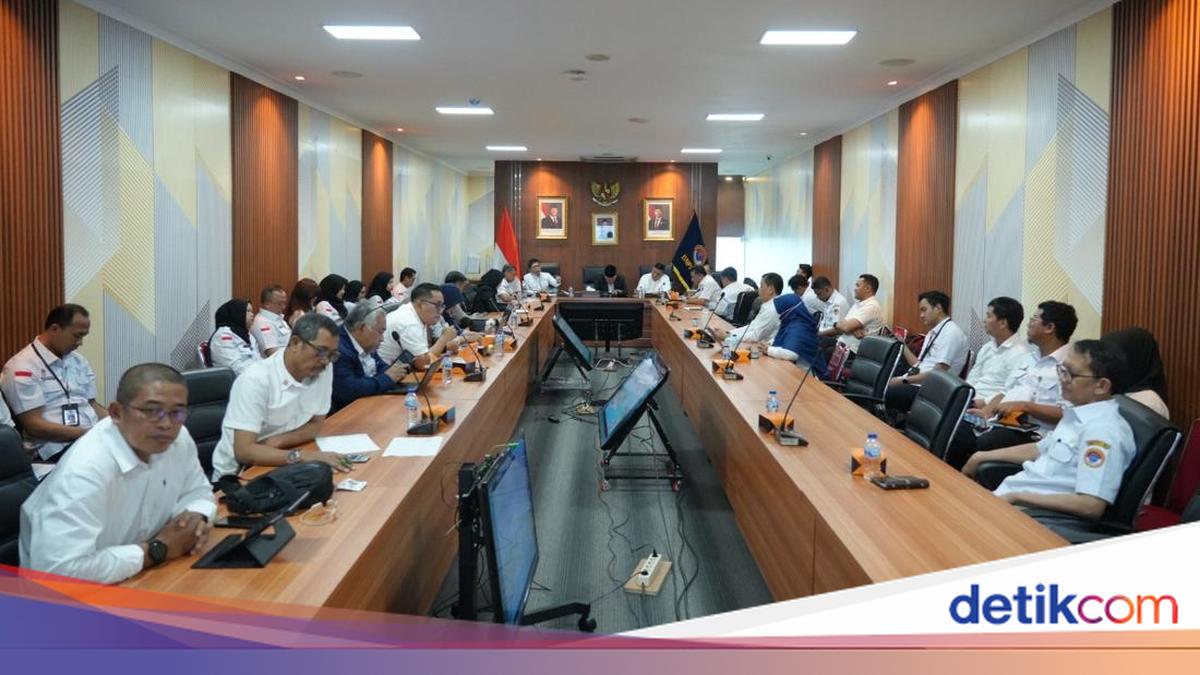
The National Border Management Agency of the Republic of Indonesia (BNPP RI) has discussed the acceleration of connectivity in the Indonesia-Malaysia border regions of West Kalimantan and the Riau Islands. The discussion took place during a coordination forum held at the BNPP RI Permanent Secretariat Meeting Room.
The forum was led by Nurdin, the Deputy for National Border Management of BNPP RI, and involved the Ministry of Transportation, the Regent of Sambas, Satono, the Riau Islands Provincial Government, and members of the Riau Islands Provincial DPRD, on Wednesday (30/9).
Nurdin stated that connectivity in border areas needs to be developed as a multimodal system that integrates land, sea, and air transportation. This approach is not only oriented towards infrastructure development but also considers public services, logistics movement, economic activity, tourism, and cross-border cooperation.
“Border connectivity needs to be viewed as a cross-regional multimodal system, not just the separate development of roads or ports,” Nurdin said in a written statement on Thursday (1/10/2026).
According to Nurdin, transit nodes in West Kalimantan—including Badau, Entikong, Aruk, Jagoi Babang, and Temajuk—need to be positioned as part of a single corridor connected to transport hubs in West Kalimantan through to Serasan, Natuna. Consequently, Border Crossing Posts (PLBN) and Border Posts (PLB) can serve as drivers for regional growth centres in addition to their cross-border service functions.
Nurdability also explained a shift in the approach to managing PLBNs that function as seaports. Moving forward, management will be directed towards an international port approach, involving more stakeholders.
“The approach for PLBN is port-to-port, international port. We are gradually building the governance model to become an international port,” he said.
Nurdin noted that this approach will expand the involvement of maritime elements, such as harbour masters and port authorities, alongside Customs, Immigration, Quarantine, and Security (CIQS) elements. Integration between stakeholders is necessary to increase the effectiveness of services at PLBNs that function as international sea transit points.
In the initial stage, Nurdin emphasised strengthening domestic connectivity before expanding discussions to international connectivity. This development includes the interconnection of Serasan, Natuna, Anambas, West Kalimantan, and other regions with geographical and economic links.
“What we can do now is focus on the domestic side. How to build our domestic side, advancing Serasan, Natuna, Anambas, and so on,” he said.
The Head of the Bureau of Planning and Cooperation of BNPP RI, Budi Setyono, stated that the Sambas Regency Government has prepared policies to facilitate the movement of people and goods. These policies are expected to strengthen connectivity while providing economic value and accelerating development in the border areas of Sambas Regency and West Kalimantan.
From the Riau Islands, Budi conveyed aspirations to overcome the isolation of island regions, particularly during periods of transport access constraints.
The discussion resulted in 11 proposals, including interventions in sea and air transport routes for both domestic and international connectivity. One area of focus is the Temajuk-Serasan-Natuna route.
BNPP RI is encouraging the evaluation of routes and the increase of pioneer shipping frequencies, integrating them with schemes for accelerated regional economic development. This step requires coordination across ministries, agencies, and local governments to ensure integrated connectivity development.
The Head of BPPD Riau Islands, Doli Boniara, stated that the development of Serasan should not rely entirely on connectivity with Malaysia. He noted that Serasan has the potential to be developed as a cruise ship stopover, which could open new economic activities for the community.
On the other hand, developing Serasan as an international entry and exit point still faces several challenges. These include the sub-optimal function of CIQP supervision, the undecided status of the customs area, and regulatory issues regarding PLBN and port legality.
Therefore, regulatory and governance restructuring is required so that Serasan’s function as an exit-entry point can operate optimally.
Member of the Riau Islands Provincial DPRD, Mustamin Bakri, stated that the construction of PLBN must be followed by the realisation of inter-regional connectivity. According to Mustamin, the geographical characteristics of the Riau Islands make sea and air transport essential for connecting Serasan with Sambas, Sematan, Temajuk, and other areas.
“The main focus after the construction of PLBN is to ensure that inter-regional connectivity can be realised,” concluded Mustamin.
Mustamin mentioned that Natuna, Anambas, Serasan, and several tourist areas in the Riau Islands possess economic potential that can be developed with adequate transport facilities.
This forum is part of BNPP RI’s efforts to integrate connectivity, border services, and regional economic development within a single management framework.
Source: jawawa.id (https://jawawa.id/newsitem/bnpp-discusses-acceleration-of-indonesia-malaysia-connectivity-in-west-kalimantan-and-riau-islands-1790862996)
Originally published by detikcom (https://news.detik.com/berita/d-8688438/bnpp-bahas-percepatan-konektivitas-ri-malaysia-di-kalbar-kepri), translated from Indonesian