
BNPP Confirms Input for Maritime Border Area Management Action Plan
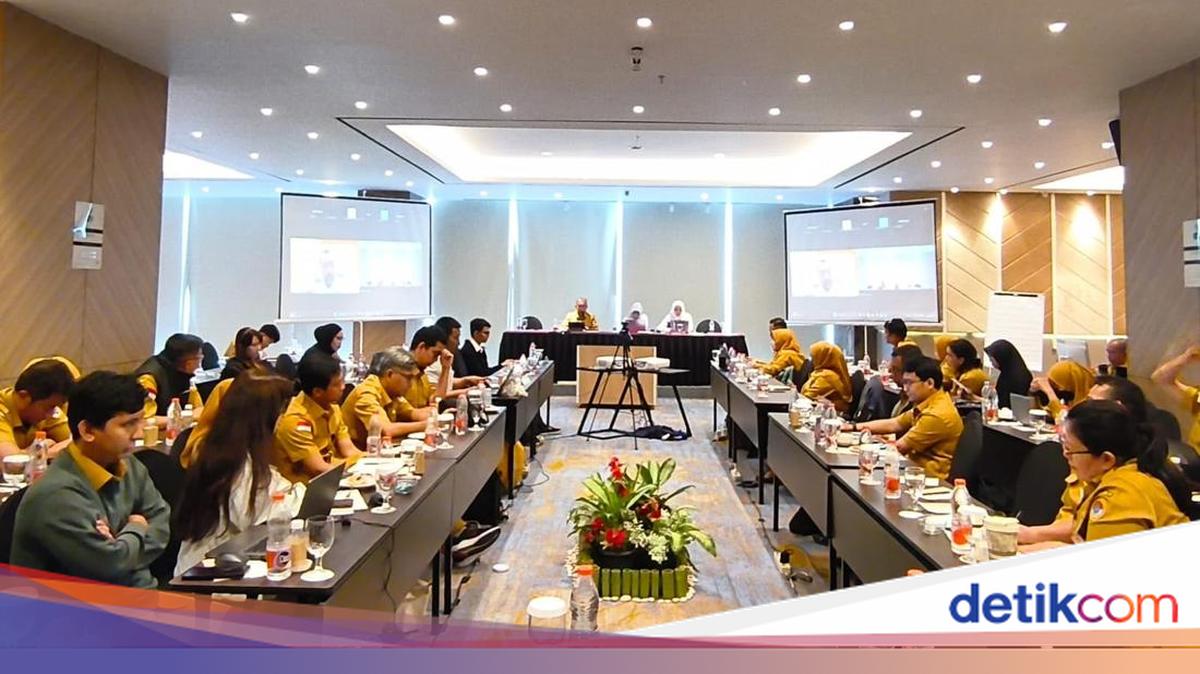
The Assistant Deputy for Maritime Border Area Potential of the National Border Management Agency of the Republic of Indonesia (BNPP RI) has conducted a confirmation forum regarding input for the 2027 Maritime Border Area Potential Management Action Plan alongside partner ministries and agencies. This forum is part of the process to align the programmes and budgets of various agencies to support the management of maritime border areas in 2027.
Yedi Rahmat, the Assistant Deputy for Maritime Border Area Potential at BNPP RI, stated that the forum aims to reconfirm the materials used to draft the 2027 Programme and Budget Plan for the Management of National Border and Border Area (PBWN-KP).
“The 2027 action plan data from each partner agency under the Assistant Deputy for Maritime Border Area Potential needs to be submitted promptly so it can be compiled as part of the 2027 PBWN-KP Action Plan,” Yedi said in a written statement on Tuesday (29/09/2026).
According to Yedi, the programmes developed by agencies within BNPP RI serve as a reference for border area development. Therefore, the preparation of the action plan must consider the links between agency programmes, regional needs, and the direction of border management policies.
He explained that national development for 2027 is directed through eight clusters covering 56 National Priority Work Programmes (PKPN). Within the scope of maritime border potential management, there are two programmes across two clusters relevant to the implementation of the PBWN-KP Action Plan.
“These two programmes include the 5,000 Fishing Villages programme under the food sovereignty cluster, and the accelerated development of underdeveloped, frontier, and outermost (3T) regions under the people’s economy and village cluster,” Yundie explained.
It is noted that the preparation of the 2027 PBWN-KP Action Plan also refers to the Draft Master Plan, the results of monitoring and evaluation of unexecuted 2026 activities, and recommendations from the Border Area Management Index (IPKP) across 11 maritime Border Area Growth Centres (PPKP).
During the forum, partner agencies presented several programme indicators to serve as material for the 2027 Action Plan. For instance, the Ministry of Tourism expressed readiness to support through human resource capacity building, amenity support, event organisation, and tourism promotion in border areas.
Meanwhile, the Ministry of Creative Economy expressed support for the development of creative villages, creative spaces, and talent cultivation in border regions. This support is aimed at strengthening the creative economic potential of communities in these areas.
The Ministry of Marine Affairs and Fisheries has positioned the ‘Merah Putih Fishing Village’ programme as a primary focus of support in border areas, though specific locations and activity allocations are still being finalised.
The Ministry of Manpower expressed support for vocational training in border areas through Tailor Made Training (TMT) and Mobile Training Unit (MTU) schemes.
From the trade sector, the Ministry of Trade proposed support through trade facility education and services, assistance for export entrepreneurs, export-import facilitation, and the strengthening of border trade cooperation.
Additionally, the Ministry of Transportation expressed support for border area management through the implementation of the ‘sea toll’ (tol laut) as an instrument to strengthen connectivity, goods distribution, and logistics services.
Yedi emphasised that all inputs will serve as consolidation material for BNPP RI in drafting the 2027 PBWN-KP Action Plan. Cross-agency alignment is expected to ensure that planned programmes are linked to regional needs and can be implemented effectively in maritime border territories.